


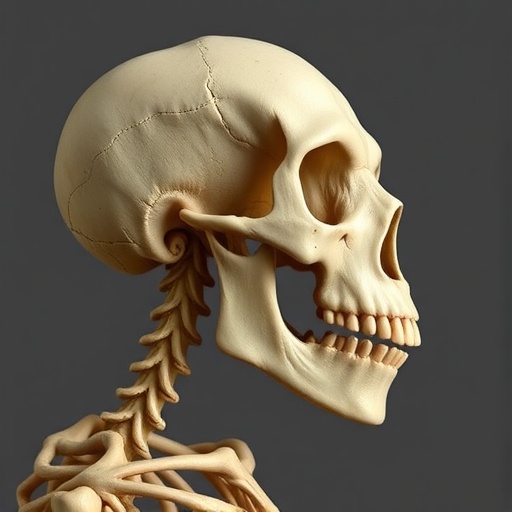
In a groundbreaking development at the intersection of forensic anthropology and legal medicine, recent research spearheaded by Menéndez Garmendia, Sánchez-Mejorada, and Gómez-Valdés has introduced novel methodologies for sex estimation rooted in the analysis of contemporary Mexican postcranial long bones. Published in the International Journal of Legal Medicine in 2025, this work breaks new ground by addressing a critical gap in forensic identification protocols that has long plagued forensic experts dealing with diverse populations.
Sex estimation, a foundational step in biological profiling, relies heavily on osteological markers that differentiate male and female skeletal anatomy. Traditionally, much of the existing literature and practical standards in forensic odontology have been calibrated using European or North American skeletal collections. However, the skeletal morphology among Latin American populations, particularly Mexicans, diverges in various subtle but significant ways due to genetic, environmental, and lifestyle factors. The current study uniquely focuses on this demographic, offering highly relevant data and analytical tools optimized for contemporary Mexican postcranial remains.
The researchers selected the postcranial long bones—in particular, the femur, tibia, humerus, and radius—as their focal point for sex determination. These bones are often well-preserved in forensic contexts and can be subjected to metric analysis even when cranial elements are missing or compromised. Through an extensive data collection process involving modern Mexican skeletal samples, the authors developed robust discriminant function equations and reference standards that substantially improve accuracy over previous models derived from predominantly Caucasian samples.
A significant technical advancement reported in the study lies in the integration of multivariate statistical analysis with forensic anthropological criteria that reflect population-specific biological variation. The authors utilized advanced morphometric techniques alongside rigorous validation protocols, including cross-validation and bootstrapping. This allowed them to assess the precision and reliability of their models comprehensively, demonstrating prediction accuracies exceeding 85% across different skeletal elements—a substantial leap forward in forensic identification reliability.
Another compelling facet of the research is the emphasis on practical applicability within legal medicine frameworks. The investigators critically evaluated how their newly proposed sex estimation approach could be seamlessly incorporated into forensic casework without necessitating prohibitively expensive technologies. This democratization of forensic information is crucial for Mexican medicolegal institutions, which frequently operate under resource constraints yet face an ongoing need to identify unidentified remains due to high rates of violent crime and migration-related mortality.
Furthermore, this work sets a precedent for regional-centric forensic anthropology research in Latin America, a field that has historically suffered from underrepresentation in global scientific discourse. By anchoring their findings in the contemporary Mexican population, the researchers underscore the importance of tailored demographic data sets for improving forensic outcomes and fostering greater confidence among forensic practitioners and judicial authorities alike. The study’s implications resonate well beyond Mexico’s borders, offering methodological blueprints for other nations seeking culturally and biologically relevant forensic tools.
In the context of the digital age, the study also leverages emerging data analytics capabilities that refine the predictive power of osteometric variables. By incorporating machine learning algorithms tuned to skeletal metrics, the authors enhanced their ability to classify sex with greater nuance, transcending simple dimensional comparisons. This approach not only recognizes the natural continuum of human variation but also accommodates the complex interplay of genetic ancestry and environmental factors uniquely present in Mexican populations.
Clinically, the implications of these findings extend to the management of unidentified human remains and mass disaster victim identification. The enhanced sex estimation accuracy bolstered by this research expedites the biological profiling process, streamlining identification pipelines and facilitating the delivery of closure to affected families. Moreover, by improving demographic data quality, forensic anthropologists can contribute more effectively to epidemiological and bioarchaeological research, enriching our understanding of population dynamics in Mexico.
The ethical dimension of forensic practice is also illuminated by this research. The authors emphasize respect for the deceased and the necessity of culturally sensitive methodologies in forensic investigations. By committing to region-specific validation, the study champions an ethical framework that prioritizes scientific integrity and social responsibility, which is increasingly demanded by both forensic communities and affected families.
Technically, the researchers presented detailed descriptions of metric landmarks and measurement protocols designed to minimize intra- and inter-observer error. They standardized bone orientation and measurement procedures, facilitating reproducibility and comparability. This rigor in methodological design assures forensic practitioners that the techniques can be reliably applied across different operators, laboratories, and case scenarios.
Notably, this work reflects a concerted effort to bridge the “forensic anthropological knowledge gap” that exists between global north and global south research environments. By prioritizing localized data and population-specific methodological refinements, Menéndez Garmendia and colleagues contribute to dismantling historic biases inherent in existing forensic databases, championing inclusivity in forensic science.
The study’s discussion further touches on potential avenues for expanding this research. The authors propose that future investigations integrate genetic data alongside osteological metrics to explore the heritability of sexually dimorphic traits in Mexican populations. Additionally, the role of secular trends influencing bone morphology, due to lifestyle and dietary changes over recent decades, provides fertile ground for longitudinal study.
Importantly, the research team situates their findings within broader forensic workflows. Sex estimation is often the first step of a multi-parameter biological profile assessment, which also includes ancestry, stature estimation, and age-at-death estimation. By enhancing accuracy in sex determination, the present methods form a crucial foundation upon which subsequent forensic analyses can build, ultimately improving the holistic identification process.
In conclusion, this landmark study marks a critical evolution in forensic anthropology with its population-specific, methodologically sound, and accessible approach to sex estimation from postcranial long bones in contemporary Mexican individuals. It not only propels forensic identification practices into a more equitable and precise era but also highlights the indispensable role of culturally relevant data in advancing forensic science globally. Amid escalating demands for forensic services worldwide, these findings underscore the necessity of adaptive and resilient methodologies attuned to the biological realities of diverse populations.
Cite Scienmag News
Ophelia Keating. (August 4, 2025). Sex Determination from Mexican Postcranial Long Bones. Scienmag. https://scienmag.com/sex-determination-from-mexican-postcranial-long-bones/
Ophelia Keating. "Sex Determination from Mexican Postcranial Long Bones." Scienmag, 4 August 2025, https://scienmag.com/sex-determination-from-mexican-postcranial-long-bones/. Accessed 4 September 2026.
Ophelia Keating. "Sex Determination from Mexican Postcranial Long Bones." Scienmag. August 4, 2025. https://scienmag.com/sex-determination-from-mexican-postcranial-long-bones/


