


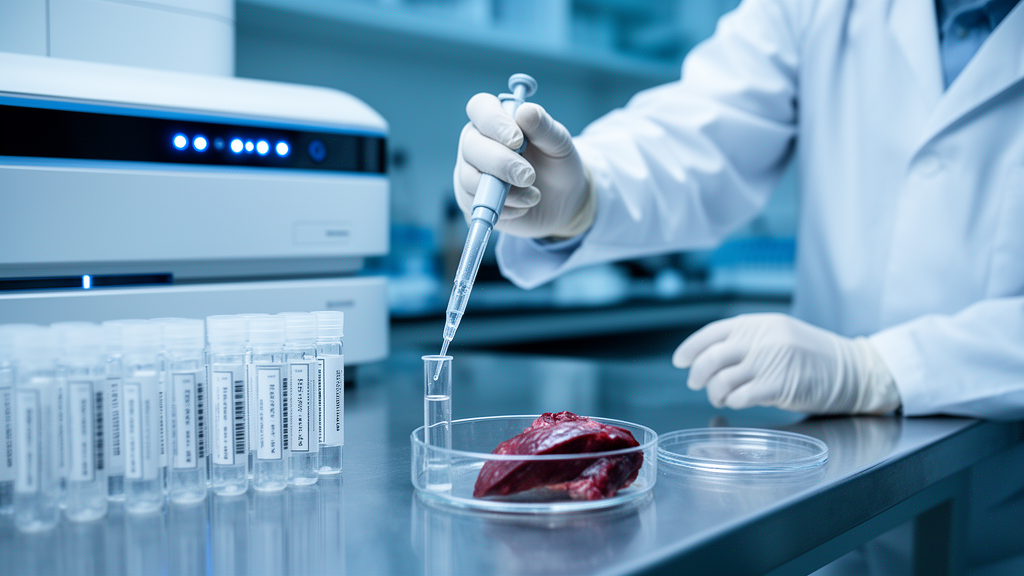
Liver transplantation saves thousands of lives each year, but it also hands patients one of medicine’s most dangerous microbiological gambles: a new organ, a profoundly suppressed immune system, and a microbial landscape that conventional laboratory methods can only partially map. A retrospective cohort study now published in Frontiers in Cellular and Infection Microbiology suggests that metagenomic next-generation sequencing, or mNGS, could redraw that map. By sequencing the genetic material found directly in clinical samples, the technique identified far more bacteria, fungi, and viruses than standard culture, exposed possible donor-to-recipient pathogen transmission events that routine screening had missed, and prompted changes in antimicrobial therapy for the majority of infected transplant recipients.
The research team, led by transplant surgeons and microbiologists at the Affiliated Hospital of Qingdao University in China, enrolled 45 consecutive liver transplant donor–recipient pairs between May 2024 and January 2025. From each donor, the investigators collected up to three sample types within 24 hours before organ procurement: sputum or endotracheal aspirate, EDTA-anticoagulated peripheral blood, and organ preservation solution, the sterile fluid used to perfuse and flush the organ during recovery surgery. From each recipient, samples were taken within 24 hours after transplantation and included blood, respiratory specimens, ascites when abdominal infection was suspected, and occasionally preservation solution. In total, 124 donor samples and 97 recipient samples were tested in parallel by both mNGS and conventional microbiological culture, creating one of the most systematic matched-pair comparisons of these two diagnostic philosophies in the transplant literature.
Technically, mNGS works by extracting all nucleic acids from a specimen, sequencing them on an MGISEQ-200 platform, computationally stripping away human host sequences using the hg38 reference genome, and aligning the remaining reads against comprehensive microbial reference databases drawn from NCBI GenBank, RefSeq, and nt. Pathogen abundance was quantified in reads per 10 million raw reads, with positivity thresholds of RPTM ≥ 3 for viruses, RPTM ≥ 20 for bacteria and fungi, and RPTM ≥ 1 for special organisms such as Cryptococcus and Mycobacterium tuberculosis. Culture, by contrast, relied on growth-based identification by MALDI-TOF mass spectrometry with antimicrobial susceptibility testing under Clinical and Laboratory Standards Institute guidelines. The two methods embody fundamentally different diagnostic logics: culture requires organisms to be alive, cultivable, and abundant enough to grow, while mNGS requires only that their genetic fingerprints be present in the sample.
The clinical stakes were high. Among the 45 recipients, 29, or 64.4 percent, developed post-transplant infections, and the lung was by far the dominant battlefield, accounting for 89.7 percent of infections, followed by the abdomen at 24.1 percent and the bloodstream at 17.2 percent. Infected recipients spent dramatically longer in the intensive care unit, with a median of 91.0 hours compared with 53.9 hours for infection-free patients, and their total hospitalization stretched to a median of 44.0 days versus 23.0 days. These figures echo the broader epidemiology of solid organ transplantation, where more than 60 to 80 percent of recipients develop at least one clinically significant infection within the first year, and where early postoperative infection rates in liver transplant cohorts range from 44 to 71 percent.
When the researchers compared detection rates, the advantage of mNGS was striking. At the patient level, mNGS achieved positivity in 95.6 percent of donors versus 80.0 percent for culture, and in 64.4 percent of recipients versus just 22.2 percent for culture. The gap was widest for fungi and absolute for viruses: fungal detection in donors reached 40.0 percent by mNGS versus 15.6 percent by culture, and every viral pathogen identified in the study, including cytomegalovirus, Epstein–Barr virus, human parvovirus B19, and hepatitis B virus, was found exclusively by sequencing. In recipient samples, the contrast was even sharper in some matrices. Recipient blood samples yielded pathogens in 40.5 percent of cases by mNGS but in zero percent by culture, and donor blood showed 62.9 percent versus a mere 2.9 percent. Even after statistically accounting for the fact that multiple samples came from the same individuals using generalized estimating equations, the mNGS advantage remained highly significant in both donors and recipients.
Yet the study also revealed that the two methods are complementary rather than interchangeable. Among samples positive by both techniques, pathogen-level concordance was predominantly partial, with complete agreement in only 17.8 percent of donor samples and 22.2 percent of recipient samples. In other words, each method consistently uncovered a distinct subset of the microbial burden that the other missed. This trade-off was equally evident in diagnostic performance. Using the clinically adjudicated post-transplant infection diagnosis as the reference standard, mNGS achieved a sensitivity of 69.0 percent at the patient level, far exceeding the 31.0 percent of culture, but its specificity was only 43.8 percent, whereas culture reached 93.8 percent. The authors caution that because clinicians were not blinded to mNGS results in this retrospective setting, incorporation bias may have inflated the sensitivity estimates, and they emphasize that mNGS should never be interpreted in isolation from clinical, radiological, and other microbiological evidence.
The pathogen landscape that mNGS revealed included organisms that culture simply cannot reach. Most notably, Pneumocystis jirovecii, an opportunistic fungus responsible for severe and potentially fatal pneumonia in immunocompromised patients, was identified exclusively by sequencing. Rare invasive molds such as Rhizomucor pusillus, Lichtheimia ramosa, and Cunninghamella bertholletiae, which are notoriously culture-resistant and dangerous, were likewise detected only by mNGS in donor samples. In recipients, Staphylococcus aureus and Klebsiella pneumoniae led the bacterial detections, while Candida albicans, Candida tropicalis, and Aspergillus species dominated the fungal findings. The ability to detect these fastidious and culture-resistant organisms before clinical deterioration represents one of the most clinically consequential dimensions of the technology.
Perhaps the most novel contribution of the study was its systematic hunt for donor-derived pathogen transmission. By comparing matched donor and recipient microbiological profiles, the investigators identified 11 possible donor-to-recipient transmission events across 11 pairs, involving six distinct organisms, and six of the 11 affected recipients, or 54.5 percent, went on to develop clinical infections. Klebsiella pneumoniae was the most frequently transmitted pathogen, responsible for five of the 11 events, and three of the five recipients with donor-derived Klebsiella developed multi-site infections involving the lung, abdomen, or bloodstream. The study also documented possible donor-derived transmission of hepatitis B virus and human parvovirus B19, both invisible to culture-based screening. The authors stress that these events represent species-level concordance rather than genetically confirmed transmission, since no whole-genome sequencing or molecular typing was performed to establish clonal identity between donor and recipient isolates.
The impact on antimicrobial decision-making was equally significant. mNGS findings prompted treatment modifications in 24 of 45 recipients overall, including 20 of the 29 infected recipients, or 69.0 percent. In contrast, culture results alone informed no additional treatment changes beyond those already associated with mNGS findings. The spectrum of mNGS-informed modifications was notably broader than culture could support, including escalation in 40 percent of cases, addition of anti-Gram-positive agents in 35 percent, combination therapy in 35 percent, antifungal adjustments in 25 percent, and, critically, antiviral additions in 10 percent and de-escalation in 5 percent, categories that culture cannot inform given its inability to detect viruses and its characteristic diagnostic delay. Among the nine recipients whose treatment was adjusted based on both methods concurrently, the Jaccard similarity index between mNGS- and culture-informed modification categories was 1.00 in six cases and 0.50 to 0.67 in the remaining three, indicating that mNGS decisions extended rather than contradicted culture-confirmed findings.
The study also uncovered an unexpected epidemiological signal: recipients transplanted for liver cancer showed a markedly lower risk of post-transplant infection, with an univariate odds ratio of 0.10 and a p-value of 0.003. The authors interpret this cautiously, noting that patients with hepatocellular carcinoma are more likely to have compensated liver function, better nutritional status, and elective rather than emergency transplantation compared with those transplanted for acute liver failure or decompensated cirrhosis, so the association likely reflects confounding by underlying disease severity rather than any independent protective effect of cancer itself. Donor mNGS fungal detection and perioperative blood transfusion showed trends toward significance but did not reach statistical thresholds in this small cohort.
Despite its promise, the study carries important limitations. The cohort of 45 pairs limits statistical power, the retrospective design means clinicians were not blinded to mNGS results, and the absence of molecular typing means transmission events remain classified as possible rather than confirmed. The single-center setting in China may also limit generalizability to regions with different donor pools and local epidemiology. Nevertheless, the findings make a compelling case that mNGS, when deployed across multiple anatomical compartments in both donors and recipients, can substantially expand the visible pathogen spectrum, expose hidden donor-derived transmission risks, and drive more informed antimicrobial stewardship in a population where every diagnostic delay carries real clinical consequences. The authors conclude that mNGS should be regarded as an adjunctive peri-transplant diagnostic tool, pending prospective multicenter validation with standardized interpretation frameworks and genomic confirmation of transmission events.
Subject of Research: Metagenomic next-generation sequencing of matched liver transplant donor–recipient pairs reveals pathogen transmission dynamics and informs antimicrobial therapy
Article Title: Metagenomic next-generation sequencing of matched donor–recipient pairs reveals pathogen transmission dynamics and informs antimicrobial therapy in liver transplantation: a retrospective cohort study
Article References: Feng, S., Liu, J., Zhang, X., Zhang, L., Zhao, S., Jiang, N., Cai, J., Zheng, Y., Gai, W., & Xu, C. (2026). Metagenomic next-generation sequencing of matched donor–recipient pairs reveals pathogen transmission dynamics and informs antimicrobial therapy in liver transplantation: a retrospective cohort study. Frontiers in Cellular and Infection Microbiology, 16, Article 1919428. https://doi.org/10.3389/fcimb.2026.1919428
Image Credits: AI Generated
DOI: 10.3389/fcimb.2026.1919428
Keywords: liver transplantation, metagenomic next-generation sequencing, donor-derived infection, antimicrobial stewardship, post-transplant infection, Klebsiella pneumoniae, pathogen detection, transplant immunology, diagnostic microbiology, organ preservation solution, Metagenomic, next-generation
Cite Scienmag News
Kristina Jarvis. (October 19, 2026). Sequencing donor and recipient samples reveals hidden pathogen transmission in liver transplants. Scienmag. https://scienmag.com/sequencing-donor-and-recipient-samples-reveals-hidden-pathogen-transmission-in-liver-transplants/
Kristina Jarvis. "Sequencing donor and recipient samples reveals hidden pathogen transmission in liver transplants." Scienmag, 19 October 2026, https://scienmag.com/sequencing-donor-and-recipient-samples-reveals-hidden-pathogen-transmission-in-liver-transplants/. Accessed 19 October 2026.
Kristina Jarvis. "Sequencing donor and recipient samples reveals hidden pathogen transmission in liver transplants." Scienmag. October 19, 2026. https://scienmag.com/sequencing-donor-and-recipient-samples-reveals-hidden-pathogen-transmission-in-liver-transplants/


