

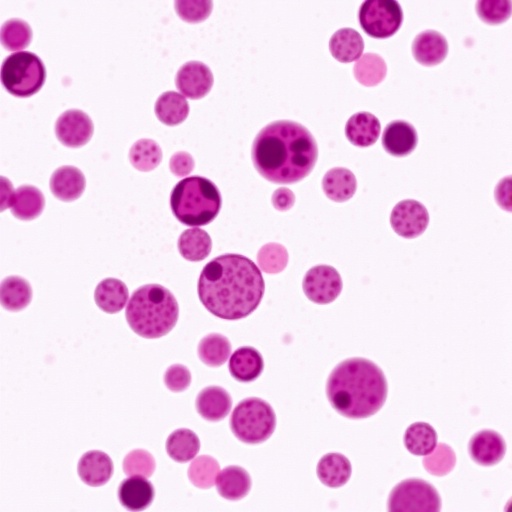
In a groundbreaking advancement poised to revolutionize forensic science, researchers have unveiled a novel methodology that enhances the separation and identification of mixed bloodstains originating from multiple individuals. This technique leverages the specificity of human neutrophil antigen-1 (HNA-1) antibodies, providing unparalleled precision in distinguishing between blood samples that have historically posed significant analytical challenges. As crime scenes often present complex biological evidence entangled from various sources, the ability to definitively differentiate contributors within a mixed bloodstain holds transformative potential for criminal investigations and judicial outcomes alike.
The study, conducted by Xia, Zheng, Wang, and colleagues, embodies a pioneering application of immunological markers in forensic serology. By targeting HNA-1—a polymorphic antigen expressed variably among individuals on the surface of neutrophils—they established a robust framework to achieve separation at the cellular level. This approach is distinctly innovative because conventional DNA analysis, while powerful, often struggles with mixtures due to overlapping genetic profiles and degraded samples. The advent of antibody-based differentiation introduces a new dimension of specificity and clarity.
Central to the research is the selective binding mechanism by which HNA-1 antibodies identify neutrophils harboring specific antigenic variants. Neutrophils, a predominant white blood cell type swiftly recruited to sites of injury, carry these markers in a way that is genetically inherited and variably expressed among populations. By utilizing monoclonal antibodies precisely tailored to recognize variant forms of HNA-1, the researchers achieved efficient tagging of blood components from individual donors in a mixed sample. This immunoreactivity enables separation techniques that isolate distinct cellular fractions prior to genetic analysis, hence reducing the genomic noise inherent in mixed samples.
The procedure involves the incubation of mixed bloodstains with fluorescently labeled HNA-1-specific antibodies, facilitating the identification and separation of neutrophils under fluorescence-activated cell sorting (FACS). This high-throughput and sensitive sorting protocol allows forensic experts to physically partition the bloodstain into components attributable to each individual, circumventing the ambiguities posed by DNA deconvolution methods. Such stratification prior to DNA extraction significantly bolsters the purity of isolated genetic material.
Moreover, this antibody-enabled method addresses a critical bottleneck in forensic mixture analysis: the allelic drop-out and drop-in artifacts common in low-template or aged biological samples. By enriching the target cells expressing distinct HNA-1 variants before DNA profiling, the method promotes more reliable and interpretable genetic outputs. This specificity dramatically elevates the confidence in assigning biological evidence to individuals, which is pivotal in both exoneration and conviction contexts.
The implications extend beyond traditional forensic frameworks, presenting avenues for adaptation in clinical pathology and transplant immunology, where the identification of individual contributions within mixed cellular populations can prove invaluable. In legal medicine, the adoption of this technology promises to enhance the evidentiary strength of bloodstain analyses submitted in courts worldwide, potentially reshaping standards for biological sample processing and expert testimony.
A cornerstone of the research is the statistical validation of HNA-1 allelic variation in diverse populations, ensuring the broad applicability and discriminatory power of the antibody-based assay. The polymorphic nature of HNA-1 grants the method an inherent advantage over uniform markers, as it leverages natural antigenic diversity to distinguish contributors with high resolution. Such population-based analyses underpin the assay’s forensic robustness and support its integration into routine investigative workflows.
The robustness and reproducibility of this approach were demonstrated through comprehensive validation experiments involving artificially mixed blood samples under varying conditions. The technique maintained remarkable efficacy in complex mixtures and in samples subjected to environmental degradation, underscoring its resilience in real-world forensic scenarios. This operational durability marks a significant evolution from existing methodologies that falter under less-than-ideal sampling conditions.
Notably, the technology aligns with the growing trend towards combining immunological and molecular techniques in forensic investigations. The hybrid strategy facilitates multifaceted evidence profiling, offering a complementary toolkit that harnesses cellular markers alongside genetic signatures. This complementary dimension empowers forensic practitioners to uncover nuanced information previously obscured within composite biological evidence.
Furthermore, the application of human neutrophil antigen-1 antibodies represents a strategic exploitation of innate immunogenetics—an area seldom tapped in forensic science until now. By integrating knowledge from hematology and immunology into crime scene analysis, the researchers have illuminated an intersecting frontier that promises to elevate forensic precision and reduce ambiguities that can hinder justice.
Ethical and procedural considerations accompany this advancement, particularly regarding standardization, antibody specificity validation, and the necessity for clear interpretative guidelines. The researchers advocate for extensive collaborative efforts across forensic laboratories to harmonize protocols and ensure the reproducibility of results. Such standardization will be essential to secure judicial acceptance and foster trust in this innovative technique.
The evolutionary leap presented by this research transcends mere technical improvement; it challenges existing paradigms of forensic biological evidence interpretation. By reconceptualizing bloodstains as immunologically distinguishable mixtures rather than homogenized genetic blends, the study opens new horizons for evidence resolution that are both scientifically rigorous and practically transformative.
As this novel antibody-driven methodology gains traction, we may soon witness its impact on a spectrum of forensic endeavors—from solving cold cases that hinged on inconclusive mixture analyses to enhancing the reliability of routine forensic examinations. This advancement has the potential to bolster the accuracy of justice delivery systems by refining the molecular and immunological clarity with which human biological evidence is examined.
In sum, the synthesis of immunological specificity and advanced cell sorting technologies articulated in this research signifies a watershed in forensic methodologies. It marks a transition towards integrated biological profiling strategies tailored to unravel the inherent complexities of mixed bloodstain evidence, thereby underpinning the future of forensic science with enhanced precision, reliability, and judicial relevance.
Subject of Research: Separation and identification of mixed bloodstains from two individuals using human neutrophil antigen-1 antibodies.
Article Title: Separation and identification of two-individual mixed bloodstains using human neutrophil antigen-1 antibodies.
Article References:
Xia, X., Zheng, Jl., Wang, Sw. et al. Separation and identification of two-individual mixed bloodstains using human neutrophil antigen-1 antibodies. Int J Legal Med (2026). https://doi.org/10.1007/s00414-026-03718-z
Image Credits: AI Generated


