

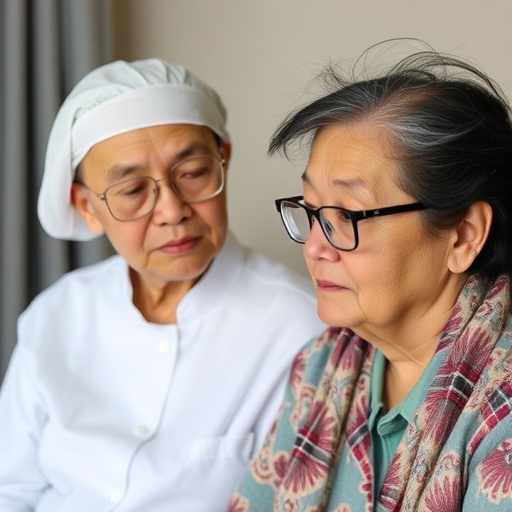
As global populations age, the intricate challenges surrounding elderly care are becoming increasingly pressing. A groundbreaking study conducted by researchers Phiraphat Vapattanawong and Rungroj Phetsitong, soon to be published in BMC Geriatrics, sheds new light on a crucial yet often overlooked aspect of aging: the relationship between sensory impairments in older adults and the resulting caregiver burden. This comprehensive population-based study in Thailand unravels the complex interplay between sensory deficits and the emotional, physical, and psychological stress experienced by caregivers, highlighting implications for healthcare systems worldwide.
Sensory impairments—specifically hearing and vision loss—are widespread among older adults, profoundly affecting quality of life and independent functioning. These impairments compromise communication and mobility, increasing reliance on caregivers for daily activities. Vapattanawong and Phetsitong’s work delves into how these sensory limitations translate into increased demands on caregivers, often family members, who must navigate multifaceted challenges without formal training or adequate support.
The backdrop to this study is Thailand’s rapidly aging demographic. With societal transformations, including urbanization and changing family structures, traditional caregiving roles are evolving. Thailand serves as a pivotal case study to explore how sensory-related disabilities in older adults impact caregiver burden in a middle-income country context, juxtaposed between traditional cultural expectations and modern healthcare constraints.
Methodologically, this study utilized extensive population-based data to assess sensory impairment prevalence alongside detailed caregiver questionnaires to quantify burden. By integrating subjective caregiver reports and objective sensory assessments, the researchers achieved a nuanced perspective on the caregiving ecosystem. This dual approach provided a robust framework for identifying correlations and potential causal pathways between sensory loss and caregiver strain.
One of the salient findings from the research revealed that older adults with dual sensory impairments – both hearing and vision loss – impose significantly higher levels of care demands. Caregivers reported increased emotional exhaustion, decreased social engagement, and physical fatigue. These compounded sensory deficits exacerbate communication challenges, impeding caregiver-patient interactions and escalating caregiving complexity.
In addition, sensory impairments were linked to heightened risks of social isolation for both the elderly and their caregivers. The breakdown in effective communication often diminishes social support networks, leaving caregivers less connected to their communities and resources. This dynamic underscores the importance of considering sensory health as a critical factor not only for individuals but for the broader caregiving environment.
Importantly, the study also highlighted gender disparities in caregiving burden. Female caregivers, who constitute the majority in the sampled population, exhibited more pronounced physical and psychological stress indicators. Cultural norms assigning caregiving responsibilities predominantly to women magnified these effects, emphasizing the gendered nature of unpaid eldercare.
Another pivotal aspect of Vapattanawong and Phetsitong’s findings is the link between caregiver burden and health outcomes. Prolonged strain, without sufficient respite or medical support, correlated with increased incidence of chronic conditions among caregivers, including hypertension and depressive disorders. This bilateral health impact accentuates the need for integrated care models addressing both elderly patients and their caregivers.
From a healthcare policy perspective, the study exposes critical gaps in existing support structures for sensory-impaired older adults and their caregivers. Thailand’s current frameworks for eldercare, though evolving, are inadequate for accommodating the nuanced challenges presented by sensory disabilities. The findings advocate for comprehensive intervention programs encompassing sensory rehabilitation, caregiver education, and mental health services.
Technological advancements also emerge as a promising avenue for alleviating caregiver burden. The researchers call for investment in affordable assistive devices—such as hearing aids and visual aids—that could substantially improve communication and autonomy among older adults. Digital platforms designed to offer caregiver support and education may further mitigate psychological stress and social isolation risks.
Moreover, this research underscores the importance of early detection and intervention in sensory impairments. Proactive screening programs for hearing and vision loss can empower caregivers with knowledge and resources, preparing them better for the demands ahead. Early rehabilitation can slow functional decline, reducing the intensity and duration of caregiving burden.
Community engagement initiatives also play a vital role. The study advocates incorporation of neighborhood-based support groups and outreach programs to create networks of resilience for caregivers. Social cohesion, peer support, and shared experiences have the potential to buffer against the isolating effects demonstrated in the study.
This study’s implications extend beyond Thailand, resonating with global aging trends. Countries with similar demographic shifts face parallel challenges in managing sensory-related disabilities and caregiver burdens. Vapattanawong and Phetsitong’s research contributes a valuable evidence base to inform culturally sensitive health policies and caregiver support mechanisms worldwide.
Crucially, this investigation highlights that caregiver burden is a multifactorial phenomenon. Sensory impairments interact with socio-economic conditions, healthcare access, and cultural expectations, creating a complex tapestry necessitating multidisciplinary approaches. Addressing sensory health in older adults is not simply a clinical task but an essential component of sustaining caregiver well-being and societal health.
As the aging population accelerates worldwide, the dual burdens on eldercare recipients and their caregivers demand urgent attention. This study provides a clarion call for health systems, policymakers, and communities to recalibrate strategies toward more holistic, sustainable care frameworks. Empowering caregivers through better sensory health interventions holds promise to alleviate the growing burden and enhance the dignity of aging populations.
In summary, Vapattanawong and Phetsitong’s research has advanced our understanding of the profound connections between sensory impairments in older adults and caregiver burden in a real-world population context. Their meticulous approach reveals critical pathways for intervention at individual, community, and systemic levels. As this knowledge informs future healthcare policies, there lies an opportunity to transform eldercare into a more supportive, equitable, and humane endeavor.
Ultimately, the intersection of sensory health and caregiving is a frontier in geriatric medicine ripe for innovation. By harnessing technology, fostering community involvement, and implementing targeted policy reforms, societies can mitigate caregiver burden and improve quality of life for millions of older adults worldwide. The insights from this study illuminate a path forward for building resilient care ecosystems that honor the needs of both the elderly and those who care for them.
Subject of Research: Sensory impairments in older adults and their impact on caregiver burden in Thailand.
Article Title: Sensory impairments and caregiver burden: a population-based study of older adults in Thailand.
Article References:
Vapattanawong, P., Phetsitong, R. Sensory impairments and caregiver burden: a population-based study of older adults in Thailand. BMC Geriatr (2026). https://doi.org/10.1186/s12877-026-07352-7
Image Credits: AI Generated


