


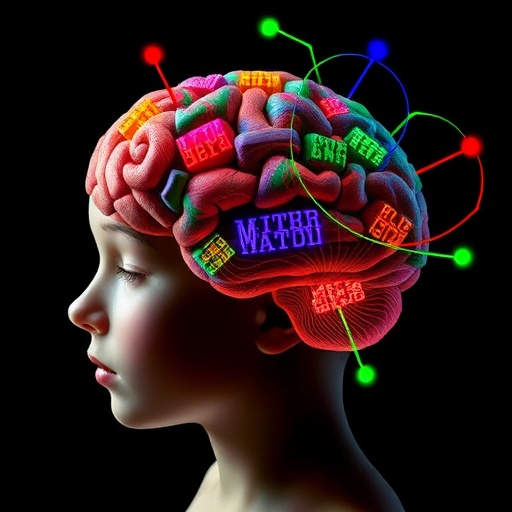
In a groundbreaking new study published in Translational Psychiatry, researchers have illuminated the intricate links between altered brain chemistry, sensory processing anomalies, and motor dysfunction in autism spectrum disorder (ASD). This research offers an unprecedented window into the neurobiological mechanisms that underpin the characteristic motor difficulties experienced by individuals with autism, positioning sensory abnormalities as a crucial intermediary factor. The findings herald a significant advance toward deciphering how complex neural circuits involved in sensory and motor functions are disrupted in ASD, potentially opening novel avenues for targeted interventions.
Autism spectrum disorder is widely recognized for its diverse symptomatology, ranging from social communication challenges to repetitive behaviors. Motor impairments, however, have often been relegated to a secondary status in the autism literature despite their profound impact on daily functioning and quality of life. Emerging evidence has suggested a link between atypical sensory experiences—such as hypersensitivity or hyposensitivity to stimuli—and motor abnormalities, yet the underlying neurochemical processes remained elusive until now.
The research team, led by Shi et al., meticulously examined sensory processing traits alongside motor performance metrics and concurrent neurochemical profiles in a well-characterized cohort of individuals with ASD. Employing state-of-the-art neuroimaging combined with advanced behavioral assessments, the study delineated distinct sensory atypicalities that appear to serve as a vital bridge connecting brain chemistry disruptions to motor dysfunction. This multifaceted approach provides a robust framework for understanding how alterations at the molecular level can cascade into observable motor deficits.
Central to the study’s findings is the identification of specific neurochemical imbalances involving excitatory and inhibitory neurotransmission within sensory and motor networks. The investigators reported altered concentrations of gamma-aminobutyric acid (GABA) and glutamate—key neurochemicals that regulate neural excitability and synaptic plasticity. Such imbalances may destabilize sensory signal processing, leading to aberrant sensory experiences that in turn confound motor coordination and control mechanisms.
Further, the study leveraged sophisticated functional connectivity analyses to reveal disrupted communication between primary sensory cortices and motor planning regions. This functional disconnection underscores the integrative role that sensory input plays in refining and executing voluntary movement. The authors propose that sensory atypicalities attenuate the fidelity of sensory feedback loops, thereby impairing motor output precision and fluidity.
Intriguingly, the researchers also observed that sensory processing abnormalities varied along a spectrum, correlating directly with the severity of motor impairments. Individuals exhibiting heightened sensory dysregulation tended to have more pronounced difficulties in tasks requiring fine motor skills and balance. This correlation not only highlights the heterogeneity within ASD but also emphasizes sensory processing as a potential biomarker for motor dysfunction severity.
Beyond its theoretical implications, this study’s integrative model holds tangible clinical relevance. The elucidation of sensory atypicality as a mediator sparks the possibility of novel therapeutic strategies aimed at recalibrating sensory processing to amend motor deficits. Interventions designed to modulate sensory input—whether through sensory integration therapy, neurofeedback, or pharmacological targeting of neurotransmitter systems—may yield meaningful improvements in motor performance and overall adaptive functioning.
Critically, the authors emphasize the necessity of a personalized medicine approach, acknowledging that the complex interplay between neurochemistry, sensory processing, and motor output may differ across individuals on the spectrum. Future research must therefore continue to unravel these individual differences to optimize treatment fidelity and efficacy.
In addition, the study draws attention to the developmental trajectory of brain chemistry and sensory-motor integration. Longitudinal analyses suggested that early interventions targeting sensory atypicalities could potentially mitigate downstream motor difficulties, advocating for earlier diagnostic evaluation and therapeutic engagement in ASD populations.
This comprehensive investigation also utilized precise measurement tools to quantify sensory modalities across auditory, tactile, and visual domains, delineating how each sensory system’s atypical functioning distinctively impacts motor coordination. The nuanced understanding gained here serves to refine both diagnostic criteria and therapeutic targets for sensorimotor abnormalities in autism.
Additionally, the integration of neurochemical data with behavioral phenotypes sets this study apart, as it employs a novel biochemical lens to interpret autism’s complex symptom mosaic. Previous models have often overlooked the biochemical underpinnings of sensory-motor defects, but Shi et al.’s findings underscore the critical influence these molecular factors exert on higher-order functional output.
The study’s methodology was underpinned by rigorous control for confounding variables such as age, cognitive ability, and medication status, which enhances the confidence in causative interpretations of neurochemical-sensory-motor relationships. This rigor is exemplary in the field, where heterogeneous presentations often complicate neurobiological analyses.
Moreover, the compelling visual representation of these relationships—presented in detailed neuroimaging overlays and correlation matrices—provides an accessible yet scientifically rich narrative that will resonate with both clinical and research audiences. The clarity with which complex interactions are mapped exemplifies the study’s contribution to advancing neuroscience communication.
In sum, Shi and colleagues have provided a clarifying perspective on how sensory atypicalities function as a critical interface linking disrupted brain chemistry and motor dysfunction in autism. This research bridges previously disconnected domains, enriching our understanding of ASD’s multifactorial nature and setting the stage for innovative, mechanistically informed interventions.
As the autism research community continues to pursue integrated models of neuropathology, this seminal study serves as a beacon illuminating the path forward. It challenges prevailing paradigms to recognize sensory processing not as a peripheral concern, but as a central node in the neurobiological architecture driving motor and behavioral manifestations of autism.
This newfound knowledge promises to inspire a wave of interdisciplinary studies focusing on sensorimotor integration and neurotransmitter regulation in neurodevelopmental disorders. Ultimately, it beckons a future where tailored therapies grounded in neurochemical and sensory profiles could profoundly enhance functional outcomes for individuals on the autism spectrum, transforming both lives and clinical practice.
Cite Scienmag News
Cassandra Pierce. (May 8, 2026). Sensory Atypicalities Link Brain Chemistry, Motor Issues in Autism. Scienmag. https://scienmag.com/sensory-atypicalities-link-brain-chemistry-motor-issues-in-autism/
Cassandra Pierce. "Sensory Atypicalities Link Brain Chemistry, Motor Issues in Autism." Scienmag, 8 May 2026, https://scienmag.com/sensory-atypicalities-link-brain-chemistry-motor-issues-in-autism/. Accessed 4 September 2026.
Cassandra Pierce. "Sensory Atypicalities Link Brain Chemistry, Motor Issues in Autism." Scienmag. May 8, 2026. https://scienmag.com/sensory-atypicalities-link-brain-chemistry-motor-issues-in-autism/


