

Tuesday, July 28, 2026
Science
No Result
View All Result
  • Login
  • HOME
  • SCIENCE NEWS
  • CONTACT US
  • HOME
  • SCIENCE NEWS
  • CONTACT US
No Result
View All Result
Scienmag
No Result
View All Result
Home Science News Biology

Senolytic PROTAC Slows Age-Related Intervertebral Disc Degeneration in Male Mice

July 28, 2026
in Biology
Reading Time: 2 mins read
0
Senolytic PROTAC Slows Age-Related Intervertebral Disc Degeneration in Male Mice

Senolytic PROTAC Slows Age-Related Intervertebral Disc Degeneration in Male Mice

65
SHARES
587
VIEWS
Share on FacebookShare on Twitter
ADVERTISEMENT

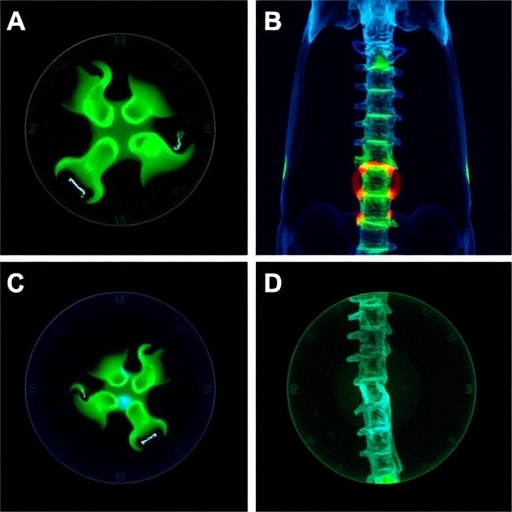
Aging intervertebral discs are a major contributor to chronic low back pain, yet the biological chain of events that turns tissue aging into degeneration remains difficult to interrupt. In a new open-access study in Aging, researchers tested a next-generation senolytic PROTAC designed to eliminate therapy-resistant cellular stress states tied to aging-related inflammation.

The compound, PROTAC 753b, works by using a dual binding moiety to bring the anti-apoptotic proteins BCL-2 and BCL-xL into proximity with the VHL E3 ligase. Once recruited, the target proteins are ubiquitinated and degraded by the proteasome. This approach aims to trigger apoptosis preferentially in senescent or survival-dependent cells while addressing platelet toxicity concerns associated with earlier BCL-2/BCL-xL-targeting strategies.

To evaluate therapeutic impact, investigators administered PROTAC 753b systemically to aged mice beginning at 16 months of age. The regimen comprised six one-month cycles, each separated by drug delivery and rest periods; dosing occurred twice per week via intraperitoneal injection at 5 mg/kg. Discs were analyzed after six months of treatment, when animals reached 22 months of age.

Histological and molecular analyses focused on hallmarks of intervertebral disc degeneration, including extracellular matrix integrity and protease-driven breakdown. In male mice, PROTAC 753b substantially preserved disc structure, maintaining aggrecan and reducing MMP-associated aggrecan degradation—changes consistent with a slower pace of age-driven tissue deterioration.

Surprisingly, the benefits were largely absent in female mice. This sex-specific outcome suggests that disc degeneration trajectories differ by sex at this life stage, potentially altering both the burden of vulnerable cells and the baseline inflammatory environment that therapy can modulate.

Mechanistic probing of cellular senescence markers inside disc tissue did not show the expected drop in canonical senescence signatures, nor did it clearly shift PROTAC molecular targets within the disc microenvironment. Instead, treated male animals displayed lower circulating inflammatory proteins such as IL-6 and TNFα, pointing toward a dominant systemic, non-cell-autonomous mechanism.

The authors also argue that effective senolytic action may not require high intradisc drug penetration. Because intervertebral discs are largely avascular, local drug delivery can be limited; nonetheless, systemic reduction of senescence-associated inflammation may still translate into measurable structural rescue.

Together, the study positions PROTAC 753b as a viable strategy to ameliorate age-related intervertebral disc degeneration, at least in males, while highlighting a critical variable for translation: sex-dependent biology may govern whether global senolytic immunometabolic effects reach clinically meaningful outcomes.

Finally, the work underscores both opportunity and uncertainty in targeting senescence networks. If systemic inflammatory tone can be recalibrated, disc aging may be slowed even when local target engagement is incomplete—an idea that will require follow-up studies in additional models and, ultimately, human trials.

Subject of Research: Animals (intervertebral disc aging; cellular senescence)
Article Title: Slowing intervertebral disc aging in mice through long-term systemic treatment with the senolytic BCL-2/BCL-xL proteolysis targeting chimera (PROTAC) 753b
News Publication Date: 13-Jul-2026
Web References: https://doi.org/10.18632/aging.206394
References: https://doi.org/10.18632/aging.206394
Image Credits: Copyright: © 2026 Alexander et al. (CC BY 4.0)

Keywords: intervertebral disc aging, cellular senescence, senolytic, anti-apoptosis, PROTAC-753b

Tags: aging-related intervertebral disc deteriorationBCL-2 and BCL-xL targeted PROTACscellular senescence and inflammation in spinal discseffects of PROTAC 753b on extracellular matrix integritynovel treatments for low back painproteasome-mediated protein degradation in agingreduction of matrix metalloproteinases in disc agingsenolytic PROTAC therapy for disc degenerationsystemic senolytic drug administration in micetargeted elimination of senescent cells to
Share26Tweet16
Previous Post

Pusan National University pharmacy study explores rare atom-containing natural products

Next Post

Cellphone ownership linked to lower reading comprehension in children, study finds

Related Posts

Nuclear Escape Accelerates as Stress Builds Inside the Atomic Nucleus
Biology

Nuclear Escape Accelerates as Stress Builds Inside the Atomic Nucleus

July 28, 2026
Lipid Regulator Modulates Sonic Hedgehog Pathway, Shaping Heart and Lungs
Biology

Lipid Regulator Modulates Sonic Hedgehog Pathway, Shaping Heart and Lungs

July 27, 2026
Stomach Signals Help Brain Build Memories, New Study Reveals
Biology

Stomach Signals Help Brain Build Memories, New Study Reveals

July 27, 2026
AI app identifies birds offline by recording animal sounds on your phone
Biology

AI app identifies birds offline by recording animal sounds on your phone

July 27, 2026
Albert Einstein World Science Award Winner Announces Breakthrough Research
Biology

Albert Einstein World Science Award Winner Announces Breakthrough Research

July 27, 2026
New Snail Species Strengthens Montenegro Biodiversity Protection Case
Biology

New Snail Species Strengthens Montenegro Biodiversity Protection Case

July 27, 2026
Next Post
Cellphone ownership linked to lower reading comprehension in children, study finds

Cellphone ownership linked to lower reading comprehension in children, study finds

  • Mothers who receive childcare support from maternal grandparents show more

    Mothers who receive childcare support from maternal grandparents show more parental warmth, finds NTU Singapore study

    27656 shares
    Share 11059 Tweet 6912
  • University of Seville Breaks 120-Year-Old Mystery, Revises a Key Einstein Concept

    1061 shares
    Share 424 Tweet 265
  • Bee body mass, pathogens and local climate influence heat tolerance

    682 shares
    Share 273 Tweet 171
  • Researchers record first-ever images and data of a shark experiencing a boat strike

    546 shares
    Share 218 Tweet 137
  • Groundbreaking Clinical Trial Reveals Lubiprostone Enhances Kidney Function

    531 shares
    Share 212 Tweet 133
Science

Embark on a thrilling journey of discovery with Scienmag.com—your ultimate source for cutting-edge breakthroughs. Immerse yourself in a world where curiosity knows no limits and tomorrow’s possibilities become today’s reality!

RECENT NEWS

  • Strategic Partnerships Set to Accelerate Industrial Decarbonization Efforts
  • AI Study Shows Cancer Therapy Effectiveness
  • Ultrafast Discovery of a Photoinduced Hidden State in Metal-Organic Frameworks
  • AI-Guided Handheld Cardiac Ultrasound Promises Early Detection and Cost Savings

Categories

  • Agriculture
  • Anthropology
  • Archaeology
  • Athmospheric
  • Biology
  • Biotechnology
  • Blog
  • Bussines
  • Cancer
  • Chemistry
  • Climate
  • Earth Science
  • Editorial Policy
  • Marine
  • Mathematics
  • Medicine
  • Pediatry
  • Policy
  • Psychology & Psychiatry
  • Science Education
  • Social Science
  • Space
  • Technology and Engineering

Subscribe to Blog via Email

Enter your email address to subscribe to this blog and receive notifications of new posts by email.

Join 5,146 other subscribers

© 2025 Scienmag - Science Magazine

Welcome Back!

Login to your account below

Forgotten Password?

Retrieve your password

Please enter your username or email address to reset your password.

Log In
No Result
View All Result
  • HOME
  • SCIENCE NEWS
  • CONTACT US

© 2025 Scienmag - Science Magazine

Discover more from Science

Subscribe now to keep reading and get access to the full archive.

Continue reading
