

Tuesday, October 20, 2026
Science
No Result
View All Result
  • Login
  • HOME
  • SCIENCE NEWS
  • CONTACT US
  • HOME
  • SCIENCE NEWS
  • CONTACT US
No Result
View All Result
Scienmag
No Result
View All Result
Home Science News Technology and Engineering

Self-organized microcavities in polymer–pigment composite films

October 20, 2026
in Technology and Engineering
Neil Sanderson
By Neil Sanderson Scienmag Editorial Profile - Materials Characterization
Reading Time: 2 mins read
0
Self-organized microcavities in polymer–pigment composite films

Self-organized microcavities in polymer–pigment composite films

65
SHARES
587
VIEWS
Share on FacebookShare on Twitter
ADVERTISEMENT

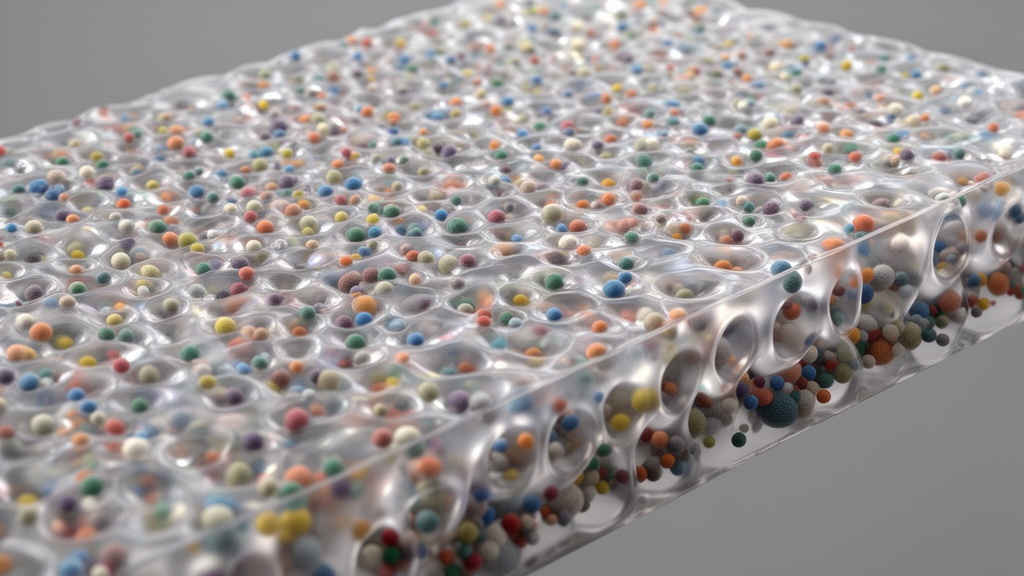
Researchers have reported the spontaneous formation of ring-shaped microcavities in poly(methyl methacrylate) composite films containing pigment. The structures formed through a simple, cost-effective spin-coating process that required no lithography, and their average diameters could be tuned from 15 to 50 micrometres. Optical measurements showed pronounced waveguiding consistent with whispering-gallery-mode propagation, providing enhanced light confinement along the cavity periphery.

The experimental study found that the cavity morphology was highly sensitive to processing conditions. Researchers varied the spin speed, solution concentration and polymer molecular weight to control the dimensions of cavities formed in films containing a single pigment. These three variables collectively demonstrated that the self-organized structures could be adjusted rather than merely reproduced.

The pigment mixture provided an additional means of controlling morphology. Using more than one pigment extended the cavity size to as much as 70 micrometres, beyond the 15–50-micrometre range obtained through variation of the spin-coating conditions. Introducing a second pigment disrupted the observed waveguiding, which the researchers attributed to a non-uniform and discontinuous pigment arrangement along the cavity periphery.

The results establish a direct association between the self-organized structure, the spatial distribution of pigment particles and the confinement of light. Single-pigment rings exhibited the reported waveguiding behavior, while the discontinuous pigment arrangement associated with the two-pigment mixture corresponded with its disruption. The authors describe the work as a promising route toward tunable microcavity structures for optical sensing, low-threshold microlasers, integrated photonics and flexible optoelectronic technologies, but those uses remain prospective rather than demonstrated outcomes.

Subject of Research: Morphology control and light confinement in spin-coated polymer–pigment microcavities

Article Title: Self-organized microcavities in polymer–pigment composite films: morphology control and light confinement

Article References: Lairenjam, P. D. (2026). Self-organized microcavities in polymer–pigment composite films: morphology control and light confinement. Journal of Materials Science, 61(42), 33350-33368. https://doi.org/10.1007/s10853-026-13687-8

Image Credits: AI Generated

DOI: 10.1007/s10853-026-13687-8

Keywords: polymer composites, microcavities, pigment particles, spin coating, self-organization, light confinement, whispering-gallery modes, photonic materials, Self-organized, polymer, pigment, composite

Cite Scienmag News

Neil Sanderson. (October 20, 2026). Self-organized microcavities in polymer–pigment composite films. Scienmag. https://scienmag.com/self-organized-microcavities-in-polymer-pigment-composite-films/

Neil Sanderson. "Self-organized microcavities in polymer–pigment composite films." Scienmag, 20 October 2026, https://scienmag.com/self-organized-microcavities-in-polymer-pigment-composite-films/. Accessed 20 October 2026.

Neil Sanderson. "Self-organized microcavities in polymer–pigment composite films." Scienmag. October 20, 2026. https://scienmag.com/self-organized-microcavities-in-polymer-pigment-composite-films/


Tags: compositecomposite film self-assembly mechanismscost-effective fabricationinfluence of multiple pigments on cavity formationlight confinementlight waveguiding in polymer microcavitiesmicrocavitiesoptical confinement in polymer-based microcavitiesphotonic materialspigmentpigment dispersion effects on optical propertiespigment particlespigment-controlled cavity morphologypolymerpolymer compositespolymer–pigment composite film processing parametersself-organizationSelf-organizedself-organized microcavities in polymer–pigment composite filmsspin coatingspin-coating fabrication of microstructurestunable microcavity size in polymer filmswhispering-gallery modeswhispering-gallery-mode light confinement
Share26Tweet16
Previous Post

Protein neddylation: substrate landscape and target modulators

Next Post

Notulae to the Italian alien vascular flora: 15

Related Posts

Meteosat Third Generation Lightning Imager detection performances
Athmospheric

Meteosat Third Generation Lightning Imager detection performances

October 20, 2026
Japanese YouTube Comments Reveal Informal Religious Language
Technology and Engineering

Japanese YouTube Comments Reveal Informal Religious Language

October 20, 2026
Lithium niobate sensor achieves uncooled microsecond optomechanical readout
Technology and Engineering

Lithium niobate sensor achieves uncooled microsecond optomechanical readout

October 20, 2026
Structured maintenance linked to 99.91% rolling-door availability in Lima
Science News

Structured maintenance linked to 99.91% rolling-door availability in Lima

October 20, 2026
Extra Trees leads 13-model cyberbullying benchmark on English tweets
Science News

Extra Trees leads 13-model cyberbullying benchmark on English tweets

October 20, 2026
Shrimp-shell liquefaction reaches 42.35% under optimized laboratory conditions
Science News

Shrimp-shell liquefaction reaches 42.35% under optimized laboratory conditions

October 20, 2026
Next Post
Notulae to the Italian alien vascular flora: 15

Notulae to the Italian alien vascular flora: 15

  • Mothers who receive childcare support from maternal grandparents show more optimized

    Mothers who receive childcare support from maternal grandparents show more parental warmth, finds NTU Singapore study

    27656 shares
    Share 11059 Tweet 6912
  • University of Seville Breaks 120-Year-Old Mystery, Revises a Key Einstein Concept

    1061 shares
    Share 424 Tweet 265
  • Bee body mass, pathogens and local climate influence heat tolerance

    682 shares
    Share 273 Tweet 171
  • Researchers record first-ever images and data of a shark experiencing a boat strike

    546 shares
    Share 218 Tweet 137
  • Groundbreaking Clinical Trial Reveals Lubiprostone Enhances Kidney Function

    531 shares
    Share 212 Tweet 133
Science

Embark on a thrilling journey of discovery with Scienmag.com—your ultimate source for cutting-edge breakthroughs. Immerse yourself in a world where curiosity knows no limits and tomorrow’s possibilities become today’s reality!

RECENT NEWS

  • Focus groups identify lung cancer care feedback priorities
  • Cerrado toad reveals ant-heavy diet, larger females and variable egg production
  • Morphological and DNA analyses identify two new Sutorius species in Guizhou
  • Student interviews reveal affective appeal of gamified flipped English classes

Categories

  • Agriculture
  • Anthropology
  • Archaeology
  • Athmospheric
  • Biology
  • Biotechnology
  • Blog
  • Bussines
  • Cancer
  • Chemistry
  • Climate
  • Earth Science
  • Editorial Policy
  • Marine
  • Mathematics
  • Medicine
  • Pediatry
  • Policy
  • Psychology & Psychiatry
  • Science Education
  • Science News
  • Social Science
  • Space
  • Technology and Engineering

Subscribe to Blog via Email

Enter your email address to subscribe to this blog and receive notifications of new posts by email.

Join 5,150 other subscribers

© 2025 Scienmag - Science Magazine

Welcome Back!

Login to your account below

Forgotten Password?

Retrieve your password

Please enter your username or email address to reset your password.

Log In
No Result
View All Result
  • HOME
  • SCIENCE NEWS
  • CONTACT US

© 2025 Scienmag - Science Magazine

Discover more from Science

Subscribe now to keep reading and get access to the full archive.

Continue reading