

Thursday, October 22, 2026
Science
No Result
View All Result
  • Login
  • HOME
  • SCIENCE NEWS
  • CONTACT US
  • HOME
  • SCIENCE NEWS
  • CONTACT US
No Result
View All Result
Scienmag
No Result
View All Result
Home Science News Medicine

Self-care training linked to fewer attacks, persistent costs in Bangladesh

October 22, 2026
in Medicine
Ophelia Keating
By Ophelia Keating Scienmag Editorial Profile - Health Services Research
Reading Time: 2 mins read
0
Self-care training linked to fewer attacks, persistent costs in Bangladesh

Self-care training linked to fewer attacks, persistent costs in Bangladesh

65
SHARES
587
VIEWS
Share on FacebookShare on Twitter
ADVERTISEMENT

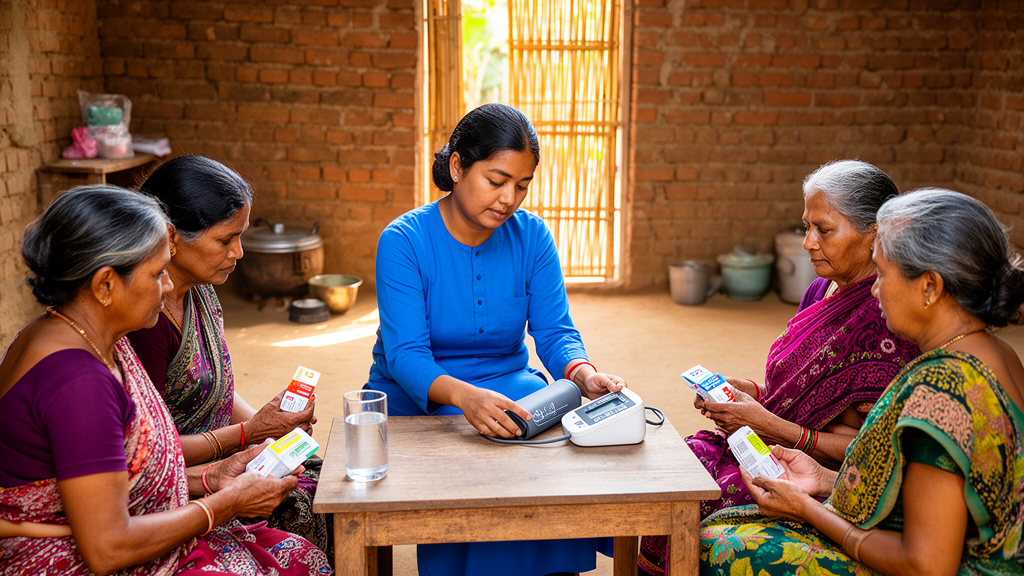
In a two-district longitudinal cohort study in Bangladesh, people living with lymphatic filariasis reported fewer acute attacks and less severe pain after training in an enhanced morbidity management and self-care protocol. Among 290 participants with mild, moderate or severe lymphoedema, the proportion reporting acute attacks fell to 25.2–35.2% after the intervention, while severe pain declined to 22.4–28.0%; both changes were reported with p-values below 0.001. The findings link the programme with improved self-reported outcomes, but the cohort design does not establish that the training alone produced the changes.

The research was conducted in Lalmonirhat and Thakurgaon districts during 2020–2021. Researchers assessed participants at baseline, trained them in enhanced self-care and then followed them after three months, with final assessments conducted at six months in Lalmonirhat and nine months in Thakurgaon. The measures included lymphoedema stage, acute attacks, pain, adherence and costs for self-care items such as soap, cream and pain relief. The baseline population covered the full severity range represented in the two districts, although the proportions with mild, moderate and severe disease varied: mild cases accounted for 11.2–54.7%, moderate cases 21.9–39.5% and severe cases 23.4–49.3%.

Before training, acute attacks and severe pain were widespread. Across the district and follow-up ranges, 62.8–79.6% of participants reported acute attacks and 40.6–54.6% reported severe pain. After the enhanced protocol, the corresponding ranges were 25.2–35.2% and 22.4–28.0%, respectively. These are reported longitudinal associations rather than proof of a causal effect. The study followed one cohort of people affected by filarial lymphoedema, used self-reported clinical outcomes and provided different final observation periods for the two districts, limiting how broadly the results can be generalized.

The study also found that self-care imposed a continuing out-of-pocket burden. Baseline monthly expenditure for participants’ self-care items ranged from 195.3 to 215.2 Bangladeshi taka, equivalent to US$2.29–2.53 in the source report. People with severe lymphoedema spent significantly more each month than those with mild disease in both districts: averages were 234.3 versus 159.2 BDT in Lalmonirhat and 234.2 versus 172.0 BDT in Thakurgaon, with both p-values below 0.05. Total monthly spending remained broadly stable over time, but its composition changed significantly, with spending shifting toward soap and cream and expenditure on pain relief decreasing, at p<0.001. Exploratory mixed-effects analyses found that higher expenditure was independently associated with follow-up time, district and greater baseline lymphoedema severity. Taken together, the results indicate that enhanced self-care training was associated with fewer reported acute attacks and less severe pain, while the financial burden of home care persisted, especially among participants with severe disease.

Subject of Research: Clinical outcomes and household costs of enhanced lymphoedema self-care in Bangladesh

Article Title: Evaluating the cost of self-care: Impact of enhanced morbidity management protocol on people living with lymphatic filariasis in Bangladesh

Article References: Williams, T., Karim, M. J., Siddiqui, S., Fazlur Rahman, A., Chowdhury, S., Jahan, S., AMS, S. M., Forbes, S. P., Betts, H., Taylor, M. J., & Kelly-Hope, L. A. (2026). Evaluating the cost of self-care: Impact of enhanced morbidity management protocol on people living with lymphatic filariasis in Bangladesh. PLOS Neglected Tropical Diseases, 20(10), e0014812. https://doi.org/10.1371/journal.pntd.0014812

Image Credits: AI Generated

DOI: 10.1371/journal.pntd.0014812

Keywords: lymphatic filariasis, lymphoedema, self-care training, Bangladesh, acute attacks, chronic pain, healthcare costs, out-of-pocket spending, longitudinal cohort, morbidity management, Evaluating, cost

Cite Scienmag News

Ophelia Keating. (October 22, 2026). Self-care training linked to fewer attacks, persistent costs in Bangladesh. Scienmag. https://scienmag.com/self-care-training-linked-to-fewer-attacks-persistent-costs-in-bangladesh/

Ophelia Keating. "Self-care training linked to fewer attacks, persistent costs in Bangladesh." Scienmag, 22 October 2026, https://scienmag.com/self-care-training-linked-to-fewer-attacks-persistent-costs-in-bangladesh/. Accessed 22 October 2026.

Ophelia Keating. "Self-care training linked to fewer attacks, persistent costs in Bangladesh." Scienmag. October 22, 2026. https://scienmag.com/self-care-training-linked-to-fewer-attacks-persistent-costs-in-bangladesh/


Tags: acute attacksBangladeshchronic paincommunity-based morbidity control for neglected tropicalcostcosts and adherence to self-care for lymphatic filariasisdistrict-level outcomes of lymphoedema managementEvaluatinghealthcare costsimpact of self-care training on acute attacks and painlongitudinal cohortlongitudinal study on lymphatic filariasis in Bangladeshlymphatic filariasisLymphatic filariasis self-care interventionlymphoedemamorbidity managementmorbidity management for lymphoedema in Bangladeshout-of-pocket spendingreducing disease burden through patient educationself-care protocols for lymphoedema patientsself-care trainingseverity-based outcomes in lymphatic filariasis treatment
Share26Tweet16
Previous Post

Regional Cultural Norms Linked to Less Corporate Misconduct

Next Post

Seven-year follow-up documents partial chromosome 19p duplication

Related Posts

Rising GFAP After Thrombolysis Flags Early Stroke Deterioration
Medicine

Rising GFAP After Thrombolysis Flags Early Stroke Deterioration

October 22, 2026
Repeated-measures study in 17 chronic-stroke adults finds carotid-femoral pulse-wave velocity most reliable
Medicine

Repeated-measures study in 17 chronic-stroke adults finds carotid-femoral pulse-wave velocity most reliable

October 22, 2026
Policy forum urges adaptive monitoring and review of doxy-PEP guidance
Medicine

Policy forum urges adaptive monitoring and review of doxy-PEP guidance

October 22, 2026
Nearly 1 million genomes reveal what an average human genome contains
Medicine

Nearly 1 million genomes reveal what an average human genome contains

October 22, 2026
Cyclosporine A Directly Binds CCL5 in SJS/TEN Study
Medicine

Cyclosporine A Directly Binds CCL5 in SJS/TEN Study

October 22, 2026
Stoma patients describe telehealth benefits for product and skin care
Medicine

Stoma patients describe telehealth benefits for product and skin care

October 22, 2026
Next Post
Seven-year follow-up documents partial chromosome 19p duplication

Seven-year follow-up documents partial chromosome 19p duplication

  • Mothers who receive childcare support from maternal grandparents show more optimized

    Mothers who receive childcare support from maternal grandparents show more parental warmth, finds NTU Singapore study

    27656 shares
    Share 11059 Tweet 6912
  • University of Seville Breaks 120-Year-Old Mystery, Revises a Key Einstein Concept

    1061 shares
    Share 424 Tweet 265
  • Bee body mass, pathogens and local climate influence heat tolerance

    682 shares
    Share 273 Tweet 171
  • Researchers record first-ever images and data of a shark experiencing a boat strike

    546 shares
    Share 218 Tweet 137
  • Groundbreaking Clinical Trial Reveals Lubiprostone Enhances Kidney Function

    531 shares
    Share 212 Tweet 133
Science

Embark on a thrilling journey of discovery with Scienmag.com—your ultimate source for cutting-edge breakthroughs. Immerse yourself in a world where curiosity knows no limits and tomorrow’s possibilities become today’s reality!

RECENT NEWS

  • Seven-year follow-up documents partial chromosome 19p duplication
  • Self-care training linked to fewer attacks, persistent costs in Bangladesh
  • Regional Cultural Norms Linked to Less Corporate Misconduct
  • Secondary analysis links prompt specificity to musical role in 24 users

Categories

  • Agriculture
  • Anthropology
  • Archaeology
  • Athmospheric
  • Biology
  • Biotechnology
  • Blog
  • Bussines
  • Cancer
  • Chemistry
  • Climate
  • Earth Science
  • Editorial Policy
  • Marine
  • Mathematics
  • Medicine
  • Pediatry
  • Policy
  • Psychology & Psychiatry
  • Science Education
  • Science News
  • Social Science
  • Space
  • Technology and Engineering

Subscribe to Blog via Email

Enter your email address to subscribe to this blog and receive notifications of new posts by email.

Join 5,151 other subscribers

© 2025 Scienmag - Science Magazine

Welcome Back!

Login to your account below

Forgotten Password?

Retrieve your password

Please enter your username or email address to reset your password.

Log In
No Result
View All Result
  • HOME
  • SCIENCE NEWS
  • CONTACT US

© 2025 Scienmag - Science Magazine

Discover more from Science

Subscribe now to keep reading and get access to the full archive.

Continue reading