

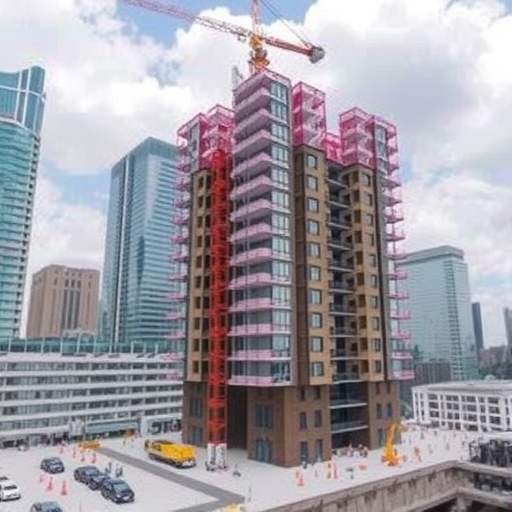
In recent decades, the skyline of urban landscapes has dramatically transformed due to an observable surge in high-rise buildings. As cities continue to expand vertically to accommodate a growing population, this architectural phenomenon necessitates a comprehensive understanding of the factors that can significantly affect the safety and stability of these structures, particularly in regions that are seismically active. The recent study by researchers Zhang and Far sheds light on a critical aspect of this structural integrity: the interplay between ground conditions and foundation types in influencing the seismic response of high-rise buildings under dynamic soil-structure interaction.
Seismic events pose a unique challenge to the stability of tall structures. When an earthquake strikes, it generates ground shaking that can severely impact buildings, especially those that are elevated. The response of these structures is not solely dependent on their design and material strength; rather, the underlying soil conditions and the type of foundation they are built upon can drastically alter their performance during such events. In this context, the study emphasizes the urgency to unravel the complexities of soil-structure interaction and its implications for high-rise buildings.
Ground conditions vary widely across different geographical locations, influenced by factors such as soil type, water content, and geological formation. These variations can significantly alter the foundational support provided to a structure. For instance, sandy soils may tend to liquefy during seismic activities, leading to catastrophic failure, whereas clay soils may exhibit different characteristics that could either compromise or enhance stability. Zhang and Far’s research meticulously addresses how these divergent ground compositions interact with various types of foundations, ultimately affecting the seismic resilience of high-rise edifices.
Moreover, the foundation type plays a pivotal role in determining how a building will respond to seismic forces. There are various foundation systems, including shallow foundations, deep foundations, and pile foundations, each with distinct advantages and disadvantages depending on the site conditions. The study expands on how these different foundations can either mitigate or amplify seismic responses. For example, deep foundations that penetrate stable soil layers can provide superior lateral support and resistance, thereby enhancing a building’s overall stability during an earthquake.
The dynamic nature of soil-structure interaction cannot be overlooked when examining a building’s seismic response. When a seismic wave travels through the ground, it creates forces that interact with the structure above. This interaction depends not only on the mechanical properties of the building but also on the dynamic characteristics of the underlying soil. The researchers utilize advanced simulation models to explore these interactions, providing valuable insights that may influence future building codes and engineering practices.
Furthermore, the implications of this research extend beyond theoretical analysis; they carry significant practical importance for urban planners, architects, and civil engineers. Understanding how ground conditions and foundation types contribute to seismic response can facilitate better design decisions, ensuring the safety of occupants and the longevity of high-rise buildings. As urban centers worldwide face increasing seismic risks due to climate change and urbanization, implementing the findings of Zhang and Far becomes crucial in safeguarding infrastructure.
Engineers are encouraged to adopt a holistic approach when designing high-rise buildings, integrating geological surveys and site-specific analyses into their planning phases. This approach not only enhances safety but can potentially lower construction costs and reduce time delays by avoiding unforeseen complications during the building process. Adopting the right soil profile and foundation system tailored to a site’s unique conditions can significantly reduce vulnerability to seismic events.
In addition, the research highlights the importance of ongoing monitoring and assessment of existing high-rise structures in seismically active zones. Many urban landscapes are populated with buildings that were constructed prior to advances in understanding seismic behavior and soil-structure interaction. Consequently, retrofitting and assessing these older structures for earthquake preparedness is equally vital in improving overall disaster resilience. Zhang and Far’s work could also pave the way for establishing guidelines in the retrofitting processes, providing a methodology to assess and enhance the seismic performance of such buildings.
As the global community grapples with the impacts of climate-induced natural disasters, the findings from this research serve as a crucial resource empowering engineers and officials to fortify urban infrastructures. Not only does it reinforce the concept of resilient design, but it also propels a cultural shift towards prioritizing safety in architectural planning. By emphasizing the lasting impact of soil and foundation types on seismic response, communities can be better equipped to manage and mitigate the risks posed by potential earthquakes.
The discourse surrounding urban safety and high-rise construction often lacks direct integration of geological insights, leading to a fragmented understanding of conditions influencing building stability. By demonstrating the intricate relationship between ground conditions, foundation systems, and seismic performance, this study fosters a more cohesive dialogue among various stakeholders, including policymakers and practitioners.
To further advance this field of research, future explorations could delve into real-world case studies where various ground conditions and foundational designs illustrate the seismic response outcomes. By compiling data across a diverse array of geographical regions, researchers can establish broader patterns that contribute to the global discourse on seismic safety for high-rise constructions. Such findings not only enhance design standards but may also influence regulatory frameworks governing urban development.
Overall, Zhang and Far’s study encapsulates the essence of interdisciplinary collaboration needed to navigate the complexities of modern urban design. As cities continue to evolve and innovate, understanding the fundamental principles of soil-structure interaction stands at the forefront of engineering excellence and disaster resilience.
In conclusion, the research by Zhang and Far signifies a vital step towards understanding the synthesis of ground conditions and foundation types in the seismic response of high-rise buildings. Their findings underscore the imperative for ongoing research, heightened awareness among engineers, and collective responsibility towards creating seismic-resilient urban infrastructures. This perspective is not only relevant for current developments but also invaluable for future urban landscapes facing the realities of climate change and natural disasters, ensuring that our cities remain safe and sustainable for generations to come.
Subject of Research: The impact of ground conditions and foundation types on the seismic response of high-rise buildings.
Article Title: Ground conditions and foundation types: Unraveling their impact on seismic response of high-rise buildings within dynamic soil-structure interaction.
Article References:
Zhang, X., Far, H. Ground conditions and foundation types: Unraveling their impact on seismic response of high-rise buildings within dynamic soil-structure interaction.
Earthq. Eng. Eng. Vib. 24, 927–941 (2025). https://doi.org/10.1007/s11803-025-2351-3
Image Credits: AI Generated
DOI:
Keywords: Seismic response, high-rise buildings, ground conditions, foundation types, soil-structure interaction, urban safety, civil engineering, earthquake resilience.


