


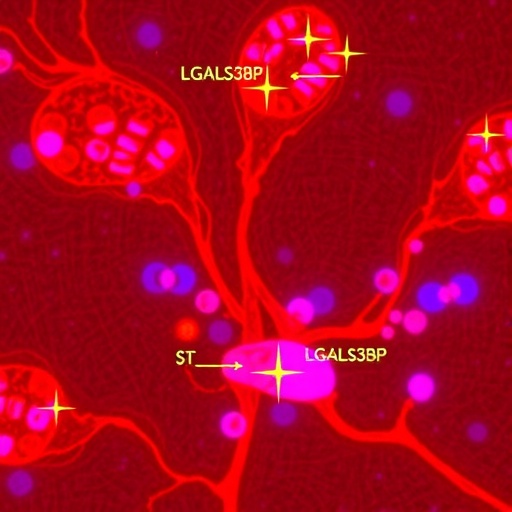
Recent advances in immunology have uncovered a startling new player in the complex pathology of sepsis-associated liver dysfunction: the secretory protein LGALS3BP. In a groundbreaking study published in Cell Death Discovery, Hwang, Shim, Park, and colleagues have elucidated the molecular mechanisms by which LGALS3BP exacerbates liver damage in the context of sepsis, revealing a critical pathway involving inflammasome-mediated pyroptosis. This discovery not only deepens our understanding of sepsis-induced organ failure but also opens promising avenues for therapeutic intervention in a condition that remains a leading cause of mortality worldwide.
Sepsis, a life-threatening systemic inflammatory response triggered by infection, frequently leads to multiple organ dysfunction syndrome (MODS), with the liver being especially vulnerable. Although much progress has been made in decoding sepsis pathogenesis, the precise molecular drivers of sepsis-associated liver injury have remained elusive. The new study identifies secreted LGALS3BP as a potent amplifier of liver inflammation, promoting cell death through activation of pyroptosis—a highly inflammatory form of programmed cell death mediated by the inflammasome complex.
LGALS3BP, also known as galectin-3-binding protein, is a multifunctional glycoprotein implicated in immune modulation. While its roles in cancer and viral infections were previously examined, this research represents the first comprehensive characterization of LGALS3BP’s contribution to sepsis pathology. The researchers utilized advanced in vitro and in vivo models to demonstrate that elevated levels of secretory LGALS3BP correlate with worsened hepatic outcomes under septic conditions. Mechanistically, LGALS3BP initiates a cascade that culminates in activation of the NLRP3 inflammasome, facilitating cleavage of gasdermin D and subsequent pyroptotic cell death in liver tissue.
The inflammasome is a crucial component of innate immunity that senses danger signals, leading to caspase-1 activation, maturation of pro-inflammatory cytokines such as interleukin-1β (IL-1β), and pyroptosis. By delineating the link between LGALS3BP and inflammasome activation, the study provides robust evidence that this secretory protein acts as a molecular danger-associated molecular pattern (DAMP), amplifying inflammatory signals within the hepatic microenvironment. This discovery suggests that LGALS3BP not only heralds worsened liver injury but may also serve as a biomarker for stratifying severity in septic patients.
The investigators employed genetically modified mouse models deficient in LGALS3BP combined with experimental polymicrobial sepsis induced through cecal ligation and puncture (CLP). The LGALS3BP knockout animals exhibited significantly reduced liver inflammation, diminished inflammasome activation, and improved survival rates compared to wild-type counterparts. Complementary cellular studies using primary hepatocytes and macrophages revealed that recombinant LGALS3BP protein treatment triggered inflammasome assembly, caspase-1 activation, and pyroptotic cell death, confirming the molecular mechanism responsible for these observations.
These detailed mechanistic insights underscore the role of secretory LGALS3BP as an upstream driver of pyroptosis in septic liver dysfunction. Pyroptosis, with its distinct morphological and biochemical features, entails cellular swelling, membrane rupture, and release of proinflammatory intracellular content, which exacerbates tissue damage and systemic inflammation. The demonstration that LGALS3BP modulates these pathways places this glycoprotein at a nodal point integrating infection-induced signals with innate immune responses.
Furthermore, the study’s proteomic and transcriptomic analyses revealed that LGALS3BP influences multiple signaling axes, including NF-κB activation and cytokine production, further intensifying the inflammatory milieu. The comprehensive multi-omics approach provided a holistic view of the molecular perturbations induced by LGALS3BP, linking it to both immune cell recruitment and hepatocyte dysfunction. These findings hold considerable translational potential for developing targeted therapies.
The clinical relevance of these findings was substantiated through analysis of serum samples from septic patients, where elevated LGALS3BP levels strongly correlated with liver enzyme abnormalities and disease severity scores. This correlation supports the notion that circulating LGALS3BP could serve not only as a mechanistic marker but also as a prognostic indicator to identify patients at risk of severe sepsis-associated liver failure. Diagnostic applications based on this biomarker may improve patient stratification and guide precision medicine approaches.
In terms of therapeutic implications, the identification of secretory LGALS3BP as a driver of inflammasome-mediated pyroptosis highlights the potential benefits of targeting this glycoprotein to ameliorate liver injury in sepsis. Pharmacological inhibitors or neutralizing antibodies against LGALS3BP or its downstream signaling partners could attenuate inflammasome assembly and pyroptosis, reducing tissue damage and improving survival. Importantly, such interventions would complement existing therapies that primarily address infection control and supportive care, addressing the underlying inflammatory pathology directly.
Moreover, the research expands the understanding of inflammatory cell death pathways in hepatic disease beyond traditional apoptosis or necrosis paradigms. The emphasis on pyroptosis mediated by gasdermin D cleavage heralds new therapeutic strategies that could also apply to other liver disorders characterized by excessive inflammation, including viral hepatitis, alcoholic liver disease, and non-alcoholic steatohepatitis (NASH).
The study also opens intriguing questions regarding the source and regulation of LGALS3BP secretion during systemic infection. Whether LGALS3BP is released predominantly by liver-resident cells, infiltrating immune cells, or distant organs remains an area for future investigation. Disentangling these regulatory networks will be crucial for designing interventions that effectively modulate LGALS3BP without compromising host defenses.
In sum, the work led by Hwang and collaborators provides a detailed molecular blueprint for how secretory LGALS3BP aggravates sepsis-associated liver injury through inflammasome-mediated pyroptosis. Their multidisciplinary approach integrating molecular biology, animal modeling, and clinical data not only advances fundamental science but also proposes actionable targets for mitigating sepsis-induced organ dysfunction. Given the global burden of sepsis and limited treatment options for liver complications, this research is poised to have a profound impact on future therapeutic development and patient outcomes.
As biomedical research continues to unravel the intricacies of immune regulation in sepsis, studies such as this serve as exemplars of translational discovery. They illuminate cryptic biological mechanisms and convert these insights into tangible clinical opportunities. The findings regarding LGALS3BP enrich the immunological landscape of sepsis and present a compelling target whose modulation could transform the management of this devastating syndrome.
In conclusion, secretory LGALS3BP emerges as a pivotal modulator of inflammasome activation and pyroptosis within the liver during sepsis. By driving inflammatory cell death and tissue damage, it transforms the hepatic response to infection from containment to catastrophe. Targeting this pathway offers a promising strategy to preserve liver function, reduce mortality, and improve recovery in septic patients. These revelations underscore the power of integrative molecular research to translate complex cellular phenomena into meaningful clinical breakthroughs for one of modern medicine’s greatest challenges.
Cite Scienmag News
Ophelia Keating. (June 23, 2026). Secretory LGALS3BP Drives Sepsis Liver Damage via Pyroptosis. Scienmag. https://scienmag.com/secretory-lgals3bp-drives-sepsis-liver-damage-via-pyroptosis/
Ophelia Keating. "Secretory LGALS3BP Drives Sepsis Liver Damage via Pyroptosis." Scienmag, 23 June 2026, https://scienmag.com/secretory-lgals3bp-drives-sepsis-liver-damage-via-pyroptosis/. Accessed 3 September 2026.
Ophelia Keating. "Secretory LGALS3BP Drives Sepsis Liver Damage via Pyroptosis." Scienmag. June 23, 2026. https://scienmag.com/secretory-lgals3bp-drives-sepsis-liver-damage-via-pyroptosis/


