


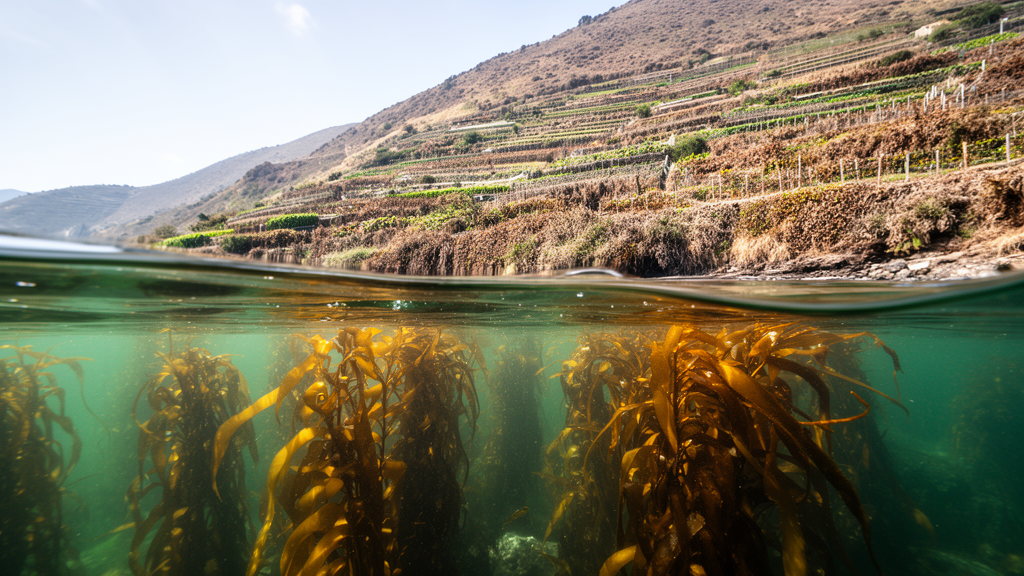
A sweeping new review published in Frontiers in Systems Biology argues that Earth’s biosphere is approaching a state of functional saturation, a condition in which ecosystems can no longer sustain additional productive or regulatory functions due to cumulative anthropogenic pressures, even where physical space technically remains available. The research, led by I. Valentin Petrescu-Mag and colleagues at the University of Agricultural Sciences and Veterinary Medicine Cluj-Napoca, examines whether the progressive contraction of terrestrial plant communities under intensifying human pressure can be functionally offset by the expansion of marine macroalgal systems in a high-CO2 world. The answer, according to the synthesis, is a resounding no, and the implications for planetary resilience are profound.
The review integrates perspectives from Earth system ecology, biogeochemistry, and spatial analysis to evaluate three interdependent dimensions: the saturation of habitable terrestrial space, the relative openness yet ecological constraint of marine environments, and the dynamic coupling between atmospheric CO2 and ocean chemistry. What emerges is a fundamental asymmetry between land and ocean systems. Terrestrial ecosystems are undergoing direct structural transformation through land-use change, resulting in a measurable contraction of ecologically functional space and increasing transgression of planetary boundaries. Marine systems, by contrast, retain substantial geometric space but are subject to diffuse, cumulative stressors, particularly in productive coastal zones where macroalgal communities are most viable.
The quantitative evidence for terrestrial saturation is stark. Global human modification and Human Footprint datasets show that approximately 75 percent of the planet’s land surface experiences measurable human pressure, with only roughly 43 percent of terrestrial lands in 2022 remaining at very low modification and 10 percent already highly modified. Between 1990 and 2020, 24 percent of terrestrial ecosystems, spanning 31 million square kilometres, increased in modification. From 2000 to 2018, more than 2 million square kilometres of wilderness were lost, with mangrove-dominated biomes suffering over 5 percent wilderness loss, illustrating strong coastal pressure zones. These pressures translate into substantial local biodiversity impacts, with land-use conversion and degradation having already reduced local terrestrial species richness by 13.6 percent on average and total abundance by 10.7 percent.
The worst-affected habitats show even more dramatic declines, with 76.5 percent reductions in local richness and 39.5 percent reductions in abundance. When community completeness is considered, highly impacted regions retain on average less than 20 percent of their regionally suitable plant species locally, compared with about 35 percent in areas with minimal human footprint. Human consumption patterns further externalize terrestrial biodiversity loss, with food consumption alone accounting for about 40 percent of global biodiversity loss and more than half of the biodiversity loss driven by consumption in developed economies occurring outside their borders. The terrestrial signal is one of pervasive, spatially extensive, and often chronic proximity between plants and intense anthropogenic modification.
Marine macroalgae, commonly referred to as seaweeds, occupy an environment that differs markedly in its exposure to these constraints. The marine realm, while not exempt from human impact, offers vast spatial continuity, distinct carbon dynamics, and in certain contexts reduced direct exploitation compared to terrestrial systems. However, macroalgal communities are strongly impacted by climate-driven extremes and local coastal stressors. Anthropogenic stressors affecting them include ocean warming and marine heatwaves, overfishing of herbivore predators, eutrophication, pollution, and marine litter. Climate change-related warming and heatwaves stand out as pervasive threats for marine foundation species including kelps, often acting synergistically with other stressors such as overfishing and coastal development.
The consequences of these episodic but intense marine impacts are vividly illustrated by specific case studies. Bull kelp forests in northern California lost more than 90 percent of canopy along more than 350 kilometres of coastline following a marine heatwave and sea star mass mortality, leading to persistent urchin barrens and approximately 80 percent abalone mortality. Another study documented a 95 percent reduction in giant kelp canopy and a 2,485 percent increase in herbivore densities in a subregion of Baja California after extreme heatwaves, with shifts to urchin barrens as alternative stable states. In Tasmania, early warning incipient barrens expanded along 500 kilometres of coast, with projections that about 50 percent of kelp beds in the range extension region may collapse by 2030. These changes are often abrupt, spatially contagious, and strongly linked to warming interacting with predator overfishing and herbivore release.
Not all macroalgal responses are negative, however. Warming and eutrophication can also drive blooms and spatial expansion of some macroalgae. Biomass of the brown alga Sargassum horneri in the East China and Yellow Seas increased from 2000 to 2021, primarily linked to ocean warming, while green alga Ulva prolifera increases appear to reflect combined warming and coastal human activities such as aquaculture. Tropical macroalgal reefs can be natural and productive components of tropical seascapes, and high macroalgal cover is not always an anthropogenic symptom and may support fisheries and productivity where herbivore communities and connectivity remain intact. Yet these localized increases in productivity do not translate into the kind of long-term carbon sequestration and ecosystem stability that terrestrial vegetation provides.
The biogeochemical role of macroalgae differs fundamentally from that of terrestrial plants. While macroalgal communities can exhibit high rates of primary production, a substantial proportion of this biomass is rapidly remineralized within the marine environment. Only a fraction is exported to deep ocean sinks where long-term sequestration can occur. Consequently, the capacity of macroalgae to offset atmospheric CO2 increases is constrained by ocean circulation, decomposition processes, and ecological feedbacks, limiting their effectiveness as a global carbon sink despite high local productivity. This distinction is critical, as compensation for terrestrial loss would require not only equivalent production but also comparable contributions to long-term carbon storage and ecosystem stability. Terrestrial plants contribute significantly to long-term carbon storage through biomass accumulation and soil formation, whereas a substantial fraction of macroalgal production is rapidly remineralized, with only limited transfer to long-term oceanic carbon sinks.
The temporal dimension of these processes reveals a critical mismatch between terrestrial degradation and marine response. Land-use change operates on relatively rapid timescales, leading to immediate and often irreversible loss of plant communities. In contrast, marine responses to elevated CO2 and associated environmental changes unfold more gradually due to the lag in oceanic carbon uptake. This creates a period of systemic disequilibrium in which terrestrial primary production is declining or becoming spatially constrained, while marine productivity may be temporarily enhanced but remains unstable and subject to increasing stress. Such a mismatch precludes a synchronous or balanced compensation between the two domains. The susceptibility of macroalgal systems to abrupt regime shifts introduces an additional layer of uncertainty, as climate-driven disturbances and trophic imbalances can rapidly transform productive ecosystems into low-functioning states.
Taken together, these findings indicate that the Earth system is not undergoing a balanced redistribution of primary producers from land to sea, but rather a transition toward a new configuration characterized by reduced terrestrial complexity and increasingly stressed marine systems. The rise in atmospheric CO2 may transiently enhance certain aspects of marine productivity, but this effect is tightly coupled to processes that ultimately constrain and destabilize marine ecosystems. The decline of terrestrial phytosociological systems represents not a shift in location of primary production, but a net reduction in the resilience and integrity of the biosphere as a whole. The authors conclude that the notion of marine macroalgae as a compensatory mechanism for terrestrial vegetation loss is not supported under current understanding of Earth system constraints, and they underscore the urgency of conserving remaining terrestrial ecosystems while simultaneously mitigating cumulative impacts on marine environments, recognizing that neither domain can substitute for the ecological functions of the other.
Subject of Research: Functional saturation of terrestrial and marine ecosystems under anthropogenic pressure
Article Title: Functional saturation of Earth’s habitable domains: constraints on land systems and potential in marine environments
Article References: Petrescu-Mag, I. V., Oroian, I. G., Păsărin, B., Safirescu, O. C., Burduhos, P., Braşovean, I., Bordea, D., Moldovan, B., Pojar, T. N., Bănățean-Dunea, I., Oroian, F. C., & Pandey, P. (2026). Functional saturation of Earth’s habitable domains: constraints on land systems and potential in marine environments. Frontiers in Systems Biology, 6, Article 1941138. https://doi.org/10.3389/fsysb.2026.1941138
Image Credits: AI Generated
DOI: 10.3389/fsysb.2026.1941138
Keywords: functional saturation, terrestrial ecosystems, marine macroalgae, planetary boundaries, ocean acidification, biodiversity loss, carbon sequestration, regime shifts, land-use change, biosphere resilience, primary productivity, Earth system ecology
Cite Scienmag News
Gavin Prescott. (October 17, 2026). Seaweed Cannot Save Us: Land Ecosystems Are Functionally Saturating. Scienmag. https://scienmag.com/seaweed-cannot-save-us-land-ecosystems-are-functionally-saturating/
Gavin Prescott. "Seaweed Cannot Save Us: Land Ecosystems Are Functionally Saturating." Scienmag, 17 October 2026, https://scienmag.com/seaweed-cannot-save-us-land-ecosystems-are-functionally-saturating/. Accessed 17 October 2026.
Gavin Prescott. "Seaweed Cannot Save Us: Land Ecosystems Are Functionally Saturating." Scienmag. October 17, 2026. https://scienmag.com/seaweed-cannot-save-us-land-ecosystems-are-functionally-saturating/


