


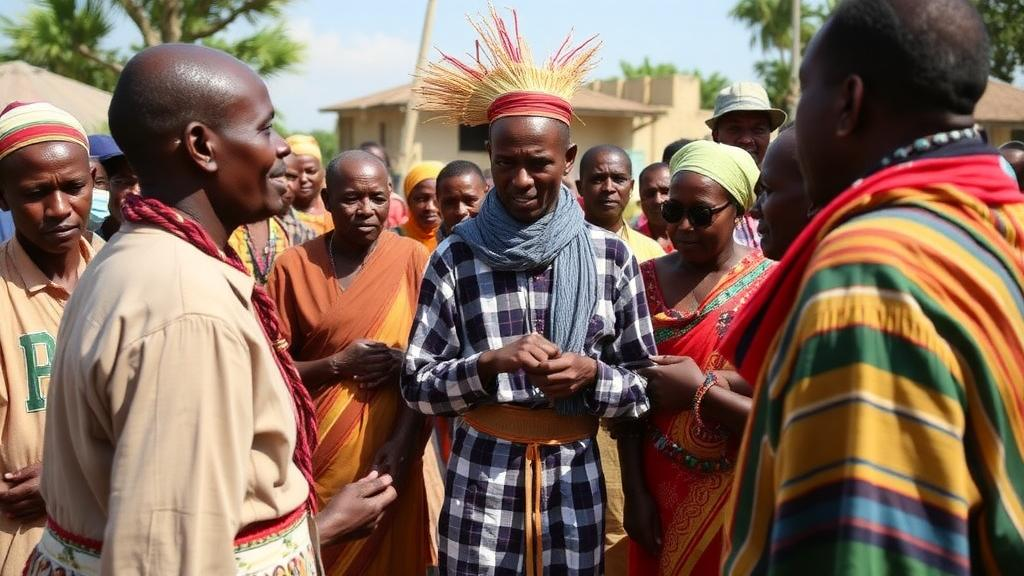
An ethnographic study conducted in Debre Markos, in the Gojjam region of Ethiopia, reports that the Engicha Nekela festival—a regional variant of the Amhara Ashenda celebration—serves as a mechanism for social cohesion and cultural continuity in an agrarian, multi-ethnic community where disputes over resources are common. The open-access study, published in Humanities and Social Sciences Communications, examined how the seasonal ritual fosters identity, solidarity, and integration through enhanced communication, tension resolution, and the transmission of values between generations.
The research relied on qualitative methods carried out between August 2015 and September 2016. The authors combined participant observation with in-depth interviews and focus group discussions involving roughly 25 to 30 participants. Because the study is ethnographic and centered on a single community, its findings describe how the ritual operates in this particular setting rather than measuring effects that can be generalized to other regions or populations.
The analysis links several concrete ritual elements to social integration. Communal participation itself brings residents together in a shared annual event. Symbolic cleansing involves uprooting and burning what the ritual frames as “evil weeds,” which the researchers interpret as metaphors for disputes and undesirable behaviors. Hair adornment and shaving mark transitions in participants’ social standing, while intergenerational bonding allows older participants to pass norms and expectations to younger community members.
According to the study, these elements work together to reinforce a shared identity and to balance individual and collective interests in a setting prone to conflict. The authors position the festival as an active contributor to social resilience in rural, dispute-prone contexts rather than a mere performance of tradition, and they frame the work as a contribution to ritual studies and to the documentation of Ethiopia’s intangible cultural heritage.
The published article is an early shared version that carries a peer-reviewed, accepted manuscript status and will be replaced by a final edited version. Within that scope, the research offers a detailed account of how one Ethiopian community’s seasonal ceremony organizes communication, conflict resolution, and the passing down of cultural knowledge across generations.
Subject of Research: The role of the Engicha Nekela ritual in social integration in Gojjam, Ethiopia
Article Title: The role of Engicha Nekela ritual in facilitating social and cultural integration in Gojjam, Ethiopia
Article References: Mekonnen, W., & Dibekulu, D. (2026). The role of Engicha Nekela ritual in facilitating social and cultural integration in Gojjam, Ethiopia. Humanities and Social Sciences Communications. https://doi.org/10.1057/s41599-026-09213-5
Image Credits: AI Generated
DOI: 10.1057/s41599-026-09213-5
Keywords: Engicha Nekela, Ashenda, Ethiopia, Gojjam, social cohesion, intangible cultural heritage, ethnography, ritual studies, intergenerational transmission, conflict resolution, role, Engicha
Cite Scienmag News
Courtney Benton. (October 24, 2026). Seasonal ritual in Ethiopia weaves social bonds in dispute-prone community. Scienmag. https://scienmag.com/seasonal-ritual-in-ethiopia-weaves-social-bonds-in-dispute-prone-community/
Courtney Benton. "Seasonal ritual in Ethiopia weaves social bonds in dispute-prone community." Scienmag, 24 October 2026, https://scienmag.com/seasonal-ritual-in-ethiopia-weaves-social-bonds-in-dispute-prone-community/. Accessed 24 October 2026.
Courtney Benton. "Seasonal ritual in Ethiopia weaves social bonds in dispute-prone community." Scienmag. October 24, 2026. https://scienmag.com/seasonal-ritual-in-ethiopia-weaves-social-bonds-in-dispute-prone-community/


