


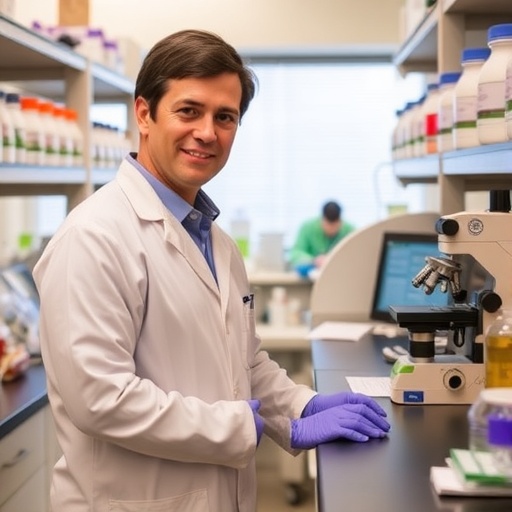
Scripps Research assistant professor Tiantian Liu has received a five-year New Innovators Award from the National Institute of Allergy and Infectious Diseases (NIAID) to investigate one of the central problems in antiviral immunology: how the immune system generates powerful T-cell responses capable of eliminating cells infected with viruses and other intracellular pathogens. The award provides $552,000 in first-year funding, with total support expected to reach $2.76 million over five years. Liu’s project is supported through the NIAID DP2 program under grant number 1DP2AI201038-01, a funding mechanism designed to give promising early-career investigators the freedom to pursue unconventional, high-impact research.
The work focuses on the biological events that occur when antigen-presenting cells communicate with T lymphocytes. This interaction is essential for adaptive immunity, particularly against viruses that replicate inside host cells, where antibodies may have limited access. Antibodies can block viral particles before they enter cells or help mark extracellular pathogens for destruction, but they generally cannot directly remove virus from an infected cell. That task depends heavily on cytotoxic T lymphocytes, often called killer T cells, which recognize fragments of viral proteins displayed on the surface of infected cells and destroy those cells before the infection can spread further.
Although many vaccines induce effective antibody responses, generating equally robust and durable T-cell immunity remains more difficult. The challenge is especially important for viruses that establish intracellular reservoirs, replicate rapidly, or alter the surface of infected cells in ways that complicate immune recognition. Protective T-cell responses require more than the simple presentation of a viral fragment. T cells must receive a coordinated set of molecular signals that determines whether they become activated, how extensively they multiply, which tissues they enter and how long they persist. The quality and timing of those signals can influence whether the resulting response is protective, weak, short-lived or excessively inflammatory.
Liu’s laboratory will examine how antigen-presenting cells control this process. These cells, which include dendritic cells, macrophages and other specialized immune populations, capture material from pathogens or infected tissues and process it into peptide fragments. The fragments are loaded onto major histocompatibility complex molecules and displayed to T cells. Presentation through MHC class I molecules is particularly important for activating CD8-positive T cells, the population that can develop into virus-killing cytotoxic lymphocytes. Antigen-presenting cells also provide co-stimulatory signals and release cytokines that help determine the functional characteristics of the T-cell response.
A key question is how antigen-presenting cells translate information about a pathogen into distinct instructions for T cells. The same viral antigen may produce very different immune outcomes depending on the type of presenting cell, the inflammatory environment, the location of the encounter and the duration of antigen exposure. Dendritic cells, for example, can acquire viral material without being infected themselves and present it to CD8-positive T cells through a pathway known as cross-presentation. This mechanism allows the immune system to initiate cellular immunity against pathogens that may not directly infect the dendritic cell. Understanding how cross-presentation is regulated could reveal ways to improve vaccines against viruses that are difficult to control with antibodies alone.
The activation of a naïve T cell is a highly structured process involving the formation of an immune synapse between the T cell and the antigen-presenting cell. The T-cell receptor scans peptide–MHC complexes, while additional receptor–ligand interactions provide co-stimulation and stabilize the cellular contact. Intracellular signaling networks then reorganize the T cell’s metabolism, gene expression and cytoskeleton. These changes determine whether the cell enters rapid proliferation, differentiates into an effector cell that can kill infected targets, or forms a memory population capable of responding during a later exposure. Liu’s project seeks to clarify how the presenting cell helps coordinate these signals rather than treating antigen recognition as an isolated event.
The research could also address why some vaccine formulations induce strong antibody production but relatively modest cellular immunity. Vaccine components are sensed by innate immune receptors, and those early signals shape the behavior of antigen-presenting cells before T-cell activation begins. If the presenting cells do not mature appropriately, migrate efficiently to lymphoid tissues or express the right combination of co-stimulatory molecules and cytokines, T-cell priming may be incomplete. Conversely, overly intense stimulation can produce inflammation without generating a durable, well-organized memory response. Defining the molecular features associated with effective T-cell priming could help researchers design immunization strategies that more precisely direct the immune system.
The potential implications extend beyond preventive vaccines. A better understanding of antigen-presenting cell biology could support the development of therapeutic vaccines for chronic viral infections and improve approaches that use T cells to target infected or abnormal cells. Researchers may ultimately be able to manipulate antigen presentation, co-stimulation or cytokine signaling to strengthen antiviral immunity while limiting harmful immunopathology. Such strategies could be valuable when the immune response itself contributes to tissue damage, a recurring concern in severe viral disease. However, Liu’s award is focused on fundamental biology, and any clinical applications will depend on findings that emerge from the laboratory studies.
The NIAID New Innovators Award was established to support creative research by early-stage investigators whose ideas challenge established approaches or address broad biomedical problems. For Liu, the central goal is to identify the rules governing communication between antigen-presenting cells and T cells, then use that knowledge to influence the immune response in a controlled way. “We want to better understand how the immune cells involved in the T cell activation work, then use those discoveries to manipulate it in ways that help treat infectious diseases,” she said. By defining how cellular interactions shape antiviral T-cell immunity, the project may provide a framework for developing vaccines and immunotherapies that do more than prevent viral entry: they could help the immune system locate, recognize and eliminate infected cells.
The project will be conducted at Scripps Research, where Liu is an assistant professor. Its stated purpose is to advance basic understanding rather than report an immediate therapeutic result, and the research is not yet evidence that a particular vaccine or treatment will follow. Still, the questions it addresses are central to the future of viral disease control. As emerging and persistent viruses continue to expose the limitations of antibody-only protection, deciphering how antigen-presenting cells initiate and shape killer T-cell responses could become a critical step toward more complete and adaptable antiviral immunity.
Web References: Scripps Research faculty profile: https://www.scripps.edu/faculty/tliu/ ; NIH RePORTER project details: https://reporter.nih.gov/search/Tf6_eiF25UellUnlp55ryw/project-details/11436857
References: NIAID DP2 New Innovators Award, grant number 1DP2AI201038-01; Scripps Research press information provided in the source content.
Cite Scienmag News
Kristina Jarvis. (August 20, 2026). Scripps Research Scientist Receives $2.76 Million NIAID New Innovators Award. Scienmag. https://scienmag.com/scripps-research-scientist-receives-2-76-million-niaid-new-innovators-award/
Kristina Jarvis. "Scripps Research Scientist Receives $2.76 Million NIAID New Innovators Award." Scienmag, 20 August 2026, https://scienmag.com/scripps-research-scientist-receives-2-76-million-niaid-new-innovators-award/. Accessed 3 September 2026.
Kristina Jarvis. "Scripps Research Scientist Receives $2.76 Million NIAID New Innovators Award." Scienmag. August 20, 2026. https://scienmag.com/scripps-research-scientist-receives-2-76-million-niaid-new-innovators-award/


