


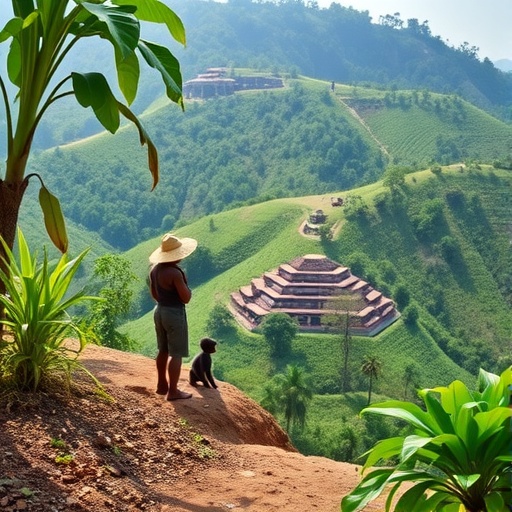
A new international study has challenged one of the most persistent assumptions in environmental economics: that countries rich in wildlife and biological diversity should naturally be among the world’s most prosperous. Instead, the research suggests that the modern concentration of poverty in many biodiversity-rich nations is closely tied to the colonial extraction of their natural resources, labour and land. Regions containing the greatest variety of species were often precisely those targeted most aggressively by colonial powers, and the economic systems imposed during that era continue to influence trade, governance and conservation today.
The study, conducted by researchers from Trinity College Dublin, the University of Bern, the Swiss Federal Institute of Aquatic Science and Technology and the Wyss Academy for Nature, examined data from 168 countries. The analysis brought together World Bank poverty statistics, biodiversity records, governance indicators, colonial histories and information on protected areas. By comparing these datasets across countries, the team investigated how biological diversity, colonial exploitation and present-day economic conditions became connected over time. Their findings were published in the peer-reviewed journal People and Nature.
The researchers began with a longstanding ecological and economic expectation: ecosystems containing many species should provide a broad portfolio of benefits to human societies. Biodiversity can support food production, supply fibres, medicines and construction materials, maintain soil fertility, regulate water cycles and increase resilience to environmental shocks. In principle, these ecosystem services should create opportunities for economic development. Yet the countries with the highest levels of biodiversity are frequently among those with the lowest average incomes. The new research argues that this apparent paradox cannot be understood by looking at ecology alone. It must also be examined through the history of power, trade and resource control.
According to Conor Waldock, Assistant Professor in Trinity College Dublin’s School of Natural Sciences and a lead author of the study, tropical and subtropical regions were often relatively prosperous before European colonial expansion. Their climates and ecosystems supported complex agricultural systems, extensive trade networks and valuable natural products. Colonial powers subsequently transformed many of these regions into sources of raw materials for overseas industries. Plants and animals were removed or commercially exploited, agricultural systems were redirected toward export production, and millions of people were enslaved or subjected to coercive labour. The biological richness of these territories made them especially attractive targets for extraction.
This process produced what the researchers describe as long-lasting poverty legacies. Colonial administrations commonly reorganised local economies around commodities such as rubber, timber, spices, dyes, fibres, pelts and plantation crops. Instead of encouraging diversified domestic production, infrastructure and institutions were built to move resources from inland regions to ports and then into European markets. The most profitable stages of production, including processing, manufacturing and finance, were concentrated in colonial or later industrialised economies. After independence, many countries remained dependent on exporting unprocessed materials while importing finished products at substantially higher prices. This unequal exchange limited the ability of resource-rich nations to capture the full economic value of their own biodiversity.
The economic mechanism behind this pattern is not simply the presence of natural resources, but the way control over those resources was organised. When a country exports a raw material and imports a finished product made from it, much of the value is created outside the resource’s place of origin. A forest may provide timber, rubber or medicinal compounds, but the greatest profits can arise from processing, branding, manufacturing and distribution. Colonial institutions were designed to channel those profits outward. In many cases, the political structures that remained after independence were not rebuilt around broad-based prosperity. Instead, they continued to favour concentrated control over land, minerals, forests and export revenues.
The study also links these historical arrangements to governance. Institutions established to facilitate extraction often weakened local authority and displaced Indigenous systems of land management. In some countries, postcolonial governments inherited limited administrative capacity, narrow tax bases and economies vulnerable to fluctuations in global commodity prices. Later economic reforms, including structural adjustment programmes, frequently required governments to reduce public spending, liberalise markets and prioritise debt repayment. The researchers argue that these policies could deepen dependence on exports and constrain investment in education, healthcare, infrastructure and locally controlled environmental management. The result is a feedback loop in which biodiversity remains abundant, but the communities living among it receive limited economic benefit.
Conservation has sometimes reproduced similar power imbalances. The researchers found that poorer, biodiversity-rich nations carry a disproportionate share of global conservation responsibilities, even though wealthy countries have historically consumed large quantities of the resources extracted from those regions. In Tanzania’s Eastern Arc Forests, conservation initiatives have at times restricted farming and access to natural resources while international organisations and tourism interests gained financial advantages from protected landscapes. In Ethiopia’s Simien Mountains, pastoral communities were blamed for environmental degradation and displaced under conservation approaches influenced by colonial ideas that treated local people as threats to nature. Such examples illustrate how protection can become exclusion when decisions are made without the participation, rights and consent of people who depend on the land.
The same tension is increasingly visible in global biodiversity policy. Under the Kunming-Montreal Global Biodiversity Framework, governments have committed to protecting 30 percent of the planet’s land and oceans by 2030. Yet many of the world’s poorest countries already protect more than 30 percent of their land, often while receiving limited financial compensation and while restricting the activities of communities that have managed those ecosystems for generations. Wealthier nations, by contrast, frequently have much smaller proportions of their landscapes under comparable conservation restrictions. The researchers warn that treating conservation and poverty reduction as automatically compatible risks repeating the structures of colonial extraction, this time under the language of global environmental responsibility.
The findings do not suggest that biodiversity causes poverty, nor that protected areas are inherently harmful. Rather, they show that biological richness can increase a region’s exposure to external exploitation when political and economic institutions allow outsiders to control land and resources. Prof. Anna Samwel of the University of Bern said colonialism impoverished many biodiversity-rich nations by promoting resource extraction and unfair trade while replacing Indigenous stewardship with aggressive commercial exploitation aimed at Western profits. For conservation to become more equitable, the study argues, decision-making power must shift toward local and Indigenous communities, funding must be distributed more fairly, and countries that bear global environmental responsibilities must receive meaningful support rather than additional restrictions.
The researchers say future conservation policies should account for historical responsibility, unequal trade and the economic costs imposed on communities living in protected areas. That could include stronger recognition of land rights, direct financing for locally governed conservation, fairer access to markets and greater investment in processing and manufacturing within biodiversity-rich countries. It also means evaluating whether a conservation project improves local wellbeing rather than measuring success only by the number of hectares placed under protection. As habitat destruction, over-exploitation and climate change intensify pressure on life on Earth, the study’s central message is increasingly urgent: protecting biodiversity will require more than setting aside land. It will require dismantling the economic arrangements that have allowed the world’s natural wealth to coexist with persistent human poverty.
Web References: https://doi.org/10.1002/pan3.70349
References: People and Nature, DOI: 10.1002/pan3.70349
Cite Scienmag News
Margaret Porter. (August 20, 2026). Colonial biodiversity exploitation helps explain poverty in biodiversity-rich countries, new study finds. Scienmag. https://scienmag.com/colonial-biodiversity-exploitation-helps-explain-poverty-in-biodiversity-rich-countries-new-study-finds/
Margaret Porter. "Colonial biodiversity exploitation helps explain poverty in biodiversity-rich countries, new study finds." Scienmag, 20 August 2026, https://scienmag.com/colonial-biodiversity-exploitation-helps-explain-poverty-in-biodiversity-rich-countries-new-study-finds/. Accessed 3 September 2026.
Margaret Porter. "Colonial biodiversity exploitation helps explain poverty in biodiversity-rich countries, new study finds." Scienmag. August 20, 2026. https://scienmag.com/colonial-biodiversity-exploitation-helps-explain-poverty-in-biodiversity-rich-countries-new-study-finds/


