


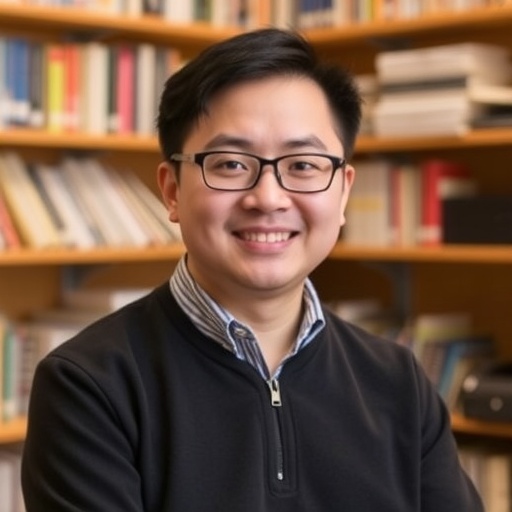
In a landmark recognition of scientific excellence, Professor Jin-Quan Yu of Scripps Research has been elected as a Fellow of the Royal Society, a prestigious institution globally renowned for its commitment to the advancement of science since its founding in 1660. This esteemed honor resonates deeply with Yu, given his pioneering work in asymmetric carbon–hydrogen (C–H) activation—a field that garnered early support from the Royal Society during his tenure at the University of Cambridge in 2002. His election underscores the growing appreciation for his transformative contributions to synthetic organic chemistry.
Currently holding the Bristol Myers Squibb Endowed Chair in Chemistry at Scripps Research, along with the Frank and Bertha Hupp Professorship, Yu is a vanguard in developing novel methodologies for molecular construction with unrivaled precision. His research primarily focuses on the direct activation and modification of C–H bonds, a paradigm shift from traditional synthetic routes that require multiple steps and functional group manipulations. By targeting the ubiquitous yet inert C–H bonds, Yu’s approach significantly streamlines chemical synthesis, potentially revolutionizing pharmaceutical and material chemistry.
C–H activation has historically posed a formidable challenge due to the robust nature and prevalence of C–H bonds in organic molecules. Yu’s strategic development of highly selective catalysts has enabled chemists to perform site-specific transformations, a feat that offers unprecedented control over molecular architecture. His groundbreaking designs of chiral catalysts have further empowered the synthesis of enantioenriched compounds—those with a unique “handedness” crucial for biological activity and drug efficacy.
The significance of chirality in pharmaceuticals cannot be overstated; the bioactive conformation of a molecule often dictates its therapeutic potency and safety profile. Yu’s pioneering work in enantioselective C–H activation addresses this by enabling the direct formation of chiral centers without the need for pre-functionalized substrates, thus enhancing synthetic efficiency and sustainability. His achievements in this arena are exemplified by the first generation of chiral catalysts that possess the remarkable ability to discriminate between enantiotopic C–H bonds in complex molecules.
Among Yu’s recent breakthroughs is the innovative utilization of inexpensive fluoride salts combined with unconventional catalysts to achieve selective C–H bond modification, as delineated in his 2024 Nature publication. This methodology opens new avenues for late-stage functionalization of drug candidates and radiotracers for advanced medical imaging, providing both cost-effectiveness and improved synthetic routes for complex molecules. Such techniques hold significant promise for accelerating drug discovery pipelines and fine-tuning pharmacological properties.
Yu’s research extends beyond hydrocarbons; he has successfully expanded C–H activation methodologies to oxygenated substrates such as alcohols, broadening the scope and utility of this powerful synthetic tool. His team’s latest endeavors also include pioneering activation protocols for ketones and esters, classes of compounds ubiquitously encountered in organic synthesis and natural products, thereby unlocking new chemoselective transformations.
In addition to functionalizing acyclic compounds, Yu has devised streamlined strategies for constructing saturated heterocycles, which are integral frameworks in the majority of FDA-approved drugs. These saturated rings, composed of nitrogen, oxygen, or sulfur atoms, contribute significantly to the pharmacokinetic and pharmacodynamic profiles of therapeutic agents. Yu’s methodologies offer scalable and straightforward access to these biologically relevant scaffolds, fostering innovation in medicinal chemistry.
Throughout his prolific career, Yu has garnered multiple accolades reflecting his stature in the chemistry community. His honors include the coveted Akira Suzuki Award, the Chemical Pioneer Award from the American Institute of Chemists, and the Henry J. Albert Award bestowed by the International Precious Metals Institute. He has also been recognized with Harvard University’s Max Tishler Prize, the University of Tokyo’s Yamada-Koga Prize, and a MacArthur Fellowship—often dubbed the “genius grant”—which celebrates exceptional creativity in scientific research. His election to both the National Academy of Sciences and the American Academy of Arts and Sciences further cements his role as a leading figure shaping the future of chemistry.
The induction into the Royal Society is accompanied by a series of scholarly activities, including a seminar where new fellows present their scientific contributions, and a formal admissions ceremony where Yu will inscribe his name in the Royal Society’s historic Charter Book. This fellowship not only honors Yu’s scientific achievements but also strengthens international collaborations that drive innovation for societal benefit.
Scripps Research continues to be at the forefront of biomedical innovation, with an interdisciplinary environment that nurtures breakthroughs from discovery to application. Its drug discovery division, Calibr-Skaggs, stands as a beacon of translational science, working collaboratively to expedite the journey of novel therapeutics to patients. Simultaneously, the Scripps Research Translational Institute integrates advanced genomics and digital medicine to pioneer personalized healthcare strategies, highlighting the institute’s commitment to revolutionizing modern medicine through cutting-edge science.
Beyond research, Scripps Research is acclaimed for its exceptional graduate program, consistently ranked among the top ten in the United States for chemistry and biological sciences. Under distinguished faculty leadership, including scholars like Jin-Quan Yu, the institute cultivates the next generation of scientific leaders equipped to tackle complex challenges in health and disease. This confluence of innovation, education, and collaboration underscores Scripps Research’s pivotal role in shaping the future of science and medicine globally.
The election of Jin-Quan Yu to the Royal Society not only celebrates his personal achievements but also symbolizes the transformative potential of C–H activation chemistry to revolutionize molecular synthesis. His visionary work exemplifies how fundamental research can lead to novel methodologies with widespread implications—from designing more efficient synthetic routes to enabling precision medicine. As these catalytic technologies continue to evolve, they promise to accelerate discovery and enhance the ability of chemists to create molecules with unprecedented complexity and functionality.
News Publication Date: December 2025
Web References:
– https://www.scripps.edu/faculty/yu/
– https://www.scripps.edu/news-and-events/press-room/2025/20251211-yu-nature-fluorine.html
– https://www.scripps.edu/news-and-events/press-room/2023/20230906-yu-nature.html
– https://www.scripps.edu/news-and-events/press-room/2025/20250108-yu-keytone-ester.html
– https://www.scripps.edu/news-and-events/press-room/2024/20240411-yu-saturated-hetrocycles.html
Keywords
Asymmetric C–H activation, chiral catalysis, enantioselective synthesis, synthetic organic chemistry, catalyst design, molecular modification, pharmaceuticals, C–H bond functionalization, saturated heterocycles, medicinal chemistry, catalytic fluorination, ketone activation, ester activation
Cite Scienmag News
Bethany Barker. (May 29, 2026). Scripps Research Chemist Jin-Quan Yu Elected Fellow of the Royal Society. Scienmag. https://scienmag.com/scripps-research-chemist-jin-quan-yu-elected-fellow-of-the-royal-society/
Bethany Barker. "Scripps Research Chemist Jin-Quan Yu Elected Fellow of the Royal Society." Scienmag, 29 May 2026, https://scienmag.com/scripps-research-chemist-jin-quan-yu-elected-fellow-of-the-royal-society/. Accessed 4 September 2026.
Bethany Barker. "Scripps Research Chemist Jin-Quan Yu Elected Fellow of the Royal Society." Scienmag. May 29, 2026. https://scienmag.com/scripps-research-chemist-jin-quan-yu-elected-fellow-of-the-royal-society/


