


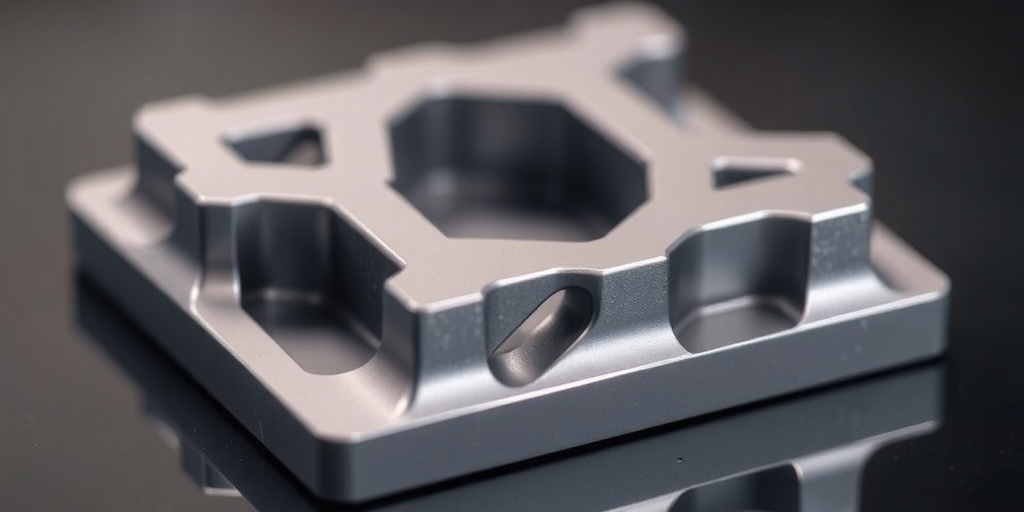
Research from Cornell University has illuminated a crucial aspect of additive manufacturing, specifically the 3D printing of metals, by investigating how the microstructure of these materials transforms during the solidification process. As researchers have found, altering the composition of metal alloys can lead to more robust and dependable outcomes in printed components. The pivotal goal of their work is to enhance the performance of materials used in 3D printing, which carries significant implications for industries reliant on metallic components.
The study, published in Nature Communications, represents a significant leap in understanding the behavior of metals during the rapid cooling and solidification phases of 3D printing. These processes inherently involve quick transitions where liquid materials solidify into complex shapes, yet result in structures that are often columnar and, therefore, susceptible to weaknesses in specific directions. Notably, these weaknesses can adversely affect the mechanical properties of the final product, limiting the materials’ practical applications across industries.
At the forefront of this research is the recognition that by manipulating the alloy’s composition—specifically the ratios of manganese and iron—it is possible to disrupt the formation of columnar grains that typically form quickly during solidification. Instead, these modifications can lead to a more uniform grain structure that enhances the mechanical properties of the material. This discovery is akin to altering the genetic makeup of a species to encourage diversity and resilience, drawing a parallel to the adaptability of evolving systems in nature.
The fundamental issue faced by scientists and engineers in the field of additive manufacturing lies in the extremely short timeframe wherein the phase change occurs—from liquid to solid—which makes studying these phenomena particularly challenging. During this rapid transition, strategies need to be developed to gather data before the material solidifies entirely, leaving no trace of its earlier, more malleable state. The researchers at Cornell overcame this limitation by employing advanced synchrotron X-ray techniques which provided crucial insights into these fleeting moments of transformation.
In their experimentations, the team discovered an intermediate phase that played a key role in limiting the growth of columnar grains. This finding underlines the importance of understanding the phase stability of alloys at play during the initial stages of solidification. The phase stability essentially dictates how the material will behave under various conditions and contributes to the microstructural characteristics that significantly influence final material attributes.
By refining the grain size through careful manipulation of the alloy composition, the researchers achieved a marked improvement in yield strength. The implications of these findings are substantial, as stronger metal parts not only exhibit enhanced durability but also expand the practical applications of 3D printed metals. From aerospace components to intricate engineering designs, the potential benefits of this new knowledge could lead to breakthroughs in manufacturing excellence.
The future direction of this research opens several avenues for exploration. As industries increasingly adopt additive manufacturing techniques, understanding how to manipulate alloy compositions at a molecular level could become a standard practice. This could usher in a new age of tailored 3D printed metals that cater to specific application needs, driving both efficiency and innovation in manufacturing.
Moreover, the impact of these advancements may extend beyond industrial usage. The enhancement of material reliability could lead to wider acceptance of 3D printed components in consumer products—from automotive parts that require lightweight yet durable materials to electronic housings designed with complex geometries. Consequently, manufacturers may find themselves under increasing pressure to adopt these improved materials to remain competitive in a rapidly evolving market landscape.
Interdisciplinary collaborations, such as those involving institutions like NASA and the University of Pittsburgh, highlight the broader appeal and applicability of this research. Bringing together expertise from various fields can yield innovative solutions that drive progress in materials science. Collaborations of this nature illustrate how academia and industry can intersect to shape the future of manufacturing, potentially transforming societal reliance on traditional production methods.
Funding from significant entities such as the U.S. Department of Energy, the National Science Foundation, and NASA has been instrumental in fuelling this research. Through such support, researchers can continue to innovate and experiment, which is vital for pushing the boundaries of what is currently possible in materials engineering.
In conclusion, the groundbreaking work from Cornell University sheds light on the intricacies of metal solidification during 3D printing. With a focus on alloy composition manipulation, the established correlations between microstructural features and material properties signal a transformative shift in how we approach additive manufacturing of metals. As the field progresses, we can expect to witness enhanced material designs that will redefine industry standards and consumer expectations alike, paving the way for a future where 3D printed metals become an integral part of both functional and creative applications.
Keywords
Additive manufacturing, Alloys, Metalworking, Microstructures, Solidification, Mechanical engineering, Structural engineering
Cite Scienmag News
Denise Maddox. (February 12, 2025). Scientists Optimize Metal Microstructure to Enhance 3D Printing Quality. Scienmag. https://scienmag.com/scientists-optimize-metal-microstructure-to-enhance-3d-printing-quality/
Denise Maddox. "Scientists Optimize Metal Microstructure to Enhance 3D Printing Quality." Scienmag, 12 February 2025, https://scienmag.com/scientists-optimize-metal-microstructure-to-enhance-3d-printing-quality/. Accessed 4 September 2026.
Denise Maddox. "Scientists Optimize Metal Microstructure to Enhance 3D Printing Quality." Scienmag. February 12, 2025. https://scienmag.com/scientists-optimize-metal-microstructure-to-enhance-3d-printing-quality/


