


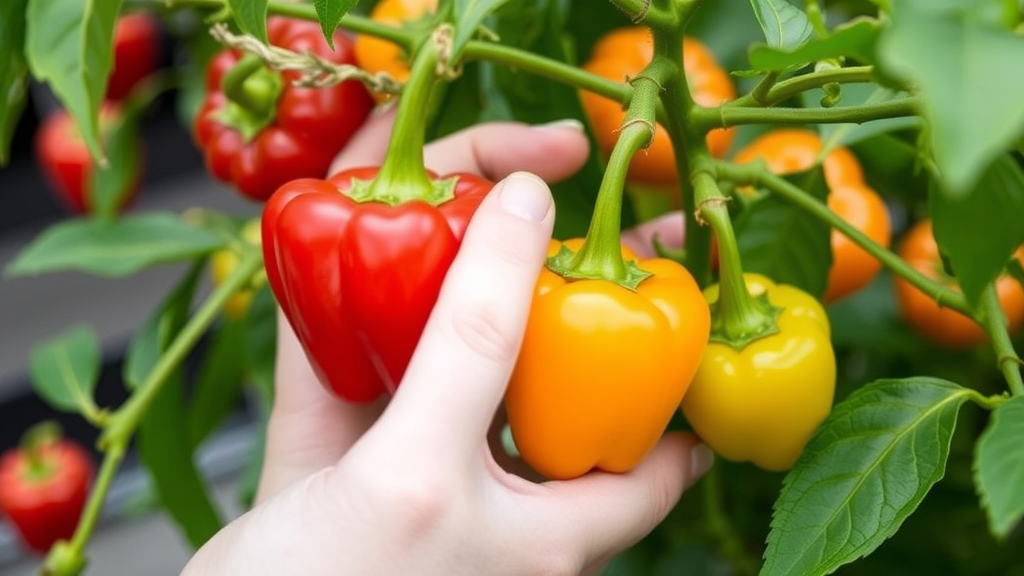
Peppers are among the world’s most valuable vegetable crops, prized for their culinary versatility, vibrant pigments, and nutritional content, yet they remain dangerously vulnerable to cold. Even brief exposure to chilling temperatures can disrupt membrane integrity, suppress photosynthesis, and throw cellular redox balance into disarray, slashing both yield and fruit quality. Now, a comprehensive review published in Plant Cell Reports synthesizes the latest functional genomics and precision breeding research into a detailed roadmap for engineering cold stress resilience in Capsicum annuum, offering what its authors describe as a blueprint for developing climate-resilient pepper cultivars capable of maintaining productivity under increasingly erratic environmental conditions.
The review, led by Ikram Ullah and Naveed Ahmad, who contributed equally, together with Aashaq Hussain Bhat, Adil Hussain, Fan Wei, and Wu Hongzhi, draws together evidence spanning cold stress perception, signal transduction, transcriptional regulation, metabolic reprogramming, and phytohormone interactions in pepper. Its central argument is that pepper’s intrinsic cold tolerance has been constrained not by the absence of defensive machinery, but by its incomplete deployment. The crop possesses endogenous cold-responsive regulators such as CaNAC035 and CabHLH035, along with antioxidant defense systems, yet these remain insufficiently activated when temperatures drop, leaving plants exposed to damage they are nominally equipped to resist.
At the heart of the problem lies a cluster of biological complications that conventional breeding has struggled to disentangle. Key cold-response regulators show low transcriptional activation under stress, meaning the genetic instructions for defense are present but poorly executed. Functional redundancy among cold-responsive genes further complicates matters: multiple genes can substitute for one another, so knocking out or enhancing a single factor often produces negligible phenotypic change. Cold tolerance itself is polygenic, governed by many genes of small effect scattered across the genome. Layered on top of these complexities are low genetic diversity within elite pepper germplasm and linkage drag, the troublesome tendency of undesirable traits to hitchhike along with desirable ones during crossing. Together, these obstacles have stymied decades of conventional cold-resistance breeding.
To overcome them, the authors champion what they call Precision Breeding 2.0, an integrated innovation that couples multi-omics-based target identification with next-generation genome-editing techniques. Rather than editing one gene at a time, this approach allows precise and multiplex engineering of complex, interconnected regulatory networks. The distinction matters because cold tolerance is not a switch but a symphony: calcium signatures, phosphorylation cascades, hormone signals, and transcriptional circuits must all be tuned in concert. By mapping these networks through transcriptomics, proteomics, and metabolomics before editing, breeders can identify the highest-leverage nodes and modify several of them simultaneously.
Among the most promising strategies highlighted in the review is the engineering of the DREB/CBF pathway, the canonical cold-response cassette first characterized in Arabidopsis and now recognized across crops. In pepper, cold-inducible CBF transcription factors interact with homeodomain leucine zipper proteins, and genome-wide analyses of the C-repeat binding factor family in related Capsicum species have revealed functional diversity in low-temperature responses. The review also outlines allele-specific editing, which lets researchers swap inferior versions of genes for superior ones without altering anything else in the genome, and targeted disruption of negative regulators, transcriptional brakes that suppress cold responses and whose removal can unlock latent tolerance.
The molecular detail underpinning these strategies is impressive. Recent work has shown that CaSnRK2.4-mediated phosphorylation of CaNAC035 regulates abscisic acid synthesis in pepper under cold stress, linking the ABA hormone pathway directly to cold acclimation. The bHLH transcription factor CabHLH035 promotes cold resistance and reactive oxygen species homeostasis, while the NAC factor CaNAC064 has been identified as a cold tolerance regulator, and CaMYB80 enhances cold tolerance by directly targeting CaPOA1. Newer discoveries continue to expand the toolkit: CaPDX1, a novel protein that positively regulates cold tolerance through interaction with CaSnRK2.4, and CaDoF10, a DNA-binding-with-one-finger transcription factor recently shown to act as a positive regulator of cold stress tolerance. CBL-interacting protein kinase CaCIPK13 reinforces defense mechanisms against cold, and the dehydrin CaDHN3 contributes to membrane stabilization, while CaPIF8 links light and cold signaling through phytochrome-interacting factors.
Beyond transcription factors, the review emphasizes metabolic reprogramming as a critical dimension of cold adaptation. Soluble sugars, glycine betaine, proline, and antioxidant flavonoids accumulate under chilling conditions to protect membranes and scavenge reactive oxygen species. Comparative transcriptomic and metabolomic analyses of cold-tolerant and cold-sensitive pepper species have pinpointed essential metabolic pathways that distinguish resilient genotypes from vulnerable ones. Melatonin application has been shown to bolster photosynthetic performance and redox homeostasis in cold-stressed pepper seedlings, and exogenous glycine betaine improves tolerance of combined low-temperature and low-light stress by enhancing antioxidant capacity. These findings suggest that editing genes governing compatible solute biosynthesis and flavonoid accumulation could complement transcription-factor engineering.
Hormonal crosstalk emerges as another central theme. Abscisic acid and low temperatures act synergistically to induce CBF/DREB1 expression in other species, and ABA core signaling components are active in pepper seed responses. The review situates cold responses within a broader web of phytohormone interactions involving jasmonic acid, cytokinins, and brassinosteroids, each modulating stress outcomes in tissue- and timing-specific ways. Circadian regulation adds yet another layer, since cold responses are gated by the clock, meaning that the same genetic intervention may yield different results depending on the time of day it is deployed, a consideration the authors argue should inform both experimental design and field deployment.
Accelerating the pipeline from discovery to delivery, the review proposes integrating transcriptomics, proteomics, metabolomics, high-throughput phenomics, and speed breeding to compress the identification, validation, and deployment of superior alleles into a fraction of the traditional timeline. High-throughput phenomics allows researchers to quantify chilling injury, membrane leakage, chlorophyll fluorescence, and recovery kinetics across thousands of seedlings, while speed breeding shortens generation cycles so that edited lines can be advanced and field-tested rapidly. Epigenetic memory and systemic priming, through which plants retain a trained state after mild stress exposure, offer an additional lever: chromatin-level modifications could potentially be exploited or engineered to keep cold-response genes in a poised, readily activated configuration.
The practical stakes are considerable. Cold snaps damage seedlings in open fields and greenhouses alike, and postharvest chilling injury degrades fruit quality during cold storage, imposing losses across the entire supply chain. As climate volatility increases, the window of safe cultivation for a crop with such narrow thermal tolerance is shrinking in key production regions. By connecting functional genomics with precision genome engineering, the authors contend, pepper breeders can move beyond the incremental gains of conventional crossing and build cultivars with fundamentally rewired stress responses. The review’s roadmap, spanning DREB/CBF pathway engineering, multiplex editing of regulatory networks, negative-regulator disruption, and omics-guided allele deployment, positions Capsicum annuum as a test case for how Precision Breeding 2.0 could reshape the resilience of horticultural crops more broadly, ensuring that one of humanity’s favorite spices keeps thriving in a colder, less predictable world.
Subject of Research: Functional genomics and precision genome-editing strategies for engineering cold stress resilience in Capsicum annuum
Article Title: Engineering cold stress resilience in capsicum annuum through functional genomics and precision breeding
Article References: Ullah, I., Ahmad, N., Bhat, A. H., Hussain, A., Wei, F., & Hongzhi, W. (2026). Engineering cold stress resilience in capsicum annuum through functional genomics and precision breeding. Plant Cell Reports, 45(10), Article 288. https://doi.org/10.1007/s00299-026-03965-9
Image Credits: AI Generated
DOI: 10.1007/s00299-026-03965-9
Keywords: Capsicum annuum, cold stress, chilling tolerance, CRISPR/Cas, Precision Breeding 2.0, DREB/CBF pathway, multi-omics, transcriptional regulation, abscisic acid signaling, climate resilience, plant biotechnology, genome editing
Cite Scienmag News
Juliet Wilcox. (September 12, 2026). Scientists Map a Genome-Editing Roadmap to Cold-Resilient Peppers. Scienmag. https://scienmag.com/scientists-map-a-genome-editing-roadmap-to-cold-resilient-peppers/
Juliet Wilcox. "Scientists Map a Genome-Editing Roadmap to Cold-Resilient Peppers." Scienmag, 12 September 2026, https://scienmag.com/scientists-map-a-genome-editing-roadmap-to-cold-resilient-peppers/. Accessed 4 October 2026.
Juliet Wilcox. "Scientists Map a Genome-Editing Roadmap to Cold-Resilient Peppers." Scienmag. September 12, 2026. https://scienmag.com/scientists-map-a-genome-editing-roadmap-to-cold-resilient-peppers/


