


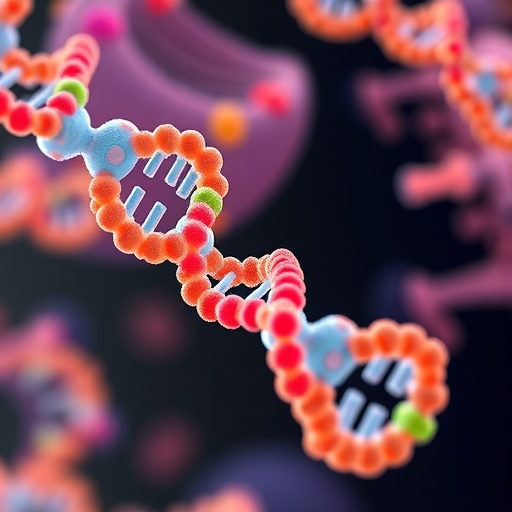
Recent breakthroughs in synthetic biology have revolutionized the capacity to engineer microorganisms, transforming them into highly efficient biofactories. A comprehensive review published in Quantitative Biology showcases how scientists have achieved unprecedented mastery in assembling exceptionally large DNA fragments, an advance that is dramatically reshaping the landscape of microbial engineering. This technological leap permits not only the construction of whole biological pathways but also the synthesis and integration of entire synthetic chromosomes. Such profound capabilities enable microbes like yeast and bacteria to produce a diverse array of complex bioproducts, ranging from pharmaceuticals to biofuels, far more efficiently than previously achievable.
The significance of these advancements transcends conventional genetic manipulation techniques. By reliably assembling kilobases to megabases of DNA with high fidelity and throughput, synthetic biologists can now redesign microbial genomes with precision and speed that were unimaginable a decade ago. This ability to integrate vast sequences of custom-designed DNA directly into host cells empowers researchers to reconstruct metabolic pathways holistically rather than piecemeal, thereby simulating and optimizing complex biochemical networks in vivo. The modularity of these synthetic constructs allows for combinatorial approaches, where distinct genetic elements are shuffled or tuned to improve production yields and functional robustness.
Central to these developments are innovative DNA assembly technologies, such as hierarchical cloning strategies, yeast homologous recombination-based assembly, and advanced enzymatic methods like Golden Gate and Gibson assembly. These techniques overcome the limitations of traditional cloning by enabling seamless and scarless joining of DNA fragments in a one-pot reaction. Furthermore, the advent of automated platforms integrated with computational design tools and artificial intelligence has substantially accelerated the design-build-test-learn cycle. By harnessing AI-driven algorithms to predict optimal genetic architectures, researchers can reduce trial-and-error experimentation, thus expediting the development of microbial cell factories.
The potential applications of these synthetic biology tools are vast and impactful. In the pharmaceutical sector, microbes can be programmed to biosynthesize complex natural products and novel therapeutic agents that are difficult or uneconomical to produce chemically. Sustainable manufacturing benefits greatly as well: engineered microbes serve as biological producers of renewable biofuels and bioplastics, offering eco-friendly alternatives that mitigate reliance on fossil fuels. Agriculture can also harness these advances by creating microbes that enhance nutrient uptake or protect plants against pathogens, promoting yield stability and reducing agrochemical usage.
This burgeoning field intersects critically with global sustainability goals. The ability to construct large DNA assemblies quickly and accurately fortifies biotechnological solutions addressing climate change, resource depletion, and circular economy initiatives. Engineered microbial systems enable the biotransformation of low-value biomass or industrial waste streams into high-value products, thereby integrating waste valorization into manufacturing workflows. Moreover, the safety and ethical implications of deploying such engineered organisms at scale are increasingly scrutinized to prevent unintended ecological impacts, ensuring that these innovations benefit society responsibly.
Dr. Yue Shen, Chief Scientist of Synthetic Biology at BGI Research in China, articulates the transformative potential of these technologies. According to Dr. Shen, as DNA assembly methodologies become more automated and closely integrated with AI-powered design, the cycle time for developing microbial cell factories will plummet. This acceleration paves the way for rapid prototyping and commercialization of biomanufacturing platforms that are not only scalable but also sustainable, cost-effective, and adaptable to diverse industrial needs. The convergence of these advances marks a pivotal era in synthetic biology, turning theoretical concepts into practical implementations with global reach.
Underpinning these strides is the synergy between interdisciplinary scientific domains—including molecular genetics, bioengineering, computational biology, and systems biology. The quantitative approaches emphasized in the research provide rigorous frameworks to model and predict cellular responses to synthetic genetic elements. These predictive models inform the design of genetic circuits and metabolic pathways that operate harmoniously within the host, avoiding deleterious effects and maximizing productivity. Such integration of quantitative analysis and synthetic biology accelerates the transition of engineered microbes from laboratory curiosities to industrial workhorses.
A critical challenge addressed in the review is the stability and functionality of large synthetic DNA fragments once introduced into host cells. Innovations in genome editing and chromosomal integration techniques safeguard the maintenance and proper expression of synthetic sequences over extended production times. Additionally, advances in chassis engineering—the tailoring of host organisms to harbor synthetic constructs—optimize cellular environments for heterologous pathway function. These refined hosts help ensure robustness under industrial fermentation conditions, mitigating fluctuations in yield that have traditionally hindered scale-up.
As the field evolves, open collaboration and data sharing are becoming essential to leverage the collective expertise of the global scientific community. Key repositories and databases catalog synthetic DNA parts, assembly protocols, and performance metrics. This shared infrastructure reduces duplication of effort and accelerates innovation by enabling researchers worldwide to build upon established knowledge bases. Moreover, enhanced transparency in methodology and biosecurity considerations fosters public confidence and supports regulatory frameworks governing synthetic biology applications.
In summary, the advances in assembling large DNA fragments represent a monumental technical leap that is accelerating the engineering of microbial cell factories. With the fusion of cutting-edge DNA assembly methods, AI-driven design, and automated biofoundries, synthetic biology is poised to redefine biomanufacturing. This paradigm shift promises to enhance healthcare, promote sustainable industrial processes, and address critical environmental challenges. As microbes become programmable factories, the vision of a biologically based economy powered by engineered life forms moves closer to reality, heralding a new era of innovation across multiple sectors.
News Publication Date: 6-May-2026
Web References:
- Quantitative Biology journal: https://onlinelibrary.wiley.com/journal/20954697
- Article DOI: http://dx.doi.org/10.1002/qub2.70039
Cite Scienmag News
Juliet Wilcox. (May 6, 2026). Scientists Harness Large DNA Fragment Assembly to Engineer Microbes for Producing Diverse Complex Compounds. Scienmag. https://scienmag.com/scientists-harness-large-dna-fragment-assembly-to-engineer-microbes-for-producing-diverse-complex-compounds/
Juliet Wilcox. "Scientists Harness Large DNA Fragment Assembly to Engineer Microbes for Producing Diverse Complex Compounds." Scienmag, 6 May 2026, https://scienmag.com/scientists-harness-large-dna-fragment-assembly-to-engineer-microbes-for-producing-diverse-complex-compounds/. Accessed 4 September 2026.
Juliet Wilcox. "Scientists Harness Large DNA Fragment Assembly to Engineer Microbes for Producing Diverse Complex Compounds." Scienmag. May 6, 2026. https://scienmag.com/scientists-harness-large-dna-fragment-assembly-to-engineer-microbes-for-producing-diverse-complex-compounds/


