

Monday, July 27, 2026
Science
No Result
View All Result
  • Login
  • HOME
  • SCIENCE NEWS
  • CONTACT US
  • HOME
  • SCIENCE NEWS
  • CONTACT US
No Result
View All Result
Scienmag
No Result
View All Result
Home Science News Cancer

Scientists Harness COVID-19 Immune Memory to Fight Cancer

July 27, 2026
in Cancer
Reading Time: 2 mins read
0
Scientists Harness COVID-19 Immune Memory to Fight Cancer

Scientists Harness COVID-19 Immune Memory to Fight Cancer

65
SHARES
587
VIEWS
Share on FacebookShare on Twitter
ADVERTISEMENT

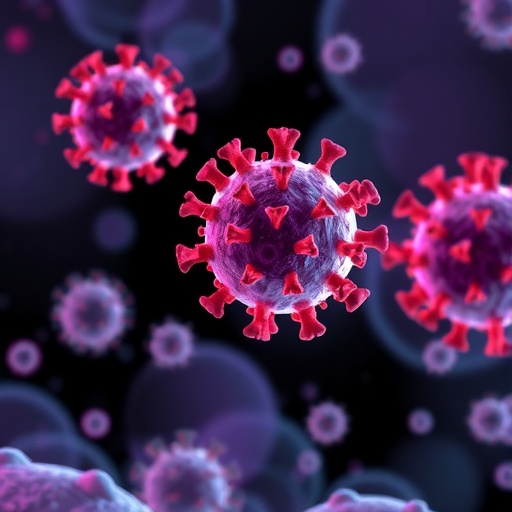
Researchers from Celloram Inc., University Hospitals, and Case Western Reserve University report PROTEXI, a dendritic-cell vaccine platform that repurposes the immune memory created by SARS‑CoV‑2 infection and COVID‑19 vaccination to enhance anti-tumor responses. The work, published in Nature Communications, reframes cancer vaccine design by redirecting existing, population-wide antiviral helper T-cell activity rather than constructing entirely new immune pathways.

The central premise is that CD4⁺ helper T cells are crucial for durable antitumor immunity, yet identifying clinically useful “helper signals” has been a persistent bottleneck. PROTEXI addresses this by coupling tumor-specific antigens to helper epitopes derived from SARS‑CoV‑2 Spike protein fragments—small peptide regions already recognized by immune systems primed through prior exposure.

In preclinical melanoma and breast cancer models, the platform slowed tumor growth, improved survival outcomes, and converted immune-evasive tumors into targets more readily recognized by the immune system. Mechanistically, the vaccine strengthens tumor-associated CD8⁺ cytotoxic T-cell responses and promotes long-lived antitumor memory, consistent with a helper-driven amplification of tumor immunity.

The researchers also report that PROTEXI reshapes the tumor microenvironment and supports epitope spreading, broadening the range of immune targets over time. Importantly for translational relevance, PROTEXI performance was demonstrated in humanized mouse experiments using immune cells from donors vaccinated against COVID‑19.

Beyond monotherapy, the approach showed improved efficacy when combined with other immunotherapeutic modalities, suggesting that memory redirection may complement existing treatment strategies. The study further supports the idea that pre-existing antiviral CD4⁺ immunity can function as a practical “immunological infrastructure,” available in billions of individuals.

The team emphasizes that the strategy targets immune-cold tumors—cancers that often resist recognition—by leveraging the highly immunogenic nature of viral memory. Rather than relying solely on patient-specific helper antigen identification, PROTEXI uses widely present antiviral specificity as a scaffold for coordinated cellular immunity.

Senior corresponding author Dr. John Letterio highlighted the translational opportunity, stating that the findings provide a rationale to advance PROTEXI into first-in-human studies for patients with sarcoma, where new immunotherapeutic options are urgently needed. Celloram leadership similarly framed the platform as a paradigm shift: turning a large-scale “human experiment” in viral immunity into a targeted cancer advantage.

For future clinical development, the planned sarcoma trial aims to evaluate safety, feasibility, and immunologic activity of the personalized dendritic-cell vaccine approach. If validated, PROTEXI could offer a generalizable route for constructing durable cancer immunity across multiple tumor types, particularly those that have historically been resistant to vaccine-based strategies.

Subject of Research: Cancer immunotherapy; cancer vaccines; dendritic-cell vaccines; antiviral CD4 T-cell memory redirection
Article Title: The Dendritic Cell-based Vaccine PROTEXI leverages Antiviral CD4 T cell Memory to boost anti-tumor immune responses in mice
News Publication Date: 27-Jul-2026
Web References: https://www.nature.com/articles/s41467-026-74891-3
References: Kang JM, Han EH, Choi JK, Youm S, Pareek T, Levi L, Kim S-J, Letterio J, Lim S. The Dendritic Cell-based Vaccine PROTEXI leverages Antiviral CD4 T cell Memory to boost anti-tumor immune responses in mice. Nature Communications, 27 July 2026. DOI: 10.1038/s41467-026-74891-3
Image Credits: University Hospitals

Keywords: Cancer vaccines; dendritic-cell vaccine; PROTEXI; SARS‑CoV‑2; COVID‑19 vaccines; CD4⁺ T-cell memory; antitumor immunity; immune-cold tumors; epitope spreading; Nature Communications

Tags: cancer vaccine developmentCOVID-19 immune memorydendritic-cell vaccine platformepitope spreading in cancerhelper T-cell activation in cancer immunotherapyhumanized mouse models for cancer researchimmune microenvironment remodelingleveraging SARS-CoV-2 vaccination for cancer treatmentlong-lasting anti-tumor immunitymelanoma and breast cancer immunotherapyrepurposing antiviral immune responsestumor-specific antigens
Share26Tweet16
Previous Post

Texas A&M Joins Genesis Mission to Use Artificial Intelligence for Science

Next Post

UC Irvine Researchers Develop California Wildfire Damage Risk Map

Related Posts

Smoking Decline May Reshape Future Cancer Burden, Study Finds
Cancer

Smoking Decline May Reshape Future Cancer Burden, Study Finds

July 27, 2026
Micropeptides from lncRNAs drive cancer progression and metastasis
Cancer

Micropeptides from lncRNAs drive cancer progression and metastasis

July 27, 2026
HK1–LDHA feedback boosts Wnt5a histone lactylation, linking prenatal acetaminophen to male OA
Cancer

HK1–LDHA feedback boosts Wnt5a histone lactylation, linking prenatal acetaminophen to male OA

July 27, 2026
Boosting antitumor immunity by triggering cancer cell pyroptosis
Cancer

Boosting antitumor immunity by triggering cancer cell pyroptosis

July 27, 2026
Self-Sampling Boosts HPV Detection and Increases Cervical Cancer Screening Rates
Cancer

Self-Sampling Boosts HPV Detection and Increases Cervical Cancer Screening Rates

July 27, 2026
KAIST Develops Antibodies With Cellular “Eyes” to Detect Cancer Mutations
Cancer

KAIST Develops Antibodies With Cellular “Eyes” to Detect Cancer Mutations

July 27, 2026
Next Post
UC Irvine Researchers Develop California Wildfire Damage Risk Map

UC Irvine Researchers Develop California Wildfire Damage Risk Map

  • Mothers who receive childcare support from maternal grandparents show more

    Mothers who receive childcare support from maternal grandparents show more parental warmth, finds NTU Singapore study

    27656 shares
    Share 11059 Tweet 6912
  • University of Seville Breaks 120-Year-Old Mystery, Revises a Key Einstein Concept

    1061 shares
    Share 424 Tweet 265
  • Bee body mass, pathogens and local climate influence heat tolerance

    682 shares
    Share 273 Tweet 171
  • Researchers record first-ever images and data of a shark experiencing a boat strike

    546 shares
    Share 218 Tweet 137
  • Groundbreaking Clinical Trial Reveals Lubiprostone Enhances Kidney Function

    531 shares
    Share 212 Tweet 133
Science

Embark on a thrilling journey of discovery with Scienmag.com—your ultimate source for cutting-edge breakthroughs. Immerse yourself in a world where curiosity knows no limits and tomorrow’s possibilities become today’s reality!

RECENT NEWS

  • Echocardiography Hemodynamics in Preterm Infants Predict Neurodevelopment Through Age Three
  • Breast Milk Odor Exposure Influences Early Oral Feeding in Preterm Infants
  • APCDd1 Identified as Highly Specific Marker for Ventral Midbrain Dopaminergic Progenitors
  • Iceberg barriers reduce foraging links, causing sharp chick declines in Coulman Island penguins

Categories

  • Agriculture
  • Anthropology
  • Archaeology
  • Athmospheric
  • Biology
  • Biotechnology
  • Blog
  • Bussines
  • Cancer
  • Chemistry
  • Climate
  • Earth Science
  • Editorial Policy
  • Marine
  • Mathematics
  • Medicine
  • Pediatry
  • Policy
  • Psychology & Psychiatry
  • Science Education
  • Social Science
  • Space
  • Technology and Engineering

Subscribe to Blog via Email

Enter your email address to subscribe to this blog and receive notifications of new posts by email.

Join 5,146 other subscribers

© 2025 Scienmag - Science Magazine

Welcome Back!

Login to your account below

Forgotten Password?

Retrieve your password

Please enter your username or email address to reset your password.

Log In
No Result
View All Result
  • HOME
  • SCIENCE NEWS
  • CONTACT US

© 2025 Scienmag - Science Magazine

Discover more from Science

Subscribe now to keep reading and get access to the full archive.

Continue reading
