


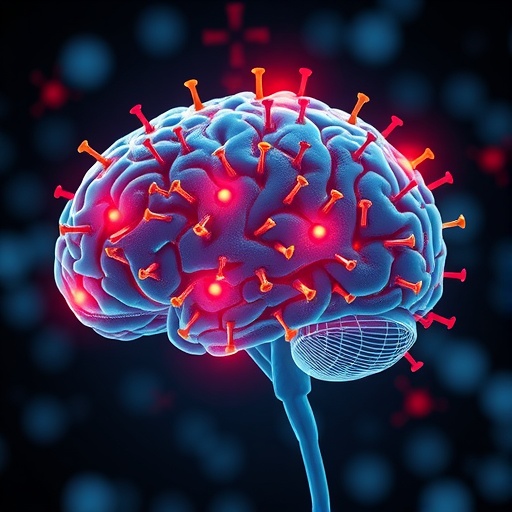
Astrocytes, the star-shaped cells that support and nourish neurons, may possess a far greater capacity for self-repair than scientists once believed. In a study published in Nature Neuroscience, researchers at the University of Zurich have identified a specialized population of “regenerative” astrocytes that helps repopulate damaged regions of the adult mouse brain. Their most unexpected discovery is that these cells do not initially rebuild injured tissue by moving as complete cells. Instead, they send newly formed cell nuclei through long cellular extensions toward the lesion, where the nuclei contribute to the reconstruction of the astrocyte network.
The finding challenges a long-standing assumption in neuroscience: that once astrocytes are destroyed in the adult brain, they cannot be fully replaced. Astrocytes are essential for maintaining the neural environment. They supply neurons with metabolic support, help regulate blood flow, maintain the balance of ions and neurotransmitters, and contribute to the integrity of the blood–brain barrier. When they are lost, neurons may become vulnerable to further injury because the tissue’s structural and chemical support systems are disrupted.
Astrocyte loss can occur after traumatic brain injury, stroke, inflammation, or autoimmune disease. One example is neuromyelitis optica spectrum disorder, a rare condition in which antibodies produced by the immune system attack astrocytes, particularly through the water-channel protein aquaporin-4. Damage to these cells can lead to extensive neurological problems, and the adult brain has generally been considered poorly equipped to replace them. The University of Zurich study suggests that this limitation may not be absolute and that local repair programs can be activated under specific conditions.
The research team, led by Bruno Weber and co-led by Marina Herwerth and Matthias Wyss, examined focal astrocyte loss in living mice. Using two-photon microscopy, a technique that allows researchers to image fluorescently labeled cells beneath the surface of living tissue, they followed the response to injury over several weeks. This approach made it possible to observe cellular behavior in real time rather than relying only on fixed tissue collected at a single point after damage occurred.
The researchers also mapped patterns of gene activity across the injured and surrounding regions. By determining which genes became active in different areas, they were able to distinguish astrocytes that remained relatively unchanged from a specialized group positioned around the perimeter of the lesion. These cells appeared to enter a temporary regenerative state. Their cellular extensions, normally responsible for contacting blood vessels, neurons and other glial cells, became elongated and oriented toward the damaged area.
The most striking aspect of the process involved cell division. When an astrocyte divides, its genetic material is duplicated and distributed between two daughter cells. In the response observed by the researchers, however, newly formed nuclei appeared to travel through the elongated extensions of astrocytes toward the lesion. The nuclei moved without the immediate migration of entire cell bodies, suggesting that the astrocyte network can use its existing architecture as a transport route for genetic and cellular components.
Once the nuclei reached the damaged region, they contributed to the gradual repopulation of the area. The process appears to restore the continuity of the astrocyte network, although the study does not establish that the repaired tissue is functionally identical to uninjured brain tissue. The distinction is important: rebuilding cellular coverage may help stabilize the local environment, but complete recovery would also require the restoration of precise contacts with neurons, blood vessels and other components of the nervous system.
The researchers identified numerous genes and signaling pathways that were temporarily activated during the regenerative response. These molecular programs may regulate cell division, extension growth, nuclear transport and the integration of newly generated astrocytic material into the lesion. Understanding how these pathways are switched on—and how they are later turned off—could eventually help scientists develop strategies to enhance repair after astrocyte loss. Any future treatment would need to be carefully controlled, since excessive or improperly directed glial activity could produce scarring, inflammation or abnormal tissue organization.
The findings do not yet demonstrate that the same mechanism operates in humans, nor do they provide an immediate therapy for brain injuries or autoimmune disease. The work was performed in mice and represents an experimental study of a specific type of focal astrocyte damage. Nevertheless, it reveals an unexpected form of cellular cooperation in the adult brain: neighboring astrocytes can temporarily change their behavior, extend their reach and deliver newly formed nuclei into a region that has lost its supporting cells. By exposing this previously unrecognized regenerative process, the study offers a new framework for investigating how damaged brain tissue might one day be stabilized and repaired.
News Publication Date: 23-Jul-2026
Web References: https://doi.org/10.1038/s41593-026-02354-5
References: Nature Neuroscience, “Focal astrocyte loss reveals nuclear translocation during lesion repopulation,” DOI: 10.1038/s41593-026-02354-5
Cite Scienmag News
Cassandra Pierce. (August 10, 2026). Scientists discover the brain can repair itself more extensively than previously believed. Scienmag. https://scienmag.com/scientists-discover-the-brain-can-repair-itself-more-extensively-than-previously-believed/
Cassandra Pierce. "Scientists discover the brain can repair itself more extensively than previously believed." Scienmag, 10 August 2026, https://scienmag.com/scientists-discover-the-brain-can-repair-itself-more-extensively-than-previously-believed/. Accessed 4 September 2026.
Cassandra Pierce. "Scientists discover the brain can repair itself more extensively than previously believed." Scienmag. August 10, 2026. https://scienmag.com/scientists-discover-the-brain-can-repair-itself-more-extensively-than-previously-believed/


