


A groundbreaking discovery from Osaka Metropolitan University has revealed a surprising paradox in plant biology: a mutation that enhances disease resistance in the model organism Arabidopsis thaliana simultaneously accelerates its aging process. This finding challenges the conventional assumption that disease resistance should invariably lead to prolonged plant vitality, uncovering a complex molecular interplay that influences both immunity and senescence in plants.
The research, conducted by Tomoko Matsumoto, a graduate student at OMU’s Graduate School of Agriculture, alongside Professors Noriko Inada and Koichi Kobayashi, focused on the ACTIN DEPOLYMERIZING FACTOR (ADF) protein family in Arabidopsis thaliana. These proteins are key regulators of actin filament dynamics within plant cells, playing crucial roles in cell structure modulation, signaling pathways, and developmental programs. By studying mutant variants of ADF, the team discovered that plants harboring a mutated form of this protein exhibited an earlier onset of leaf senescence, particularly under dark conditions.
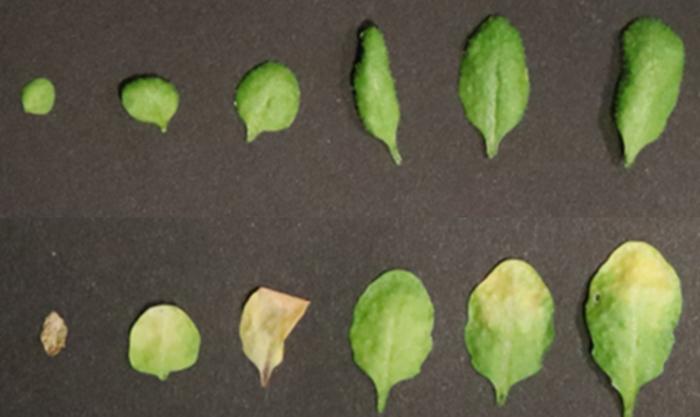
Leaf senescence, a form of programmed aging in plants, is characterized by a gradual degradation of chlorophyll and a decline in photosynthetic capacity, eventually leading to leaf yellowing and abscission. The mutant ADF plants displayed chlorosis, or yellowing, much earlier than their wild-type counterparts, signaling a premature transition into the senescence phase. This phenomenon was especially pronounced when plants were kept in darkness, suggesting a light-dependent regulation of the aging process intertwined with cytoskeletal dynamics orchestrated by ADFs.
The dual role of ACTIN DEPOLYMERIZING FACTORS as both promoters of disease resistance and regulators of leaf aging illuminates the intricate balancing act plants must maintain between survival and longevity. While the mutant protein enhances resistance against mildew pathogens, presumably by altering actin-mediated defense responses, it inadvertently accelerates tissue aging, potentially compromising overall fitness and reproductive success. This trade-off highlights a molecular nexus where growth, defense, and senescence pathways intersect.
From a mechanistic perspective, ADF proteins modulate the remodeling of actin filaments, which serve as tracks and scaffolds for intracellular transport and signaling. In the context of immune responses, actin dynamics facilitate the trafficking of defense-related molecules and the restructuring of cellular architecture to fend off pathogens. However, in modulating senescence, these proteins influence processes such as reactive oxygen species (ROS) accumulation, hormone signaling pathways (including ethylene and salicylic acid), and the activation of senescence-associated genes that collectively culminate in leaf yellowing and cell death.
Osaka Metropolitan University’s findings emphasize that ADFs’ involvement transcends their classical cytoskeletal functions, extending into pivotal regulatory roles that dictate the timing of aging and defense mechanisms in plants. The early leaf yellowing observed in mutant plants suggests that disruption of normal actin turnover may trigger feedback loops accelerating senescence pathways, possibly by altering hormonal balances or stress signal transduction.
Understanding the finely tuned mechanisms underlying ADF function can open new avenues for agricultural innovation. For instance, manipulating specific isoforms of ADFs or their regulatory networks could allow for the breeding of crop varieties that maintain robust disease resistance without compromising longevity or yield. This insight holds substantial promise for enhancing crop resilience and sustainability amidst increasing environmental stresses and pathogen pressures.
The study also sheds light on the broader biological principle that resource allocation within organisms often entails trade-offs. In plants, where resources such as energy and metabolites are limited, mounting an effective immune response can divert crucial components from growth and maintenance, thus accelerating senescence. By delineating the molecular players involved in this balance, including ADFs, researchers can better predict and manage plant responses to biotic and abiotic challenges.
Given that Arabidopsis thaliana serves as a fundamental model organism for plant biology, these discoveries are likely to have far-reaching implications beyond this species. They provide a molecular framework to investigate analogous processes in economically important crops, thereby facilitating the translation of basic research into practical agricultural solutions.
The ability of ADF mutations to simultaneously confer mildew resistance and hasten leaf aging invites deeper inquiry into the genetic and biochemical pathways that integrate immune signaling with developmental senescence. It also raises questions about the evolutionary pressures shaping these proteins’ multifunctionality, suggesting that plants prioritize immediate survival over longevity in pathogen-rich environments.
In summary, this seminal work by the Osaka Metropolitan University team underscores the complexities inherent in plant physiology, where proteins like ACTIN DEPOLYMERIZING FACTORS serve multifaceted roles at the crossroads of immunity, development, and aging. Unlocking these molecular secrets not only advances fundamental plant science but also paves the way for enhancing agricultural productivity in a changing global climate.
News Publication Date: 30-May-2025
References: http://dx.doi.org/10.1093/pcp/pcaf027
Cite Scienmag News
Beatrice Stafford. (May 30, 2025). Scientists Discover New Factor Influencing Plant Leaf Aging. Scienmag. https://scienmag.com/scientists-discover-new-factor-influencing-plant-leaf-aging/
Beatrice Stafford. "Scientists Discover New Factor Influencing Plant Leaf Aging." Scienmag, 30 May 2025, https://scienmag.com/scientists-discover-new-factor-influencing-plant-leaf-aging/. Accessed 4 September 2026.
Beatrice Stafford. "Scientists Discover New Factor Influencing Plant Leaf Aging." Scienmag. May 30, 2025. https://scienmag.com/scientists-discover-new-factor-influencing-plant-leaf-aging/


