

Thursday, July 9, 2026
Science
No Result
View All Result
  • Login
  • HOME
  • SCIENCE NEWS
  • CONTACT US
  • HOME
  • SCIENCE NEWS
  • CONTACT US
No Result
View All Result
Scienmag
No Result
View All Result
Home Science News Biology

Scientists Discover Key Mechanism Driving Nerve Cell Growth

July 9, 2026
in Biology
Reading Time: 2 mins read
0
Scientists Discover Key Mechanism Driving Nerve Cell Growth

Scientists Discover Key Mechanism Driving Nerve Cell Growth

65
SHARES
587
VIEWS
Share on FacebookShare on Twitter
ADVERTISEMENT

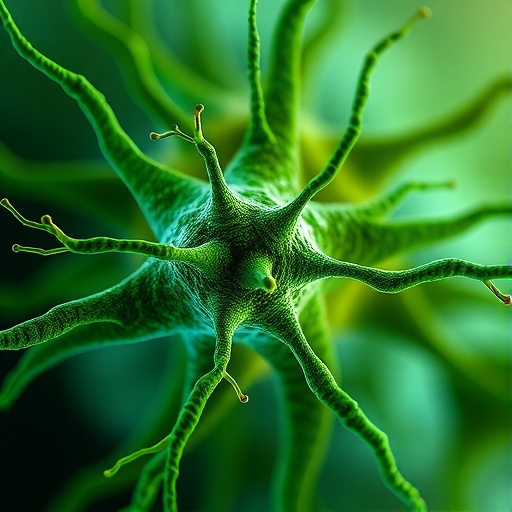
A groundbreaking study by researchers at the German Center for Neurodegenerative Diseases (DZNE) uncovers the internal cellular mechanism that determines why a neuron typically extends only one axon—a critical feature for proper brain function. Challenging the dominant theory that external environmental cues dictate axon formation, this research reveals that the axon’s emergence is driven primarily by intrinsic activity within the neuron itself.

Neurons initially exhibit symmetrical small projections called neurites during early development. Traditionally, it was believed that external growth factors selectively stimulate one neurite to transform into the axon. However, this new study, published in Nature, demonstrates that the process is governed by cyclic remodeling of the cytoskeleton originating within the neuron’s soma, or cell body. This intrinsic process disrupts the symmetry by enabling one neurite to stabilize and elongate, eventually becoming the singular axon.

Researchers observed that young neurons undergo rhythmic behavior characterized by repetitive extension and partial retraction of their neurites—akin to “two steps forward and one step back.” This oscillatory pattern unfolds over about 48 hours, culminating in the persistent growth of a single neurite. The others later mature into dendrites, specialized to receive incoming signals.

The core driver of this rhythmic cellular “shape-shifting” is a protein complex known as Arp2/3. This molecular complex functions like a zipper, locally loosening the cytoskeletal “corset” that otherwise maintains the neuron’s rigidity. By transiently relaxing the cytoskeletal meshwork in a wave-like propagation along one neurite at a time, Arp2/3 enables episodic growth spurts. These waves of remodeling continue until internal forces within the cytoskeleton reestablish tension, causing the projection to shrink again.

Interestingly, this process shows a stochastic element: the wave can reoccur on the same or a different neurite. Over time, one neurite gains stability through the internal growth of stiff structural proteins, allowing it to resist retraction and extend independently of the Arp2/3-driven oscillations. Once this neurite commits to axonal growth, the rhythmic waves subside, cementing neuronal polarity.

While external factors cannot be fully excluded, the study strongly implicates neuron-intrinsic cytoskeletal oscillators as the primary architects of axon specification. How this oscillatory remodeling is genetically programmed, why it is rhythmic, and how one neurite ultimately dominates remain open questions. The findings invite further research into the genetic and molecular pathways that coordinate these fundamental cytoskeletal dynamics.

Overall, this discovery reshapes our understanding of neuronal polarization, revealing that the precise wiring of the brain is sculpted not just by signals from outside the cell, but through carefully orchestrated internal mechanical rhythms. These insights hold promise for advancing therapeutic approaches to neurodegenerative diseases by targeting intrinsic cellular mechanisms underlying neuron development and function.


Subject of Research: Cells
Article Title: An intrinsic cytoskeletal oscillator establishes neuronal polarity
News Publication Date: 8-Jul-2026
Web References: http://dx.doi.org/10.1038/s41586-026-10755-6
References: Lin, T.-C., et al. (2026). An intrinsic cytoskeletal oscillator establishes neuronal polarity. Nature.
Keywords: Neuroscience, Cell biology, Molecular biology

Tags: cytoskeleton remodeling in neuronsinternal cellular processes in neurogenesisintrinsic neuron activity in nerve cell developmentneurite outgrowth regulationneurodevelopmental mechanisms governing axon emergenceneuron polarity establishment during developmentneuron soma cytoskeleton dynamicsneuron symmetry breaking mechanismneuronal axon formationrhythmical neurite extension and retractionrole of protein complexes in nerve cell growthsingle axon determination in neurons
Share26Tweet16
Previous Post

Climate Change Causes Marine Animals to Shrink in Size

Next Post

Paderborn University Wins European Grant for Quantum Technology Ecosystem

Related Posts

Falling Mediterranean reservoir levels increase methane emissions, study finds
Biology

Falling Mediterranean reservoir levels increase methane emissions, study finds

July 9, 2026
Decades-Old Fossils Reveal Extinct Giant Salamander Species Rediscovered
Biology

Decades-Old Fossils Reveal Extinct Giant Salamander Species Rediscovered

July 9, 2026
Macrophages Key to Organ Transplant Rejection and New Treatments
Biology

Macrophages Key to Organ Transplant Rejection and New Treatments

July 9, 2026
Global study reveals key process controlling cellular fat energy use
Biology

Global study reveals key process controlling cellular fat energy use

July 9, 2026
Caddisfly Silk Gene Rapidly Evolves While Keeping Its Stickiness
Biology

Caddisfly Silk Gene Rapidly Evolves While Keeping Its Stickiness

July 9, 2026
New Research Reveals Necks Exist in Fishes and Amphibians
Biology

New Research Reveals Necks Exist in Fishes and Amphibians

July 9, 2026
Next Post
Paderborn University Wins European Grant for Quantum Technology Ecosystem

Paderborn University Wins European Grant for Quantum Technology Ecosystem

  • Mothers who receive childcare support from maternal grandparents show more

    Mothers who receive childcare support from maternal grandparents show more parental warmth, finds NTU Singapore study

    27656 shares
    Share 11059 Tweet 6912
  • University of Seville Breaks 120-Year-Old Mystery, Revises a Key Einstein Concept

    1061 shares
    Share 424 Tweet 265
  • Bee body mass, pathogens and local climate influence heat tolerance

    682 shares
    Share 273 Tweet 171
  • Researchers record first-ever images and data of a shark experiencing a boat strike

    546 shares
    Share 218 Tweet 137
  • Groundbreaking Clinical Trial Reveals Lubiprostone Enhances Kidney Function

    531 shares
    Share 212 Tweet 133
Science

Embark on a thrilling journey of discovery with Scienmag.com—your ultimate source for cutting-edge breakthroughs. Immerse yourself in a world where curiosity knows no limits and tomorrow’s possibilities become today’s reality!

RECENT NEWS

  • Unraveling Human Cell Fate to Create Stem Cell-Derived Islets
  • Maternal CDKAL1 Gene Linked to Harmful Offspring Growth Patterns
  • Dental Chairs Pose Risks for Haemophilia Patients Without Proper Care
  • Hidden Metastases Uncover Clues to Colorectal Cancer Return

Categories

  • Agriculture
  • Anthropology
  • Archaeology
  • Athmospheric
  • Biology
  • Biotechnology
  • Blog
  • Bussines
  • Cancer
  • Chemistry
  • Climate
  • Earth Science
  • Editorial Policy
  • Marine
  • Mathematics
  • Medicine
  • Pediatry
  • Policy
  • Psychology & Psychiatry
  • Science Education
  • Social Science
  • Space
  • Technology and Engineering

Subscribe to Blog via Email

Enter your email address to subscribe to this blog and receive notifications of new posts by email.

Join 5,146 other subscribers

© 2025 Scienmag - Science Magazine

Welcome Back!

Login to your account below

Forgotten Password?

Retrieve your password

Please enter your username or email address to reset your password.

Log In
No Result
View All Result
  • HOME
  • SCIENCE NEWS
  • CONTACT US

© 2025 Scienmag - Science Magazine

Discover more from Science

Subscribe now to keep reading and get access to the full archive.

Continue reading
