


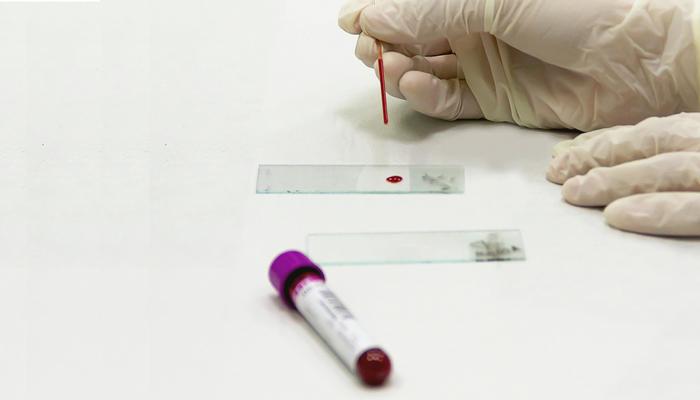
Scientists are on the verge of a cancer breakthrough after working out how the body’s immune system targets cells devastated by the disease.

Credit: University of Southampton
Scientists are on the verge of a cancer breakthrough after working out how the body’s immune system targets cells devastated by the disease.
A new study has discovered that our natural killer cells, from the immune system which protect against disease and infections, instinctively recognise and attack a protein that drives cancer growth.
The experts say that by hijacking this protein, known as XPO1, they may be able to activate more killer cells to destroy the disease.
Scientists from the University of Southampton, working with experts worldwide, led the study and now believe it could offer new and less invasive forms of treatments.
The findings have been published in the Science Advances journal.
Lead author Professor of Hepatology Salim Khakoo, from Southampton, said it was previously believed that killer cells attack cancer cells in a random manner.
He added: “Our findings actually show how our body’s immune system recognises and attacks these cancer cells.
“Killer cells are an emerging form of immunotherapy that shows huge promise.
“They don’t attack healthy tissue in the way chemotherapy and other immunotherapies do, so are safer and have less side-effects than traditional forms of cancer treatment.”
The XPO1 protein examined by the scientists is essential for normal cell function.
However, in many cancers, it becomes overactive and allows malignant cells to multiply unchecked.
The Southampton scientists found that a peptide – short chains of amino acids – derived from the XPO1 protein attracted the natural killer cells.
This, they say, triggers the body’s immune response against the cancerous cells.
Prof Khakoo added: “Patients with cancer who had both active killer cells and high levels of XPO1 had significantly better survival rates.
“This holds true for a range of cancers including those with higher rates of death such as liver cancer, which has an average survival rate of only 18 months.
“As well as liver cancer, killer cell treatment in the future could be used to treat head and neck cancers, endometrial, bladder or breast cancer.”
Previous studies have linked natural killer cells to the body’s protection against cancer.
But the latest study is the first of its kind to highlight a viable technique of activating killer cells – to target the XPO1 protein – to fight the disease.
Co-author Professor Ralf Schittenhelm, from Monash University in Australia, said the discovery could change the course of immunotherapy.
“We hope it could lead to personalised cancer treatment, especially in cases where traditional therapies have failed.
“The potential to develop targeted therapies that utilise the body’s own immune system is incredibly exciting.”
The scientific team at Southampton are now working on the development of the world’s first vaccine that uses natural killer cells to fight cancer.
Read more about the study in Science Advances at https://www.science.org/doi/10.1126/sciadv.ado6566.
ENDS
455 WORDS
Journal
Science Advances
Method of Research
Randomized controlled/clinical trial
Subject of Research
People
Article Title
The nuclear export protein XPO1 provides a peptide ligand for natural killer cells
Cite Scienmag News
Nathaniel Bowman. (August 28, 2024). Scientists discover how the body’s killer cells attack cancer. Scienmag. https://scienmag.com/scientists-discover-how-the-bodys-killer-cells-attack-cancer/
Nathaniel Bowman. "Scientists discover how the body’s killer cells attack cancer." Scienmag, 28 August 2024, https://scienmag.com/scientists-discover-how-the-bodys-killer-cells-attack-cancer/. Accessed 4 September 2026.
Nathaniel Bowman. "Scientists discover how the body’s killer cells attack cancer." Scienmag. August 28, 2024. https://scienmag.com/scientists-discover-how-the-bodys-killer-cells-attack-cancer/

