


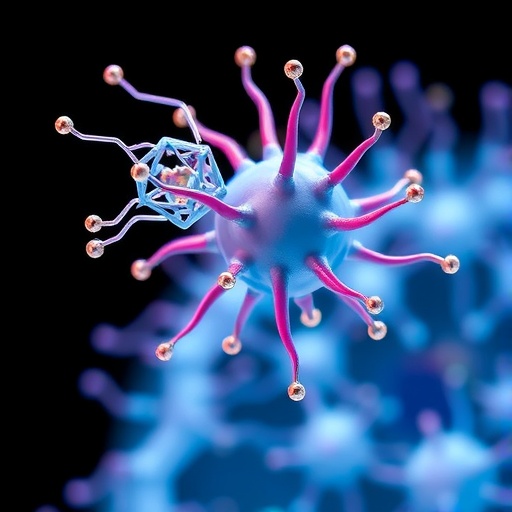
Engineered living cells are becoming miniature biological factories, capable of producing medicines, sustainable chemicals and other valuable products. They can also be designed to sense disease-related signals or respond to changing conditions inside the human body. Yet unlike machines built from fixed mechanical parts, living cells continuously grow, divide and change. That constant motion makes them powerful but unpredictable, creating a major obstacle for scientists who want to control their behavior with the precision expected from modern engineering.
Dr. Chelsea Hu, an assistant professor in the Artie McFerrin Department of Chemical Engineering at Texas A&M University, is developing technologies to make engineered cells more predictable. Her research combines device engineering, real-time feedback control and mathematical modeling to address a problem at the heart of synthetic biology: the same command does not always produce the same response in a living system. A signal that strongly activates a gene early in an experiment may have a weaker or substantially different effect after cells have grown and multiplied.
This changing behavior is especially important in biological manufacturing. In a conventional industrial process, engineers can often use sensors and controllers to keep temperature, pressure or chemical concentration within a desired range. Engineered cells, however, are not passive components. Their internal chemistry changes as they progress through different stages of growth, and cell division can alter the amount of genetic material, proteins and regulatory molecules available inside each cell. As a result, an identical external stimulus may trigger different levels of gene expression at different times.
Hu’s team is addressing this challenge with optogenetics, a technology that uses light to regulate biological processes. In an optogenetic system, researchers introduce light-sensitive genetic components into cells. When illuminated with a particular wavelength or intensity, these components can activate or suppress transcription, the process through which genetic information is copied into messenger RNA and ultimately used to produce proteins. Because light can be delivered rapidly and adjusted with fine control, optogenetics offers a promising way to regulate living cells without repeatedly adding chemicals to a culture.
The difficulty is that light-based control is only as effective as the information guiding it. Many experiments use a predetermined illumination program, such as a fixed sequence of light pulses or a constant intensity. Such open-loop strategies assume that cells will respond consistently throughout the experiment. But as the population grows and its physiology changes, the original light program may become too weak, too strong or simply mistimed. Continuous measurement and automatic adjustment are therefore essential, yet conventional laboratory equipment for combining optical stimulation, biological sensing and feedback control can be expensive and technically demanding.
In a study published in ACS Synthetic Biology, Hu and her colleagues introduced the LED-Embedded Microplate for Optogenetic Studies, or LEMOS. The platform integrates programmable light-emitting diodes with a microplate format commonly used in biological laboratories. Microplates contain rows of small wells, allowing researchers to conduct many cell experiments simultaneously. By embedding controllable LEDs into the system, LEMOS can expose individual cultures to programmed light conditions while collecting measurements that reveal how the cells are responding.
The key feature of LEMOS is its ability to support closed-loop control. Instead of delivering a light pattern without monitoring the outcome, the platform continuously measures indicators such as cell growth and gene expression. A control algorithm can then compare the measured response with a desired target and modify the illumination in real time. If gene expression begins to fall below the target, the system can alter the light signal; if the response becomes excessive, it can reduce or reshape the stimulation. This creates an adaptive relationship between the cells and the device, allowing the control strategy to evolve as the culture changes.
In practical terms, the approach could help researchers maintain more stable biological production. If engineered microbes are being used to manufacture a therapeutic protein or a specialty chemical, uncontrolled changes in gene expression can lower yield, slow growth or place stress on the cells. Excessive production can consume cellular resources and damage the host, while insufficient production can make the process inefficient. A feedback system that adjusts stimulation according to the cells’ measured state could help balance productivity and cellular health. “We can use light to regulate gene expression inside living cells,” Hu said. “This could eventually help improve production yield, reduce stress on the cells and make biological manufacturing more reliable.”
Hu’s group has paired the hardware platform with a mathematical framework called Gene Expression Across Growth Stages, or GEAGS. The model is designed to describe how cellular growth affects gene expression and how those changes influence the performance of feedback control systems. Rather than treating a cell culture as a static population, GEAGS accounts for the fact that growth stage can alter the relationship between an input, such as light, and an output, such as protein production. This distinction is critical because a controller built on an inaccurate model may overcorrect, respond too slowly or fail to maintain the intended biological state.
Together, LEMOS and GEAGS offer complementary solutions to the same problem. LEMOS provides an accessible way to stimulate and monitor cells, while GEAGS helps explain why the response changes and how a controller should adapt. The combination could make synthetic biology experiments more reproducible by giving researchers both a practical instrument and a framework for interpreting dynamic behavior. The underlying principles may eventually extend beyond laboratory cultures to therapeutic cells engineered to sense conditions in the body and respond only when needed. As scientists move toward increasingly complex living technologies, systems that measure, learn and adjust in real time could become essential for turning biological potential into dependable medical and industrial applications.
News Publication Date: Not provided
Web References:
https://engineering.tamu.edu/chemical/profiles/hu-chelsea.html
https://engineering.tamu.edu/chemical/index.html
https://www.tamu.edu/index.html
https://pubmed.ncbi.nlm.nih.gov/42185222/
https://pubmed.ncbi.nlm.nih.gov/42420738/
References:
ACS Synthetic Biology, DOI: 10.1021/acssynbio.6c00003
Article publication date: 19-Jun-2026
Cite Scienmag News
Juliet Wilcox. (August 17, 2026). Scientists Develop Real-Time Control Systems for Engineered Biology. Scienmag. https://scienmag.com/scientists-develop-real-time-control-systems-for-engineered-biology/
Juliet Wilcox. "Scientists Develop Real-Time Control Systems for Engineered Biology." Scienmag, 17 August 2026, https://scienmag.com/scientists-develop-real-time-control-systems-for-engineered-biology/. Accessed 3 September 2026.
Juliet Wilcox. "Scientists Develop Real-Time Control Systems for Engineered Biology." Scienmag. August 17, 2026. https://scienmag.com/scientists-develop-real-time-control-systems-for-engineered-biology/


