

Thursday, August 20, 2026
Science
No Result
View All Result
  • Login
  • HOME
  • SCIENCE NEWS
  • CONTACT US
  • HOME
  • SCIENCE NEWS
  • CONTACT US
No Result
View All Result
Scienmag
No Result
View All Result
Home Science News Cancer

Scientists Develop Novel Approach to Target Challenging Prostate Cancer Protein

July 10, 2026
in Cancer
Reading Time: 2 mins read
0
Scientists Develop Novel Approach to Target Challenging Prostate Cancer Protein

Scientists Develop Novel Approach to Target Challenging Prostate Cancer Protein

65
SHARES
587
VIEWS
Share on FacebookShare on Twitter
ADVERTISEMENT

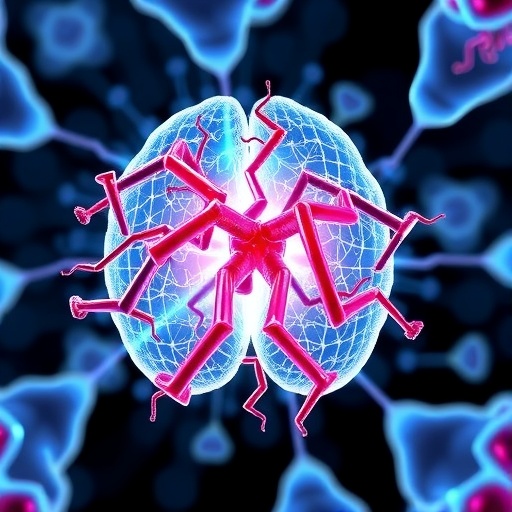
In a groundbreaking study published in the Proceedings of the National Academy of Sciences, researchers at the University of Michigan have uncovered a promising new avenue for targeting prostate cancer by drugging a protein once deemed “undruggable.” Prostate cancer, a leading cause of cancer-related mortality among men in the United States, often involves a genetic rearrangement that fuses the TMPRSS2 and ERG genes. This fusion leads to the abnormal activation of the ERG protein, which in turn fuels tumor growth and metastasis.

Historically, ERG has been a challenging drug target because it lacks well-defined binding pockets, the usual footholds small molecule drugs latch onto. However, the research team has now identified a previously unknown ligandable site within a specific region of the ERG protein known as the PNT domain. This discovery paved the way for the development of a small molecule probe, PBITE-1, designed to selectively bind and inhibit ERG’s oncogenic activity.

The researchers synthesized and screened over 1,600 compounds to find molecules capable of engaging the PNT domain. Through iterative optimization, they developed PBITE-1, which effectively disrupts ERG’s interaction with other proteins critical for cancer progression. In preclinical models—including prostate cancer cell lines and human and murine organ systems—PBITE-1 induced cancer cell death and prevented invasive behavior, demonstrating tangible anti-tumor effects.

This breakthrough is particularly significant because current prostate cancer treatments predominantly target androgen receptors, which activate ERG gene fusions that spur tumor development. While androgen receptor inhibitors can temporarily halt cancer growth, tumors often develop resistance, and patients endure severe side effects. PBITE-1 offers a new therapeutic strategy by directly targeting ERG, potentially circumventing resistance mechanisms associated with hormonal therapy.

Lead investigator Dr. Arul Chinnaiyan, who was instrumental in first identifying the TMPRSS2-ERG fusion, emphasized the importance of this discovery: “Our findings establish ERG as a druggable oncogenic driver, opening the door for personalized treatment strategies tailored to specific prostate cancer subtypes.” While PBITE-1 itself is not yet ready for clinical use, it represents a crucial proof of concept demonstrating that disrupting ERG function is feasible.

The study not only sheds light on the molecular intricacies of prostate cancer but also exemplifies how identifying previously hidden target sites on ‘undruggable’ proteins can propel therapeutic innovation. As drug development efforts continue, PBITE-1 and similar compounds may redefine treatment paradigms, offering hope for improved outcomes in one of men’s most deadly cancers.

Subject of Research: Animals
Article Title: A Ligandable PNT-Domain Establishes ERG as a Directly Targetable Oncogenic Driver in Prostate Cancer
News Publication Date: 7-Jul-2026
Web References: https://doi.org/10.1073/pnas.2537437123
Image Credits: Jessica Johnson
Keywords: Prostate cancer, ERG protein, TMPRSS2-ERG fusion, small molecule probe, PBITE-1, PNT domain, targeted therapy

Tags: challenging drug targetsdrugging undruggable proteinsERG protein inhibitionERG protein structureligandable protein sitesnovel prostate cancer therapiesPNT domain targetingpreclinical cancer modelsprostate cancersmall molecule drug developmenttargeted cancer treatmentTMPRSS2-ERG gene fusion
Share26Tweet16
Previous Post

Einstein’s Relativity Governs Chemical Bonds in Heavy Elements, Study Finds

Next Post

UC Irvine AI system sheds light on neutrino mass mystery

Related Posts

Colorectal Cancer May Damage Nerves Before Chemotherapy Begins
Cancer

Colorectal Cancer May Damage Nerves Before Chemotherapy Begins

August 20, 2026
Researchers develop unified framework explaining a major driver of cancer
Cancer

Researchers develop unified framework explaining a major driver of cancer

August 20, 2026
Scientists map B7-H3 across tumour stroma, blood vessels and immune cells
Cancer

Scientists map B7-H3 across tumour stroma, blood vessels and immune cells

August 20, 2026
Study uncovers overlooked DNA mutation pattern linked to colorectal cancer
Cancer

Study uncovers overlooked DNA mutation pattern linked to colorectal cancer

August 20, 2026
How Aggressive Colon Cancer Tumors Evade the Immune System
Cancer

How Aggressive Colon Cancer Tumors Evade the Immune System

August 19, 2026
Mapping Targetable Alterations in Glioblastoma Patients
Cancer

Mapping Targetable Alterations in Glioblastoma Patients

August 19, 2026
Next Post
UC Irvine AI system sheds light on neutrino mass mystery

UC Irvine AI system sheds light on neutrino mass mystery

  • Mothers who receive childcare support from maternal grandparents show more

    Mothers who receive childcare support from maternal grandparents show more parental warmth, finds NTU Singapore study

    27656 shares
    Share 11059 Tweet 6912
  • University of Seville Breaks 120-Year-Old Mystery, Revises a Key Einstein Concept

    1061 shares
    Share 424 Tweet 265
  • Bee body mass, pathogens and local climate influence heat tolerance

    682 shares
    Share 273 Tweet 171
  • Researchers record first-ever images and data of a shark experiencing a boat strike

    546 shares
    Share 218 Tweet 137
  • Groundbreaking Clinical Trial Reveals Lubiprostone Enhances Kidney Function

    531 shares
    Share 212 Tweet 133
Science

Embark on a thrilling journey of discovery with Scienmag.com—your ultimate source for cutting-edge breakthroughs. Immerse yourself in a world where curiosity knows no limits and tomorrow’s possibilities become today’s reality!

RECENT NEWS

  • Scientists Move Closer to Controlling Individual Electrons
  • USC research shows gray and white matter jointly support older adults’ cognition
  • uOttawa Study Links Parkinson’s Gene to Potential Defenses Against Deadly Bacterial Infections
  • First 24 Hours After Viral Infection Are Critical for Disease Outcomes

Categories

  • Agriculture
  • Anthropology
  • Archaeology
  • Athmospheric
  • Biology
  • Biotechnology
  • Blog
  • Bussines
  • Cancer
  • Chemistry
  • Climate
  • Earth Science
  • Editorial Policy
  • Marine
  • Mathematics
  • Medicine
  • Pediatry
  • Policy
  • Psychology & Psychiatry
  • Science Education
  • Social Science
  • Space
  • Technology and Engineering

Subscribe to Blog via Email

Enter your email address to subscribe to this blog and receive notifications of new posts by email.

Join 5,150 other subscribers

© 2025 Scienmag - Science Magazine

Welcome Back!

Login to your account below

Forgotten Password?

Retrieve your password

Please enter your username or email address to reset your password.

Log In
No Result
View All Result
  • HOME
  • SCIENCE NEWS
  • CONTACT US

© 2025 Scienmag - Science Magazine

Discover more from Science

Subscribe now to keep reading and get access to the full archive.

Continue reading
