


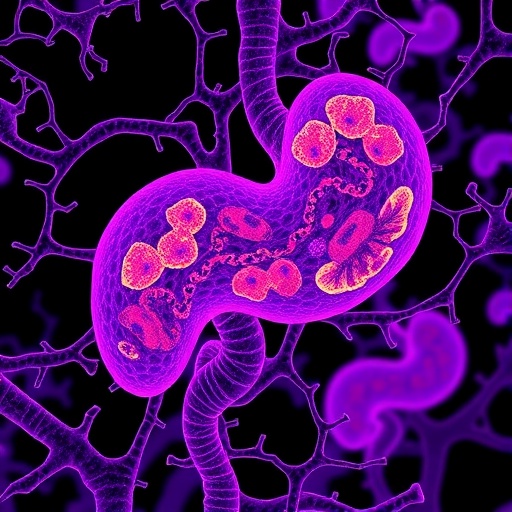
Scientists at the Free University of Brussels (VUB) have delivered a groundbreaking advance in the realm of pancreatic cancer research by producing a high-resolution cellular map of the healthy human pancreas. This meticulous cellular atlas reveals the presence of a rare and previously uncharacterized population of cells within the pancreatic ductal system. Remarkably, these cells exhibit molecular and structural features that strongly resemble those of the most aggressive pancreatic tumor cells. Published in the esteemed journal Gut, this discovery is poised to redefine our understanding of pancreatic tumorigenesis and offers promising avenues for the early detection and targeted therapy of this formidable malignancy.
Pancreatic cancer remains one of the deadliest and most therapeutically challenging cancers worldwide, largely due to its aggressive progression and the obscure biological origins of its diverse tumor subtypes. Historically, the pancreatic ductal epithelium—the tissue lining the organ’s drainage ducts where the majority of pancreatic tumors arise—was thought to be a relatively simple, uniform cell population. This long-held conception limited the scope of research focused on the cellular and molecular heterogeneity within this tissue. However, the pioneering work conducted at VUB’s Translational Oncology Research Centre has fundamentally altered this paradigm by revealing a complex, multilayered architecture within the large pancreatic ducts.
Utilizing cutting-edge single-cell sequencing technologies, spatial transcriptomics, and advanced imaging techniques, PhD researcher Jan-Lars Van den Bossche and colleagues generated an unprecedentedly detailed portrait of the human pancreas under physiological conditions. Their analysis uncovered that the previously assumed homogeneous ductal structure is, in fact, composed of multiple cellular layers. Intriguingly, these layers harbor a distinct and scarce subset of cells endowed with unique molecular characteristics that mirror those found exclusively in highly aggressive pancreatic tumor cells. This finding challenges conventional theories of tumor origin and suggests that these rare cells in healthy tissue may serve as precursors or facilitators in tumor development.
Professor Dr Ilse Rooman, leading the research team, emphasizes the significance of their foundational approach: “Comprehensive understanding of pancreatic cancer etiology hinges on an intimate knowledge of the normal biology of the organ itself. Recognizing that these specific cell populations exist naturally allows us to probe their potential contributions to tumor initiation and progression for the first time.” This insight could unlock critical diagnostic markers and intervention points well before tumors become clinically manifest, thus transforming the landscape of early detection.
Comparative analyses between healthy pancreatic tissue and tumor samples from patients suffering from pancreatic ductal adenocarcinoma (PDAC) and its rarer but more lethal variant, adenosquamous carcinoma (ASCP), unveiled striking disparities in cellular architecture. In PDAC, the typical tissue organization—the layered ductal structures—is largely obliterated, reflecting rampant cellular disorganization and loss of normal tissue features. By contrast, the ASCP tumors display near-perfect retention of the atypical healthy cell populations and their spatial configurations, suggesting a fundamentally different tissue remodeling process in this variant’s carcinogenesis.
This revelation has profound implications not only for diagnostics but also for therapeutic strategies. Current clinical protocols treat patients with ASCP identically to those with classical PDAC despite their divergent biological behaviors and tissue organization. Given the preservation of distinct cell types in ASCP tumors, there is a compelling argument to pursue variant-specific therapeutic regimens strictly targeting these cells. Tailoring treatment according to tumor subtype and cellular composition promises to enhance efficacy and minimize unnecessary toxicity.
From a mechanistic perspective, the discovery of natural cell populations sharing aggressive cancer cell properties raises intriguing questions about pancreatic tumor initiation. These rare ductal cells may harbor intrinsic molecular programs or susceptibilities that predispose them to malignant transformation. Decoding the signaling pathways and epigenetic landscapes governing these cells could reveal novel vulnerabilities that therapies can exploit. Moreover, the layered structure of the pancreatic ducts invites a reevaluation of how microenvironmental factors and intercellular communication orchestrate tumor onset.
The application of spatial transcriptomics in this study was instrumental in situating the identified cell populations within their precise anatomical context. This approach preserves the spatial relationships among cells, which is crucial for understanding how these rare cells interact with neighboring tissues and contribute to tumor microenvironment dynamics. The integration of imaging mass cytometry and multiplexed immunofluorescence further corroborated the existence and identity of these cells, underscoring the synergy of multimodal technologies in unraveling complex tissue architecture.
Furthermore, the insights provided by this cellular mapping extend beyond the pancreas. They exemplify a broader principle in oncology: the need for exhaustive characterization of normal tissue architecture to illuminate cancer origins. Many malignancies originate within intricate, heterogeneous tissues that traditional histological assessments oversimplify. By adopting single-cell and spatially resolved methodologies, researchers can delineate the cellular hierarchies and niche environments that underpin both healthy physiology and pathological transformation.
The translational potential of this research is immense. Early detection of pancreatic cancer, which currently remains elusive and is typically diagnosed at advanced stages, could be revolutionized by molecular diagnostics targeting markers unique to these rare ductal cells. Moreover, drug development efforts can be more precisely focused on intercepting the early stages of tumor progression or selectively eradicating the aggressive cell populations identified. The work from VUB sets a new benchmark for integrating basic science discoveries with clinical applications in pancreatic oncology.
In conclusion, this seminal study from the Free University of Brussels redefines our understanding of the pancreatic ductal epithelium by identifying rare cell populations intimately linked to aggressive pancreatic cancers. These findings challenge prevailing dogma and open novel frontiers for early diagnosis, personalized therapy, and deeper insights into the fundamental biology of one of the most lethal cancer types known to medicine. As researchers worldwide build upon this cellular atlas, the hope for improving patient outcomes in pancreatic cancer shines brighter than ever.
News Publication Date: [Not specified]
Web References:
Cite Scienmag News
Nathaniel Bowman. (June 9, 2026). Scientists Decode Pancreatic Stratification, Paving the Way for Improved Cancer Detection and Treatment. Scienmag. https://scienmag.com/scientists-decode-pancreatic-stratification-paving-the-way-for-improved-cancer-detection-and-treatment/
Nathaniel Bowman. "Scientists Decode Pancreatic Stratification, Paving the Way for Improved Cancer Detection and Treatment." Scienmag, 9 June 2026, https://scienmag.com/scientists-decode-pancreatic-stratification-paving-the-way-for-improved-cancer-detection-and-treatment/. Accessed 4 September 2026.
Nathaniel Bowman. "Scientists Decode Pancreatic Stratification, Paving the Way for Improved Cancer Detection and Treatment." Scienmag. June 9, 2026. https://scienmag.com/scientists-decode-pancreatic-stratification-paving-the-way-for-improved-cancer-detection-and-treatment/


