


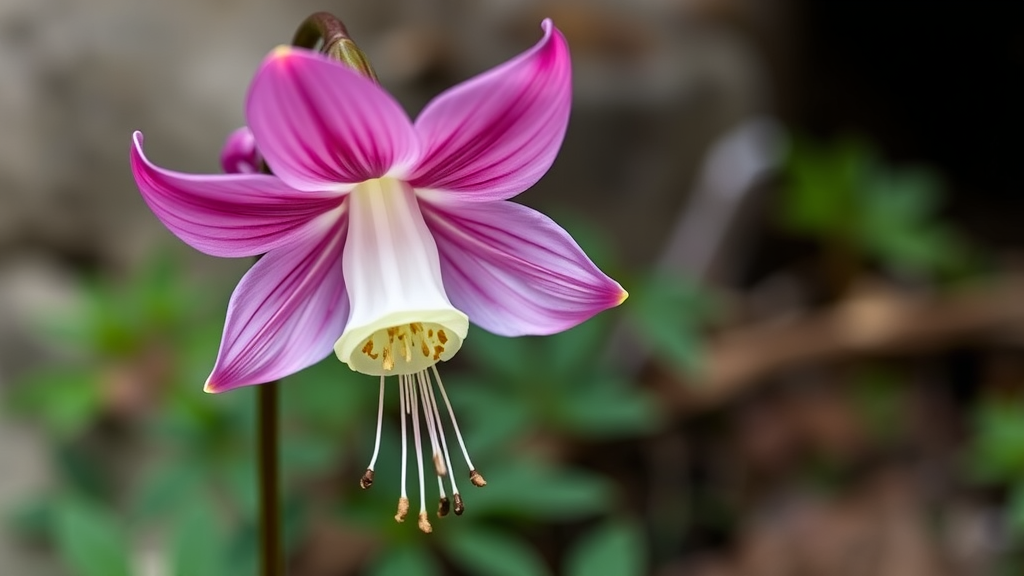
A delicate herb that perfumes the high meadows of the Kashmir Himalaya has been thrown a scientific lifeline. In a study published in Discover Conservation, researchers at the University of Kashmir report that they have worked out, for the first time, reliable recipes for multiplying the endangered sweet-scented columbine, Aquilegia fragrans Benth, both through ordinary rhizome cuttings and through laboratory-based micropropagation. The achievement matters because this medicinal plant, prized in traditional Kashmiri medicine for treating wounds, inflammatory conditions, psoriasis, eczema, kidney stones, gout, headaches and even bovine mastitis, is sliding toward extinction thanks to slow seed germination, poor natural regeneration and destructive harvesting of wild populations.
The research team, led by Irshad Ahmad Bhat together with Khushboo Guleria, Anamika Kumari, Sajida Banoo, Zahoor A. Kaloo and Mudasir Fayaz, collected fresh rhizomes in May 2022 from wild populations at Gulmarg and Aharbal in Jammu and Kashmir, regions the study describes as part of a recognized biodiversity hotspot. Voucher specimens were verified and deposited in the herbarium of the Centre for Biodiversity and Taxonomy at the University of Kashmir. The broader context is sobering: the Kashmir Himalaya alone harbours roughly 1,123 medicinal plant species, and an estimated 15,000 medicinal plant species worldwide now face extinction risk as demand for plant-derived therapies outpaces natural supply.
The core of the vegetative propagation work involved slicing rhizomes lengthwise into segments, sterilizing them in a 2 percent Bavistin fungicide solution, and then soaking the pieces for 48 hours in different plant growth regulators before planting them in pots. The hormones tested included gibberellic acid (GA3), the synthetic auxin indole-3-butyric acid (IBA), the cytokinin benzylaminopurine (BAP) and the aromatic cytokinin meta-topolin, each at 50, 100, 150 and 200 parts per million, alongside untreated controls. The results were striking. Cuttings treated with 150 ppm GA3 sprouted at a rate of 83.34 percent, compared with just 25 percent in untreated controls, and sprouted fastest, in an average of only 20.75 days.
Gibberellin treatment did far more than speed germination. GA3 at 150 ppm produced plants with an average of 44.75 leaves per plant, a shoot length of 16.6 centimetres and a rhizome length of 9.5 centimetres, all significantly higher than the control group. The authors explain that gibberellins are known to accelerate the transport of cytokinins to developing buds and to modify carbohydrate metabolism, which helps explain the vigorous sprouting and organ development observed. Interestingly, meta-topolin failed entirely to stimulate rhizome sprouting, underscoring how species-specific hormone responses can be and why empirical optimization is essential before any conservation program scales up.
Because what a cutting grows in matters nearly as much as what it is dipped in, the team also tested thirteen different soil compositions mixing soil, sand, vermicompost, peat moss and pebbles. The winning combinations were a 1:1:1 blend of soil, sand and vermicompost and a 1:1:1 mix of soil, pebbles and vermicompost, both of which achieved a perfect 100 percent sprouting rate. The fastest sprouting occurred in the soil-pebble-vermicompost mix at 19.75 days. The authors attribute the success of these porous, organic-rich substrates to better aeration and drainage, conditions that mirror the rocky, well-drained alpine meadows where the species naturally grows, and note that vermicompost supplies slow-release nitrogen and phosphorus while boosting microbial activity in the rooting zone.
The second half of the study moved from the greenhouse to the sterile laboratory. Healthy nodal segments from polyhouse-grown donor plants were disinfected using six different chemical sterilization protocols, and the most effective protocol achieved a contamination rate of only 8.46 percent, minimal tissue necrosis of 2.84 percent and an explant survival rate of 93.14 percent. The study found that mercuric chloride worked best not alone but in combination with sodium hypochlorite, consistent with earlier findings in pomegranate, bitter gourd and gerbera. With clean cultures established, the explants were placed on Murashige and Skoog medium supplemented with varying concentrations of the cytokinins meta-topolin and thidiazuron (TDZ).
Cytokinin choice and dose proved decisive for shoot regeneration. Neither hormone induced any shoots at all in regulator-free control medium, indicating that endogenous hormone levels in the explant tissue are insufficient to trigger regeneration on their own. Responses rose in a concentration-dependent manner up to 3.5 milligrams per litre, where TDZ alone produced a 75 percent regeneration frequency with 5.33 shoots per explant, and meta-topolin alone achieved 72.25 percent with six shoots per explant. Pushing concentrations to 4 milligrams per litre actually reduced regeneration efficiency, a classic supra-optimal dose response. Even better results came from pairing cytokinins with auxins: the combination of 3.5 milligrams per litre TDZ with 1.25 milligrams per litre IBA delivered the study’s headline figure of 82 percent regeneration, six shoots per explant, shoots up to 6.41 centimetres long and the shortest induction period of just 19.33 days.
Perhaps the most technically interesting component involved inducing the plantlets to form micro-rhizomes in culture. Because the medicinal value of A. fragrans is concentrated in its rhizomes, wild harvesting is inherently destructive, so producing rhizomes in vitro offers a way to supply raw material without touching wild populations. When shoots were transferred to medium containing the auxin naphthalene acetic acid (NAA), rhizome formation followed a clear dose response, peaking at 1.5 milligrams per litre NAA with a 71.45 percent induction rate, rhizomes averaging 6.02 centimetres, and the shortest induction time of 35.73 days. No rhizomes formed in regulator-free medium or at the highest NAA dose, reinforcing the narrow window of effective concentration.
The final bottleneck, and often the graveyard of micropropagation protocols, is hardening, the transition of fragile laboratory plantlets to ordinary greenhouse life. Here the team washed agar from plantlets bearing well-developed micro-rhizomes, moved them first into vermiculite under high humidity, and then into pots of soil, sand and vermicompost. Three quarters of the plantlets survived, and, crucially, no visible phenotypic differences appeared between the laboratory-raised plants and their wild relatives. The authors candidly acknowledge one limitation: molecular markers such as ISSR or RAPD were not used to confirm clonal fidelity at the genetic level, so hidden somaclonal variation cannot be fully ruled out. The regenerated plants were eventually transferred to a prepared plot at the Kashmir University Botanical Garden in June.
Taken together, the protocols offer a dual pathway forward: fast, cheap field multiplication of elite clones via GA3-treated rhizome cuttings in vermicompost-enriched soil, and a high-throughput tissue culture system for producing disease-free, genetically uniform planting stock at industrial scale. Both routes circumvent the species’ bottleneck of slow, unreliable seed germination and directly reduce pressure on wild populations whose rhizomes are currently harvested destructively. The authors argue the framework is readily transferable to other endangered Himalayan medicinal plants and set out the next research frontier: scaling up root biomass in culture, applying elicitation strategies to boost secondary metabolite production, and building the phytochemical and pharmacological database the species still lacks, so that its therapeutic compounds can eventually be standardized and clinically validated without costing the species its place on the mountain.
Subject of Research: Optimization of vegetative propagation and in vitro micropropagation protocols for the endangered Himalayan medicinal plant Aquilegia fragrans
Article Title: Optimization of vegetative propagation and micropropagation protocols for the conservation and large-scale cultivation of Aquilegia fragrans Benth
Article References: Bhat, I. A., Guleria, K., Kumari, A., Banoo, S., Kaloo, Z. A., & Fayaz, M. (2026). Optimization of vegetative propagation and micropropagation protocols for the conservation and large-scale cultivation of Aquilegia fragrans Benth. Discover Conservation, 3(1), Article 30. https://doi.org/10.1007/s44353-026-00099-7
Image Credits: AI Generated
DOI: 10.1007/s44353-026-00099-7
Keywords: Aquilegia fragrans, micropropagation, vegetative propagation, gibberellic acid, plant tissue culture, thidiazuron, meta-topolin, rhizome cuttings, medicinal plants, Kashmir Himalaya, plant conservation, vermicompost
Cite Scienmag News
Margaret Porter. (September 12, 2026). Scientists Crack the Code for Saving a Rare Fragrant Himalayan columbine. Scienmag. https://scienmag.com/scientists-crack-the-code-for-saving-a-rare-fragrant-himalayan-columbine/
Margaret Porter. "Scientists Crack the Code for Saving a Rare Fragrant Himalayan columbine." Scienmag, 12 September 2026, https://scienmag.com/scientists-crack-the-code-for-saving-a-rare-fragrant-himalayan-columbine/. Accessed 5 October 2026.
Margaret Porter. "Scientists Crack the Code for Saving a Rare Fragrant Himalayan columbine." Scienmag. September 12, 2026. https://scienmag.com/scientists-crack-the-code-for-saving-a-rare-fragrant-himalayan-columbine/


