


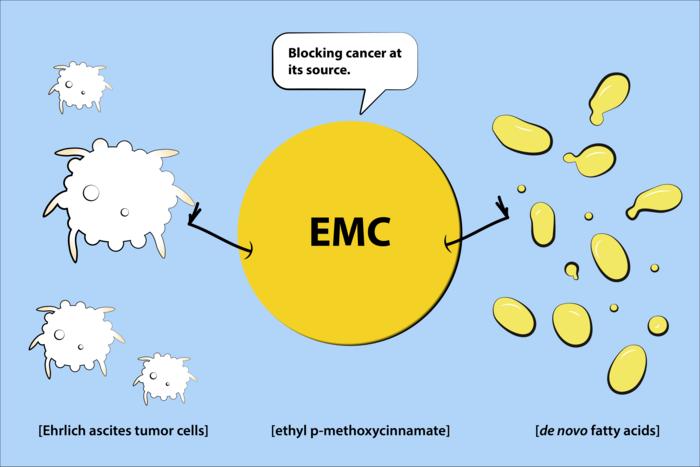
In a groundbreaking study conducted by researchers at Osaka Metropolitan University, ethyl p-methoxycinnamate (EMC), a predominant compound found in kencur ginger, has been identified as a potent inhibitor of tumor growth through a novel mechanism involving the disruption of cancer cell metabolism. This discovery challenges long-held views on the metabolic pathways that cancer cells employ and opens promising avenues for therapeutic development targeting lipid metabolism rather than the well-studied glycolytic pathway.
Cancer cells primarily generate energy using a metabolic adaptation known as the Warburg effect, in which glucose is fermented into lactate even in the presence of adequate oxygen, favoring rapid ATP production via glycolysis. While this pathway is considered less efficient compared to oxidative phosphorylation, it has been enigmatic why cancer cells depend heavily on this mechanism to fuel their unchecked proliferation and survival. The study led by Associate Professor Akiko Kojima-Yuasa delved deeply into this metabolic paradox by scrutinizing the effects of EMC on tumor cell energy dynamics.
Ethyl p-methoxycinnamate, an ester derivative of cinnamic acid abundant in kencur ginger, was administered to Ehrlich ascites tumor cells to investigate its impact on their energy metabolism. Prior research had demonstrated EMC’s cytostatic properties, but the precise metabolic targets remained undefined. The current research illuminated that EMC’s anticancer efficacy is not primarily mediated by inhibiting glycolysis as previously hypothesized. Instead, the compound acts by suppressing de novo fatty acid synthesis and perturbing lipid metabolism, critical pathways for sustaining ATP production and membrane biosynthesis in proliferating tumor cells.
Upon EMC treatment, tumor cells exhibited a marked decrease in ATP levels, attributable to the downregulation of key enzymes involved in fatty acid biosynthetic processes. Since fatty acids serve as essential building blocks for both energy storage and membrane formation, their synthesis represents a vital facet of cancer cell metabolic reprogramming. By disrupting this lipid-centric metabolic axis, EMC imposes an energy crisis that impairs tumor growth and viability.
Interestingly, despite the inhibition of fatty acid synthesis, cancer cells responded by upregulating glycolytic flux, presumably as a compensatory survival mechanism to offset the energy deficit. This metabolic plasticity underscores the complexity of cancer cell bioenergetics and suggests that the Warburg effect alone does not capture the entirety of tumor metabolism. The observed glycolytic increase may reflect cellular attempts to adapt and resist complete metabolic collapse, highlighting the resilience of cancer cells in hostile environments.
However, this compensatory glycolytic surge did not culminate in cell death, indicating that EMC’s mode of action induces cytostatic rather than cytotoxic effects. This is a crucial nuance, as it suggests that while EMC impairs tumor growth by metabolic interference, it may need to be combined with other therapies to achieve full tumor eradication. Nonetheless, its ability to selectively impede lipid synthesis in cancer cells while triggering adaptive glycolysis reveals an exploitable metabolic vulnerability.
This paradigm-shifting insight not only augments the understanding of the Warburg effect but also expands the conceptual framework of cancer metabolism, emphasizing the importance of lipid pathways alongside glucose processing. It prompts a reevaluation of metabolic targets for anticancer drug development, encouraging exploration of agents that degrade fatty acid biosynthetic machinery or modulate lipid homeostasis.
Professor Kojima-Yuasa noted that these findings lay foundational groundwork for identifying new therapeutic targets that transcend conventional glycolytic intervention strategies. As tumor cells rely heavily on fatty acid metabolism for energy and structural components, compounds like EMC could form the basis of next-generation treatments aimed at starving cancer cells through metabolic sabotage.
Moreover, the study highlights the potential significance of natural products such as EMC as bioactive compounds capable of modulating complex biochemical networks within cancer cells. Natural metabolites derived from plants have historically inspired pharmacological breakthroughs, and EMC’s newly discovered role reaffirms the vast untapped therapeutic potential present in nature’s chemical repertoire.
Beyond biochemical implications, this research illustrates the power of integrating experimental cell biology with metabolic studies to elucidate intricate cellular processes. The assays demonstrated that the suppression of ATP generation did not arise from blocking classic glycolysis but rather from interference in specific lipid synthesis pathways, a revelation that could shift the focus of future cancer metabolism research.
As cancers exhibit remarkable heterogeneity in their metabolic profiles, targeting multiple metabolic nodes is likely necessary to overcome resistance mechanisms. EMC represents a promising lead compound that, by impairing fatty acid biosynthesis, could be synergized with other metabolic inhibitors to deliver potent antitumor effects.
In conclusion, Osaka Metropolitan University’s pioneering work on EMC provides compelling evidence that cancer metabolism is more multifaceted than previously understood and that fatty acid synthesis is a critical, druggable aspect of tumor biology. The shift from an exclusive focus on glycolysis to a broader interpretation encompassing lipid metabolism heralds new frontiers in oncology research and therapeutic innovation.
Cite Scienmag News
Nathaniel Bowman. (June 10, 2025). Scientists Block Newly Discovered Cancer Cell Energy Pathway Using Natural Compound. Scienmag. https://scienmag.com/scientists-block-newly-discovered-cancer-cell-energy-pathway-using-natural-compound/
Nathaniel Bowman. "Scientists Block Newly Discovered Cancer Cell Energy Pathway Using Natural Compound." Scienmag, 10 June 2025, https://scienmag.com/scientists-block-newly-discovered-cancer-cell-energy-pathway-using-natural-compound/. Accessed 4 September 2026.
Nathaniel Bowman. "Scientists Block Newly Discovered Cancer Cell Energy Pathway Using Natural Compound." Scienmag. June 10, 2025. https://scienmag.com/scientists-block-newly-discovered-cancer-cell-energy-pathway-using-natural-compound/


