

Saturday, October 24, 2026
Science
No Result
View All Result
  • Login
  • HOME
  • SCIENCE NEWS
  • CONTACT US
  • HOME
  • SCIENCE NEWS
  • CONTACT US
No Result
View All Result
Scienmag
No Result
View All Result
Home Science News Medicine

Schistosomiasis detected in one in nine women delivering at Ugandan hospital

October 24, 2026
in Medicine, Policy
Harold Sullivan
By Harold Sullivan Scienmag Editorial Profile - Maternal and Child Health
Reading Time: 2 mins read
0
Schistosomiasis detected in one in nine women delivering at Ugandan hospital

Schistosomiasis detected in one in nine women delivering at Ugandan hospital

65
SHARES
587
VIEWS
Share on FacebookShare on Twitter
ADVERTISEMENT

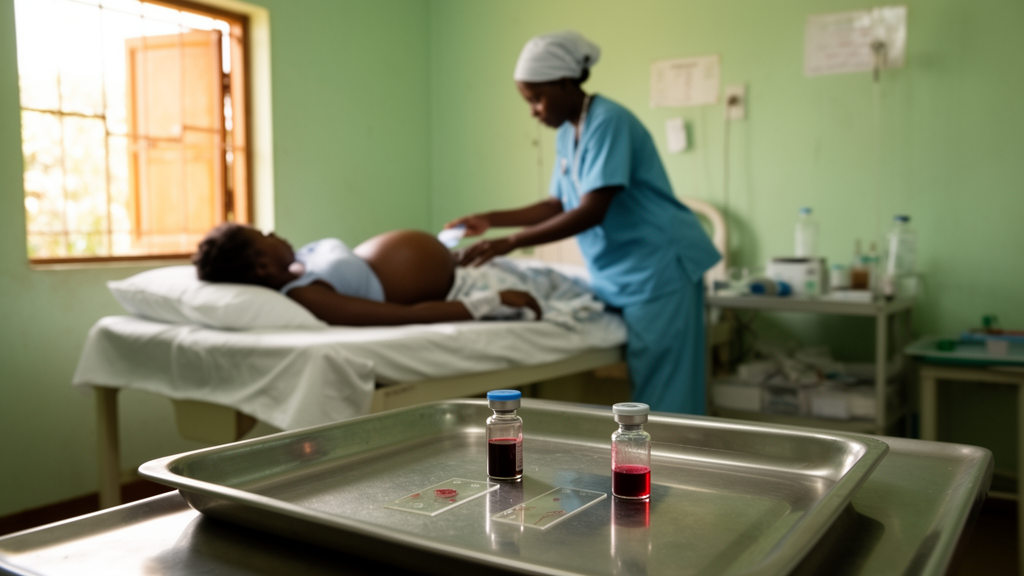
Researchers screening women giving birth at Jinja Regional Referral Hospital in eastern Uganda found microscopically detectable schistosomiasis in 44 of 392 participants, a prevalence of 11.2 percent (95% CI: 8.5–14.8). Among the microscopy-positive women, S. haematobium predominated, accounting for 63.6 percent of infections (95% CI: 48.2–76.7), while S. mansoni accounted for 29.5 percent (95% CI: 17.7–45.0) and mixed infections for 6.8 percent (95% CI: 2.1–19.6). Household water, sanitation and hygiene characteristics were strongly linked to infection.

After multivariable logistic regression adjustment, women whose main water source was unimproved had roughly three times the adjusted odds of microscopy-detected infection compared with other participants (aOR = 3.11; 95% CI: 1.46–6.64; p = 0.003). An unimproved main toilet facility showed the largest association (aOR = 4.40; 95% CI: 2.01–9.67; p < 0.001), and the absence of a handwashing facility roughly doubled the adjusted odds (aOR = 2.12; 95% CI: 1.02–4.41; p = 0.043). These principal WASH associations remained consistent in sensitivity analyses that used parsimonious conventional and Firth penalized models.

Antenatal care also featured in the analysis. Women reporting fewer than four antenatal care contacts had higher adjusted odds of infection than those reporting four to seven contacts (aOR = 8.43; 95% CI: 3.21–22.18; p < 0.001). The authors, however, caution that this antenatal care association requires cautious interpretation, and that the cross-sectional design cannot establish whether fewer care contacts contributed to infection or reflects other underlying differences between participants.

The study team emphasizes that these cross-sectional findings do not establish causality. Because exposure and infection were measured at the same time, the WASH characteristics identified are associated factors rather than proven causes of infection. Even so, the consistency of the WASH associations across sensitivity analyses strengthens the case that household water and sanitation conditions track closely with microscopy-detected schistosomiasis among delivering women in this setting.

The authors conclude that the results support further evaluation of context-appropriate schistosomiasis risk assessment within maternal health services, alongside coordinated WASH and schistosomiasis-control strategies in endemic settings. With more than one in ten delivering women at the hospital carrying microscopically detectable infections, and S. haematobium responsible for the majority of microscopy-classified cases, the findings point to delivery-based screening and household sanitation improvements as complementary targets for maternal health planning in eastern Uganda.

Subject of Research: Prevalence, microscopy-based species distribution and associated household WASH characteristics of maternal schistosomiasis at delivery in eastern Uganda

Article Title: Microscopically detectable maternal schistosomiasis at delivery in Eastern Uganda: Prevalence, microscopy-based species distribution and associated household WASH characteristics in a hospital-based cross-sectional study

Article References: Sande, G. B., Kasujja, M., Okurut, E., Okello, M., Ishimwe, M. P. S., Nteziyaremye, T., Yaweh, J., Mugabi, D., Liban, S., Okot, G., Neel, G. R., Sunday, B. Y., Igwe, M. C., Muhumuza, A., & Hakizimana, T. (2026). Microscopically detectable maternal schistosomiasis at delivery in Eastern Uganda: Prevalence, microscopy-based species distribution and associated household WASH characteristics in a hospital-based cross-sectional study. PLOS Global Public Health, 6(10), e0006297. https://doi.org/10.1371/journal.pgph.0006297

Image Credits: AI Generated

DOI: 10.1371/journal.pgph.0006297

Keywords: schistosomiasis, Schistosoma haematobium, Schistosoma mansoni, Uganda, maternal health, WASH, cross-sectional study, parasitology, antenatal care, Jinja Regional Referral Hospital, Microscopically, detectable

Cite Scienmag News

Harold Sullivan. (October 24, 2026). Schistosomiasis detected in one in nine women delivering at Ugandan hospital. Scienmag. https://scienmag.com/schistosomiasis-detected-in-one-in-nine-women-delivering-at-ugandan-hospital/


Harold Sullivan. "Schistosomiasis detected in one in nine women delivering at Ugandan hospital." Scienmag, 24 October 2026, https://scienmag.com/schistosomiasis-detected-in-one-in-nine-women-delivering-at-ugandan-hospital/. Accessed 24 October 2026.

Harold Sullivan. "Schistosomiasis detected in one in nine women delivering at Ugandan hospital." Scienmag. October 24, 2026. https://scienmag.com/schistosomiasis-detected-in-one-in-nine-women-delivering-at-ugandan-hospital/

Tags: and hygiene (WASH) factors and parasitic infectionsantenatal careassociation between toilet facilities and schistosomiasis infectioncross-sectional studydetectablehealthcare access during pregnancyimpact of unimproved water sources on schistosomiasis riskimportance of handwashing facilities in disease preventionJinja Regional Referral HospitalMaternal healthmaternal health and parasitic infections in UgandaMicroscopicallyparasitologyprevalence of S. haematobium and S. mansoni in pregnant womenrisk factors for schistosomiasis in low-resourcesanitationSchistosoma haematobiumSchistosoma mansonischistosomiasisschistosomiasis prevalence in pregnant womenUgandaWASHwater
Share26Tweet16
Previous Post

Human-Caused Warming Halted a Glacial Period That Began 2,000 Years Ago

Next Post

Chimeric rodent malaria parasites put P. vivax vaccine antigens SSP3 and SPECT1 to the test

Related Posts

Chimeric rodent malaria parasites put P. vivax vaccine antigens SSP3 and SPECT1 to the test
Medicine

Chimeric rodent malaria parasites put P. vivax vaccine antigens SSP3 and SPECT1 to the test

October 24, 2026
Proton beam pauses mid-heartbeat to spare healthy tissue in cardiac ablation
Medicine

Proton beam pauses mid-heartbeat to spare healthy tissue in cardiac ablation

October 24, 2026
Multidrug-resistant bacteria drive one in five VP shunt infections in Pakistan
Medicine

Multidrug-resistant bacteria drive one in five VP shunt infections in Pakistan

October 24, 2026
Climate Change Moves Into the Core of Health Professional Training
Medicine

Climate Change Moves Into the Core of Health Professional Training

October 24, 2026
Severe Constipation Masqueraded as Brain Infection in a Teenager, Case Report Warns
Medicine

Severe Constipation Masqueraded as Brain Infection in a Teenager, Case Report Warns

October 24, 2026
Meningioma Risk Score Overestimates Surgical Complications in Independent Validation
Medicine

Meningioma Risk Score Overestimates Surgical Complications in Independent Validation

October 24, 2026
Next Post
Chimeric rodent malaria parasites put P. vivax vaccine antigens SSP3 and SPECT1 to the test

Chimeric rodent malaria parasites put P. vivax vaccine antigens SSP3 and SPECT1 to the test

  • Mothers who receive childcare support from maternal grandparents show more optimized

    Mothers who receive childcare support from maternal grandparents show more parental warmth, finds NTU Singapore study

    27656 shares
    Share 11059 Tweet 6912
  • University of Seville Breaks 120-Year-Old Mystery, Revises a Key Einstein Concept

    1061 shares
    Share 424 Tweet 265
  • Bee body mass, pathogens and local climate influence heat tolerance

    682 shares
    Share 273 Tweet 171
  • Researchers record first-ever images and data of a shark experiencing a boat strike

    546 shares
    Share 218 Tweet 137
  • Groundbreaking Clinical Trial Reveals Lubiprostone Enhances Kidney Function

    531 shares
    Share 212 Tweet 133
Science

Embark on a thrilling journey of discovery with Scienmag.com—your ultimate source for cutting-edge breakthroughs. Immerse yourself in a world where curiosity knows no limits and tomorrow’s possibilities become today’s reality!

RECENT NEWS

  • Chimeric rodent malaria parasites put P. vivax vaccine antigens SSP3 and SPECT1 to the test
  • Schistosomiasis detected in one in nine women delivering at Ugandan hospital
  • Human-Caused Warming Halted a Glacial Period That Began 2,000 Years Ago
  • Physical Literacy Research on Children With Special Needs Stuck in Segregated Settings, Review Finds

Categories

  • Agriculture
  • Anthropology
  • Archaeology
  • Athmospheric
  • Biology
  • Biotechnology
  • Blog
  • Bussines
  • Cancer
  • Chemistry
  • Climate
  • Earth Science
  • Editorial Policy
  • Marine
  • Mathematics
  • Medicine
  • Pediatry
  • Policy
  • Psychology & Psychiatry
  • Science Education
  • Science News
  • Social Science
  • Space
  • Technology and Engineering

Subscribe to Blog via Email

Enter your email address to subscribe to this blog and receive notifications of new posts by email.

Join 5,152 other subscribers

© 2025 Scienmag - Science Magazine

Welcome Back!

Login to your account below

Forgotten Password?

Retrieve your password

Please enter your username or email address to reset your password.

Log In
No Result
View All Result
  • HOME
  • SCIENCE NEWS
  • CONTACT US

© 2025 Scienmag - Science Magazine

Discover more from Science

Subscribe now to keep reading and get access to the full archive.

Continue reading