


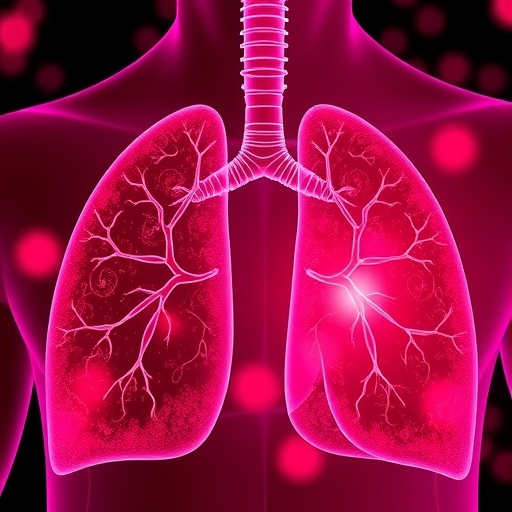
In a groundbreaking advancement in the field of immunology and pulmonary medicine, researchers have unveiled a novel therapeutic mechanism targeting sepsis-induced acute lung injury (ALI), a critical condition that significantly contributes to mortality worldwide. This newly identified axis revolves around the modulation of tissue-resident alveolar macrophages (TRAMs) mediated by Sbno2, offering a beacon of hope for managing this life-threatening complication. The study, spearheaded by Dai, Wu, Zhong, and colleagues, published in Cell Death Discovery in 2026, elucidates the intricate biological pathways involving Sbno2 that regulate the immune response in the lungs during septic injury.
Acute lung injury, particularly when precipitated by sepsis, represents a pathological state characterized by extensive inflammation, disruption of alveolar-capillary barriers, and subsequent respiratory failure. The alveolar macrophages, which reside within the lung’s alveoli, serve as the frontline defenders against invading pathogens and environmental insults. These cells are instrumental in orchestrating immune responses and maintaining pulmonary homeostasis. However, despite their critical role, the molecular underpinnings that govern their function during sepsis-associated ALI have remained inadequately understood until this pivotal study brought Sbno2 into focus.
Sbno2, a transcriptional co-regulator, is becoming increasingly recognized for its role in modulating inflammatory processes. The research delineates how Sbno2 expression in alveolar macrophages governs their activation state, influencing both cytokine production and cellular behavior in the microenvironment of the lung during sepsis. By mediating the transcriptional programs within TRAMs, Sbno2 steers the balance between pro-inflammatory and anti-inflammatory phenotypes, suggesting its function as a molecular fulcrum in immune regulation.
The implications of these findings are profound. Investigators employed a combination of in vivo models of sepsis-induced ALI and ex vivo analysis of macrophage populations, uncovering that enhanced Sbno2 activity correlates with a protective phenotype in alveolar macrophages. This phenotype reduces excessive inflammation and attenuates tissue damage, thereby preserving lung architecture and function. These insights suggest that therapeutic strategies aimed at amplifying Sbno2-mediated signaling in alveolar macrophages might mitigate the severity of lung injury during sepsis.
Further molecular characterization revealed that Sbno2 influences a network of downstream genes associated with inflammation resolution. Notably, Sbno2 modulation affects the expression of cytokines such as IL-10 and TGF-β, known for their anti-inflammatory and reparative functions. This adds a layer of complexity to the macrophage’s role, indicating that Sbno2 acts not merely as an immune activator but as a nuanced modulator capable of tipping the scales toward tissue repair and immune tolerance.
Moreover, the research underscores the importance of tissue-resident alveolar macrophages distinct from recruited monocyte-derived macrophages. While circulating immune cells contribute to the inflammatory milieu, the resident macrophages, governed by Sbno2 signaling, appear to be critical arbiters of local immune homeostasis. This distinction opens avenues for precision targeting of cell populations to avoid systemic immune suppression, which is a major challenge in sepsis treatment.
Interestingly, the team explored pharmacological agents that could mimic or enhance Sbno2 functions. Although these therapeutics are in early developmental stages, the findings pave the way for the generation of novel compounds that specifically bolster tissue-resident macrophages’ protective roles without compromising systemic immunity. Such targeted intervention could revolutionize how clinicians approach sepsis-induced pulmonary complications.
The study also sheds light on the temporal dynamics of Sbno2 expression during the course of sepsis. Initial hyperactivation of inflammatory pathways is necessary for pathogen clearance; however, sustained inflammation leads to tissue destruction. Sbno2’s role appears to involve timely modulation—attenuating inflammation at later stages to promote resolution. Understanding this timing is crucial for developing interventions that synchronize with the disease progression for maximal therapeutic benefit.
From a translational perspective, these insights could drastically reshape clinical protocols for sepsis management. Currently, treatments are largely supportive; targeting Sbno2 to harness the endogenous reparative pathways of alveolar macrophages presents a paradigm shift, potentially reducing reliance on invasive ventilation and long-term ICU stays. Furthermore, Sbno2 levels could emerge as biomarkers to stratify patients at risk of severe ALI, guiding personalized clinical decisions.
The elucidation of Sbno2-mediated pathways also invites a broader reconsideration of tissue macrophage biology in other inflammatory diseases. The concept that local macrophage populations can be reprogrammed to mitigate damage without systemic immune compromise might extend beyond sepsis to chronic pulmonary disorders like idiopathic pulmonary fibrosis and chronic obstructive pulmonary disease.
Parallel investigations are warranted to explore the interaction of Sbno2 signaling with other cellular contributors in the lung microenvironment, such as epithelial cells, fibroblasts, and endothelial cells. Understanding these cross-talk mechanisms could amplify the therapeutic potential by enabling combination strategies that restore lung function from multiple angles simultaneously.
This research exemplifies how integrating molecular biology with translational medicine can uncover hidden therapeutic targets in critical illness. The focus on transcriptional regulators like Sbno2 highlights the complexity of immune regulation and encourages the development of sophisticated biological agents tailored to modulate immunity finely rather than bluntly suppressing it.
In conclusion, the identification of Sbno2 as a key mediator in tissue-resident alveolar macrophages introduces a novel and promising therapeutic axis for combating sepsis-induced acute lung injury. With sepsis constituting a global health challenge posing immense burden on healthcare systems, interventions derived from this discovery could pave the way for more effective, targeted, and safe treatments. As the scientific community continues to unravel the depths of immune regulation in the lung, this breakthrough sets a new benchmark for innovation in critical care medicine.
Cite Scienmag News
Kristina Jarvis. (January 5, 2026). Sbno2 Role in Treating Sepsis Lung Injury. Scienmag. https://scienmag.com/sbno2-role-in-treating-sepsis-lung-injury/
Kristina Jarvis. "Sbno2 Role in Treating Sepsis Lung Injury." Scienmag, 5 January 2026, https://scienmag.com/sbno2-role-in-treating-sepsis-lung-injury/. Accessed 5 September 2026.
Kristina Jarvis. "Sbno2 Role in Treating Sepsis Lung Injury." Scienmag. January 5, 2026. https://scienmag.com/sbno2-role-in-treating-sepsis-lung-injury/


