

Monday, June 15, 2026
Science
No Result
View All Result
  • Login
  • HOME
  • SCIENCE NEWS
  • CONTACT US
  • HOME
  • SCIENCE NEWS
  • CONTACT US
No Result
View All Result
Scienmag
No Result
View All Result
Home Science News Mathematics

Say ‘aah’ and get a diagnosis on the spot: is this the future of health?

August 13, 2024
in Mathematics
Reading Time: 2 mins read
0
Computerised tongue analysis
66
SHARES
604
VIEWS
Share on FacebookShare on Twitter
ADVERTISEMENT

A computer algorithm has achieved a 98% accuracy in predicting different diseases by analysing the colour of the human tongue.

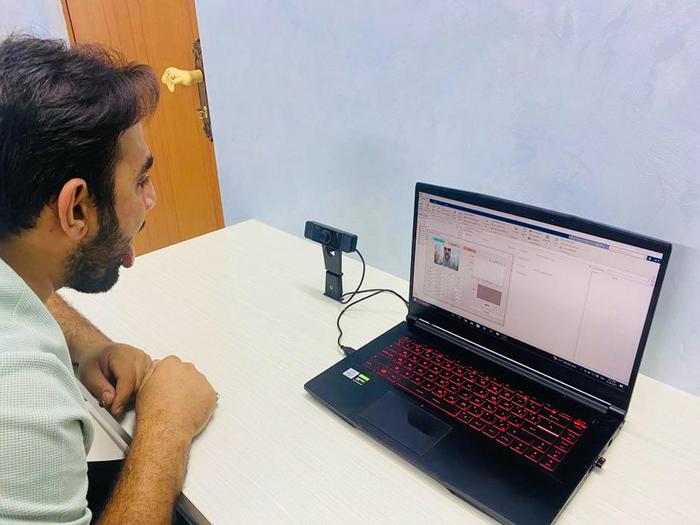
Computerised tongue analysis

Credit: Middle Technical University

A computer algorithm has achieved a 98% accuracy in predicting different diseases by analysing the colour of the human tongue.

The proposed imaging system developed by Iraqi and Australian researchers can diagnose diabetes, stroke, anaemia, asthma, liver and gallbladder conditions, COVID-19, and a range of vascular and gastrointestinal issues.

Engineering researchers from Middle Technical University (MTU) and the University of South Australia (UniSA) achieved the breakthrough in a series of experiments where they used 5260 images to train machine learning algorithms to detect tongue colour.

Two teaching hospitals in the Middle East supplied 60 tongue images from patients with various health conditions. The artificial intelligence (AI) model was able to match the tongue colour with the disease in almost all cases.

A new paper published in Technologies outlines how the proposed system analyses tongue colour to provide on-the-spot diagnosis, confirming that AI holds the key to many advances in medicine.

Senior author, MTU and UniSA Adjunct Associate Professor Ali Al-Naji, says AI is replicating a 2000-year-old practice widely used in traditional Chinese medicine – examining the tongue for signs of disease.

“The colour, shape and thickness of the tongue can reveal a litany of health conditions,” he says.

“Typically, people with diabetes have a yellow tongue; cancer patients a purple tongue with a thick greasy coating; and acute stroke patients present with an unusually shaped red tongue.

“A white tongue can indicate anaemia; people with severe cases of COVID-19 are likely to have a deep red tongue; and an indigo or violet coloured tongue indicates vascular and gastrointestinal issues or asthma.”

In the study, cameras placed 20 centimetres from a patient captured their tongue colour and the imaging system predicted their health condition in real time.

Co-author UniSA Professor Javaan Chahl says that down the track, a smartphone will be used to diagnose disease in this way.

“These results confirm that computerised tongue analysis is a secure, efficient, user friendly and affordable method for disease screening that backs up modern methods with a centuries-old practice,” Prof Chahl says.


Journal

Technologies

DOI

10.3390/technologies12070097

Method of Research

Experimental study

Subject of Research

People

Article Title

Tongue Disease Prediction Based on Machine Learning Algorithms

Article Publication Date

28-Jun-2024

Share26Tweet17
Previous Post

Rapid removal of emerging endocrine disruptors in wastewater using high-performance single-atom catalysts

Next Post

Older adults’ life satisfaction varies by immigrant status, living arrangement and social disposition

Related Posts

Mount Sinai Scientists Uncover Brain “Entrapment” Patterns Linked to Depression — Mathematics
Mathematics

Mount Sinai Scientists Uncover Brain “Entrapment” Patterns Linked to Depression

June 12, 2026
MIT Graduate Honored for Creating Groundbreaking Tools That Revolutionized Our Understanding of Quantum Systems — Mathematics
Mathematics

MIT Graduate Honored for Creating Groundbreaking Tools That Revolutionized Our Understanding of Quantum Systems

June 10, 2026
How Topology Reveals New Insights into the Nature of Black Holes — Mathematics
Mathematics

How Topology Reveals New Insights into the Nature of Black Holes

June 9, 2026
Advancing Tactile Myoelectric Prosthetic Hands: Mastering Dynamic Tool Handling Skills — Mathematics
Mathematics

Advancing Tactile Myoelectric Prosthetic Hands: Mastering Dynamic Tool Handling Skills

June 9, 2026
NUS CDE Researchers Pioneer Self-Testing Quantum Chip to Enhance Digital Security — Mathematics
Mathematics

NUS CDE Researchers Pioneer Self-Testing Quantum Chip to Enhance Digital Security

June 9, 2026
Change in Egg Allergy Rates Following Updated Early Egg Introduction Guidelines — Mathematics
Mathematics

Change in Egg Allergy Rates Following Updated Early Egg Introduction Guidelines

June 8, 2026
Next Post
Older adults’ life satisfaction varies by immigrant status, living arrangement and social disposition

Older adults’ life satisfaction varies by immigrant status, living arrangement and social disposition

  • Mothers who receive childcare support from maternal grandparents show more parental warmth, finds NTU Singapore study

    Mothers who receive childcare support from maternal grandparents show more parental warmth, finds NTU Singapore study

    27654 shares
    Share 11058 Tweet 6911
  • University of Seville Breaks 120-Year-Old Mystery, Revises a Key Einstein Concept

    1059 shares
    Share 424 Tweet 265
  • Bee body mass, pathogens and local climate influence heat tolerance

    682 shares
    Share 273 Tweet 171
  • Researchers record first-ever images and data of a shark experiencing a boat strike

    545 shares
    Share 218 Tweet 136
  • Groundbreaking Clinical Trial Reveals Lubiprostone Enhances Kidney Function

    531 shares
    Share 212 Tweet 133
Science

Embark on a thrilling journey of discovery with Scienmag.com—your ultimate source for cutting-edge breakthroughs. Immerse yourself in a world where curiosity knows no limits and tomorrow’s possibilities become today’s reality!

RECENT NEWS

  • mRNA Flu Vaccine Provides Broad Immune Defense Against Diverse Influenza Strains
  • Adaptive Brain Stimulation Tailored to Every Step of Parkinson’s Patients
  • Organ and Cellular Biological Age Predicts Disease Risk and Longevity, Study Finds
  • Which Bees Struggle Most with Heat? Exploring Why Some Are More Vulnerable to Climate Change

Categories

  • Agriculture
  • Anthropology
  • Archaeology
  • Athmospheric
  • Biology
  • Biotechnology
  • Blog
  • Bussines
  • Cancer
  • Chemistry
  • Climate
  • Earth Science
  • Editorial Policy
  • Marine
  • Mathematics
  • Medicine
  • Pediatry
  • Policy
  • Psychology & Psychiatry
  • Science Education
  • Social Science
  • Space
  • Technology and Engineering

Subscribe to Blog via Email

Enter your email address to subscribe to this blog and receive notifications of new posts by email.

Join 5,146 other subscribers

© 2025 Scienmag - Science Magazine

Welcome Back!

Login to your account below

Forgotten Password?

Retrieve your password

Please enter your username or email address to reset your password.

Log In
No Result
View All Result
  • HOME
  • SCIENCE NEWS
  • CONTACT US

© 2025 Scienmag - Science Magazine

Discover more from Science

Subscribe now to keep reading and get access to the full archive.

Continue reading
