


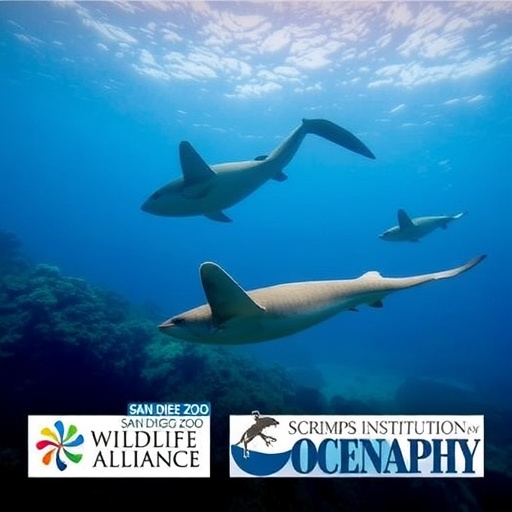
In a groundbreaking alliance poised to redefine global conservation efforts, the San Diego Zoo Wildlife Alliance (SDZWA) and UC San Diego’s Scripps Institution of Oceanography have officially inaugurated a partnership under the Agile Restoration & Conservation Hubs (ARCH) initiative. This strategic collaboration leverages over two centuries of cumulative expertise in both scientific research and public engagement to accelerate innovation and magnify conservation impact worldwide. By aligning terrestrial and marine conservation knowledge, these powerhouse institutions seek to address escalating environmental crises with unprecedented scientific rigor and technological sophistication.
The urgency of biodiversity loss, emergent pathogenic threats, and multifaceted environmental challenges has outpaced existing strategies. Traditional conservation methodologies are often undermined by technical limitations and insufficient scalability, failing to match the complexities and rapid progression of ecological disruptions. Against this backdrop, ARCH proposes a forward-thinking paradigm that integrates advanced scientific inquiry, cutting-edge technology, and grassroots community engagement to generate scalable, adaptive conservation solutions capable of confronting the global biodiversity crisis.
Central to this partnership are three integrated focal points: knowledge exchange on biobanking and live cell preservation techniques with an emphasis on marine species; the innovation of transformative conservation technologies, notably “digital twins” that digitally mirror real-world ecosystems; and the cultivation of educational pathways designed to empower the next generation of conservation leaders. This multifaceted approach enhances capacity-building while fostering scientific breakthroughs, ensuring a comprehensive response to environmental challenges.
Biobanking stands as a crucial pillar of the collaboration, harnessing SDZWA’s five decades of expertise in genetic preservation techniques such as cryopreservation, alongside Scripps’ extensive biological collections. These collections—often dubbed “underwater libraries”—encompass millions of marine specimens, including diverse fish, invertebrates, microbes, and seaweeds. However, despite their vast scale and scientific value, they have historically lacked advanced infrastructure for living cell preservation. Through targeted workshops and protocol development, researchers aim to modernize biobanking efforts, thus enabling deeper understanding and conservation of marine biodiversity at genetic and cellular resolutions.
The futuristic concept of digital twins embodies the marriage of ecological modeling and computational sciences. A digital twin is a dynamic, high-fidelity digital replica of a physical ecosystem that integrates continuous observational data streams, in-situ environmental monitoring, and sophisticated artificial intelligence algorithms, including machine learning pipelines. This tool enables near-real-time simulations of ecosystem responses to various stressors, allowing researchers to anticipate climate impacts, assess biodiversity fluctuations, and inform adaptive management strategies. The first prototype, centered on the Safari Park Biodiversity Reserve in Escondido, California, already demonstrates transformative potential for scalable ecosystem modeling and conservation decision-making.
By combining Scripps’ expertise in marine sciences, meteorological forecasting, and machine learning with SDZWA’s unparalleled terrestrial wildlife conservation knowledge, this collaboration unlocks novel avenues for interdisciplinary research. These cross-domain synergies enhance the capacity to model ecological interactions spanning both marine and terrestrial biomes, addressing challenges that transcend traditional habitat boundaries, such as climate-induced species migration and pathogen spread. The integrated approach underscores a future where conservation science is accelerated by seamless data-driven insights and ecosystem-wide perspectives.
Educational engagement forms another cornerstone of the ARCH initiative. Recognizing that sustainable conservation hinges on cultivating future leaders, the partnership is developing extensive training programs, workshops, and hands-on learning opportunities for students and early-career scientists. These programs emphasize emerging biobanking methodologies, computational modeling, and conservation technology development, imparting practical skills and fostering interdisciplinary collaboration. The initiative thereby invests in human capital critical for perpetuating scientific innovation and environmental stewardship over the long term.
The significance of advancing marine biobanking protocols cannot be overstated given the accelerating degradation of ocean habitats. Preserving genetic diversity in species such as kelp, corals, and invertebrates is essential for maintaining resilient ecosystems capable of adapting to environmental fluctuations. By directly transferring expertise from SDZWA’s Frozen Zoo—a globally recognized biobank containing living cell lines of diverse terrestrial species—to the marine context at Scripps, researchers are pioneering protocols for live cell culture and cryopreservation tailored to marine organisms, filling a critical gap in conservation genomics and ex situ support for vulnerable species.
The creation of digital twins also facilitates proactive management of biodiversity hotspots by enabling in silico experimentation. Scientists can manipulate variables such as temperature rise, pollutant levels, or species interactions within the digital model to predict cascading ecological effects before they unfold in reality. This capacity for predictive ecology represents a paradigm shift from reactive conservation toward anticipatory and preventative strategies, empowering managers and policymakers with data-driven insights for timely interventions.
Further cementing their influence, the partners showcased this innovative alliance at the 2026 South by Southwest (SXSW) tech conference in Austin, Texas, in a panel titled “Can Science Safeguard Earth’s Wildlife
Cite Scienmag News
Margaret Porter. (April 7, 2026). San Diego Zoo Wildlife Alliance and Scripps Institution of Oceanography Collaborate on Groundbreaking Conservation Initiatives. Scienmag. https://scienmag.com/san-diego-zoo-wildlife-alliance-and-scripps-institution-of-oceanography-collaborate-on-groundbreaking-conservation-initiatives/
Margaret Porter. "San Diego Zoo Wildlife Alliance and Scripps Institution of Oceanography Collaborate on Groundbreaking Conservation Initiatives." Scienmag, 7 April 2026, https://scienmag.com/san-diego-zoo-wildlife-alliance-and-scripps-institution-of-oceanography-collaborate-on-groundbreaking-conservation-initiatives/. Accessed 4 September 2026.
Margaret Porter. "San Diego Zoo Wildlife Alliance and Scripps Institution of Oceanography Collaborate on Groundbreaking Conservation Initiatives." Scienmag. April 7, 2026. https://scienmag.com/san-diego-zoo-wildlife-alliance-and-scripps-institution-of-oceanography-collaborate-on-groundbreaking-conservation-initiatives/


