


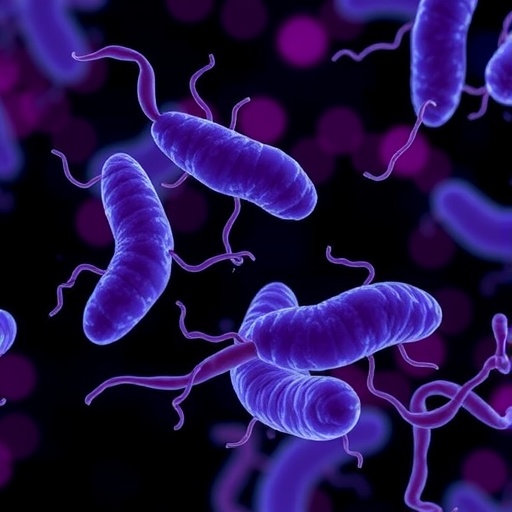
In a groundbreaking study that reshapes our understanding of bacterial immune evasion, scientists have identified a novel mechanism by which Salmonella enterica serovar Typhimurium resists attack by macrophages, the body’s frontline cells responsible for engulfing and destroying pathogens. This discovery, published in Nature Microbiology, unveils how Salmonella exploits its haem biosynthesis pathway to directly inhibit the phagocytic activity of macrophages, thereby promoting its own survival and virulence during infection.
Macrophages serve as critical defenders in the innate immune system by engulfing pathogens through phagocytosis, a process essential for controlling infections. However, certain pathogens like Salmonella have evolved sophisticated strategies to subvert and escape this immune surveillance. The present study elucidates a key bacterial factor in this evasion strategy: a methyltransferase enzyme designated SirM. Employing cutting-edge transposon sequencing (Tn-seq), the researchers mapped genetic elements that influence Salmonella’s ability to resist phagocytosis during infection of macrophage cells.
The investigation revealed that SirM expression is specifically upregulated when Salmonella encounters macrophages. SirM enzymatically methylates HemL, a pivotal enzyme responsible for catalyzing an early step in the haem biosynthesis pathway. This methylation triggers an upregulation of haem production within the bacteria, thereby linking metabolic adaptation to immune evasion. Haem, an iron-containing porphyrin traditionally known for its role in cellular respiration and oxygen transport, assumes a heretofore unknown role as an immunomodulatory factor secreted by Salmonella.
Delving deeper into the mechanistic underpinnings, the authors found that Salmonella-derived haem interferes with host macrophage signaling by inhibiting the activation of Cdc42, a small RhoGTPase integral to actin cytoskeleton remodeling during phagocytosis. Crucially, this inhibition is dependent on the presence of Toll-like receptor 4 (TLR4), a major pattern recognition receptor that typically senses bacterial lipopolysaccharide. Thus, haem functions as a molecular effector that manipulates TLR4 signaling pathways to dampen the macrophage’s ability to engulf Salmonella, effectively turning the host immune machinery against itself.
Complementing this immune evasion, the study also describes how SirM-mediated increases in haem synthesis contribute to macrophage death. Elevation of intracellular haem levels within infected macrophages triggers cell death pathways, further impairing the host’s capacity to mount an effective defense and facilitating bacterial dissemination. This dual function of haem—both as an inhibitor of phagocytosis and an inducer of macrophage mortality—amplifies the pathogen’s virulence and survival within the host environment.
To validate the significance of SirM in vivo, the researchers employed mouse infection models. Bacteria lacking SirM displayed markedly attenuated virulence and reduced ability to outcompete commensal microbiota in the intestinal tract. This suggests that SirM is essential not only for immune evasion but also for establishing a competitive advantage within the complex microbial ecosystem of the gut, thereby shaping infection dynamics and disease progression.
An intriguing aspect of this research is the phylogenetic distribution of SirM. The methyltransferase is conserved across various enteric pathogens, indicating that haem-mediated phagocytosis inhibition might represent a widespread microbial strategy rather than being unique to Salmonella. This raises important questions about the evolutionary pressures shaping host-pathogen interactions and suggests potential targets for broad-spectrum antimicrobial interventions.
The discovery that bacterial haem can modulate host immune receptor signaling introduces a paradigm shift in our understanding of pathogen-host interplay. Traditionally, haem has been viewed primarily as a metabolic cofactor, but this work highlights its capacity to act as an immune evasion molecule deployed by bacteria to subvert host defenses. The observation that haem production is tightly linked to enzymatic methylation events within the bacteria underscores the sophisticated biochemical strategies evolved to manipulate host immunity.
From a therapeutic standpoint, these findings open new avenues for combating infections caused by Salmonella and related pathogens. Targeting the SirM-HemL-haem axis presents an attractive strategy to restore effective macrophage phagocytosis, potentially enhancing bacterial clearance. Additionally, modulating TLR4 signaling or preventing haem-mediated suppression of Cdc42 could reinstate normal immune function and curb pathogenicity.
Further research is warranted to unravel the structural basis by which haem interacts with the TLR4 signaling complex and to determine whether other bacterial or host-derived factors modulate this interaction. Moreover, exploring the role of haem in other immune cell types may reveal yet-unappreciated effects on the broader immune landscape during infection.
This landmark study not only deepens our molecular understanding of Salmonella pathogenesis but also highlights the intricate interplay between microbial metabolism and immune regulation. The elucidation of haem as a bacterial weapon underscores the complex adaptations pathogens employ to colonize their hosts, evade immune destruction, and thrive within hostile environments.
As antibiotic resistance continues to pose a global health threat, insights into such novel bacterial virulence mechanisms are invaluable. They pave the way for innovative approaches that harness the immune system and disrupt microbial survival strategies without relying solely on traditional antibiotics, which often lead to resistance development.
In summation, the research establishes SirM as a critical modulator of haem biosynthesis and a key factor in Salmonella’s ability to inhibit macrophage phagocytosis and promote infection. This intricate bacterial strategy underscores the evolutionary arms race between pathogens and the immune system and opens promising new paths for therapeutic intervention against enteric infections.
The implications of these findings extend beyond Salmonella, prompting a reevaluation of haem’s role in bacterial virulence and host-pathogen interactions across a broad spectrum of infectious agents. Understanding these fundamental processes at the molecular level remains pivotal in our quest to develop next-generation anti-infective therapies.
Cite Scienmag News
Kristina Jarvis. (April 20, 2026). Salmonella Haem Blocks Macrophages, Boosts Infection. Scienmag. https://scienmag.com/salmonella-haem-blocks-macrophages-boosts-infection/
Kristina Jarvis. "Salmonella Haem Blocks Macrophages, Boosts Infection." Scienmag, 20 April 2026, https://scienmag.com/salmonella-haem-blocks-macrophages-boosts-infection/. Accessed 4 September 2026.
Kristina Jarvis. "Salmonella Haem Blocks Macrophages, Boosts Infection." Scienmag. April 20, 2026. https://scienmag.com/salmonella-haem-blocks-macrophages-boosts-infection/


