

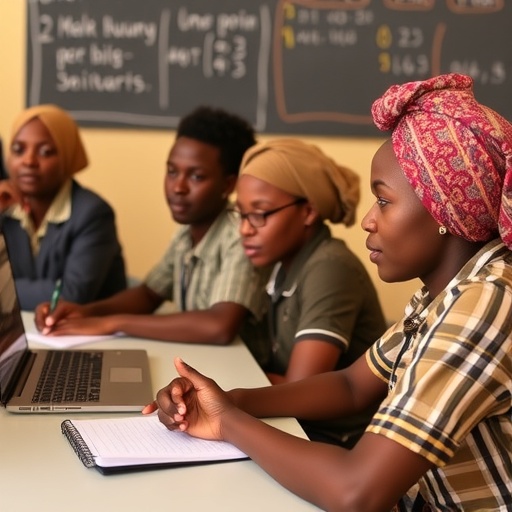
In an era where technology reshapes our daily lives and educational paradigms, the advancements in virtual laboratories have begun to penetrate the traditional realms of mathematics teaching. A recent study conducted by Ngiruwonsanga et al. brings to light an important facet of this integration—the perceptions and acceptance of such tools among teachers in Rwandan secondary schools. This research, rooted in the Technology Acceptance Model (TAM), sheds light on the potential implications for educational reform and highlights the pressing need for embracing digital tools in mathematics pedagogy.
The Technology Acceptance Model, constructed on psychological principles, postulates that perceived ease of use and perceived usefulness significantly influence individuals’ acceptance of new technologies. This model has been applied across various fields, accentuating its relevance in educational settings, particularly in the integration of virtual laboratories. In Rwandan secondary schools, where resources remain a challenge, understanding teachers’ perceptions becomes paramount. This study serves as a critical lens through which stakeholders can evaluate the readiness and willingness of educators to embrace these digital advancements.
One of the key findings of the study is the significant correlation between the perceived usefulness of virtual laboratories and teachers’ willingness to adopt them. Educators expressed that virtual labs could potentially enhance their teaching methodologies, allowing for interactive and engaging lessons that can cater to diverse learning styles. This perspective is particularly vital in a subject like mathematics, where students often struggle with abstract concepts. The ability to manipulate data in a virtual environment could lead to deeper understanding and retention of mathematical principles.
Conversely, the research also highlights some concerns among teachers regarding the integration of such technologies. An important aspect that emerged was the perceived technical challenges associated with virtual laboratories. Many educators reported feeling unequipped to handle technology that requires a certain level of digital literacy. This apprehension underscores the need for comprehensive training programs aimed at equipping teachers with the skills necessary to navigate these adaptive tools successfully. Without this foundation, the adoption process could be hindered, limiting the technology’s potential impact on education.
Moreover, the study found that the demographic backgrounds of teachers played a substantial role in their perceptions. Younger educators, often more tech-savvy and familiar with digital environments, demonstrated a more favorable attitude toward virtual laboratory integration compared to their older counterparts. This generational gap highlights the necessity for tailored professional development programs that cater to various learning paces and familiarity with technology. Recognizing and addressing these disparities is crucial as educational institutions aim to create an inclusive environment that leverages technology effectively.
The implications of the study extend beyond individual classrooms; they resonate with the broader educational ecosystem in Rwanda. As the nation strives for advancements in its educational framework, the integration of virtual laboratories could play a pivotal role in aligning secondary education with global standards. Stakeholders, including policymakers and curriculum developers, must take heed of teachers’ perceptions as they formulate strategies for the future of education in Rwanda. By prioritizing technology-driven education, the country can enhance overall student outcomes, preparing a generation of learners who are equipped for future challenges.
Moreover, the increase in online learning platforms during the COVID-19 pandemic has brought to light the urgency of pushing towards innovative teaching methods. Educators have now witnessed the immense potential that technology holds in bridging the gap between theoretical knowledge and practical application. Virtual laboratories stand as a testament to this potential, transforming mathematics classes into collaborative and immersive learning experiences.
The journey towards embracing virtual laboratories is not merely about technology but encapsulates a profound change in pedagogical philosophy. Teachers’ roles are evolving from mere knowledge dispensers to facilitators of knowledge, guiding students in utilizing these digital tools to foster critical thinking and problem-solving skills. This paradigm shift is vital for creating a robust educational framework that cultivates independent learners ready to tackle complex real-world issues.
Additionally, understanding the unique context of Rwandan education is essential in evaluating the practicalities of this technological integration. The study notes that while many schools may lack adequate resources, the investment in virtual laboratories could yield high returns by optimizing the learning experience without the need for extensive physical materials. By leveraging technology, educators can create simulations and models that were previously inaccessible, fostering a richer understanding of mathematical concepts.
The financial implications of integrating virtual laboratories should also be carefully considered. The upfront costs associated with acquiring software licenses and providing ongoing technical support can be daunting. Nevertheless, the long-term benefits, including enhanced student engagement and improved academic performance, could significantly outweigh these initial investments. Policymakers need to take a proactive stance in allocating funding to support this transition while simultaneously advocating for private sector partnerships that could ease financial burdens.
Ultimately, the findings present a call to action for educators, administrators, and policymakers alike. The successful integration of virtual laboratories in Rwandan secondary schools hinges not only on technological availability but also on comprehensive support systems that address educators’ concerns and foster a conducive learning atmosphere. Encouraging a culture of innovation within education will require collaboration among all stakeholders, ensuring that the integration of such technologies becomes a shared vision rather than an isolated effort.
Although the road to fully realizing the potential of virtual laboratories in mathematics teaching is fraught with challenges, the study by Ngiruwonsanga et al. paints a hopeful picture of a future where technology and education seamlessly fuse. By prioritizing teachers’ perceptions and providing consistent support and training, Rwandan secondary education can enter a new era, marked by empowered educators and inspired learners ready to harness the power of mathematics in a digital age.
In conclusion, the integration of virtual laboratories in Rwandan secondary schools signifies a momentous step towards revamping education and enhancing mathematical understanding among students. As the educational landscape continues to evolve, embracing technology will be vital for preparing future generations for success in an increasingly complex world. The collective responsibility lies in addressing the concerns, leveraging the unique perspectives of teachers, and fostering an environment that embraces innovation.
Subject of Research: Teachers’ perception and acceptance of virtual laboratory integration in mathematics teaching in Rwandan secondary schools.
Article Title: Teachers’ perception and acceptance of virtual laboratory integration in mathematics teaching in Rwandan secondary schools using the technology acceptance model.
Article References:
Ngiruwonsanga, A., Nkundabakura, P., Nsengimana, T. et al. Teachers’ perception and acceptance of virtual laboratory integration in mathematics teaching in Rwandan secondary schools using the technology acceptance model.
Discov Educ (2026). https://doi.org/10.1007/s44217-026-01107-7
Image Credits: AI Generated
DOI: 10.1007/s44217-026-01107-7
Keywords: Technology Acceptance Model, virtual laboratories, mathematics education, teacher perceptions, Rwandan education.


