

Tuesday, October 20, 2026
Science
No Result
View All Result
  • Login
  • HOME
  • SCIENCE NEWS
  • CONTACT US
  • HOME
  • SCIENCE NEWS
  • CONTACT US
No Result
View All Result
Scienmag
No Result
View All Result
Home Science News Medicine

Rwanda health worker survey reports childhood disability observations

October 20, 2026
in Medicine
Ophelia Keating
By Ophelia Keating Scienmag Editorial Profile - Health Services Research
Reading Time: 2 mins read
0
Rwanda health worker survey reports childhood disability observations

Rwanda health worker survey reports childhood disability observations

65
SHARES
587
VIEWS
Share on FacebookShare on Twitter
ADVERTISEMENT

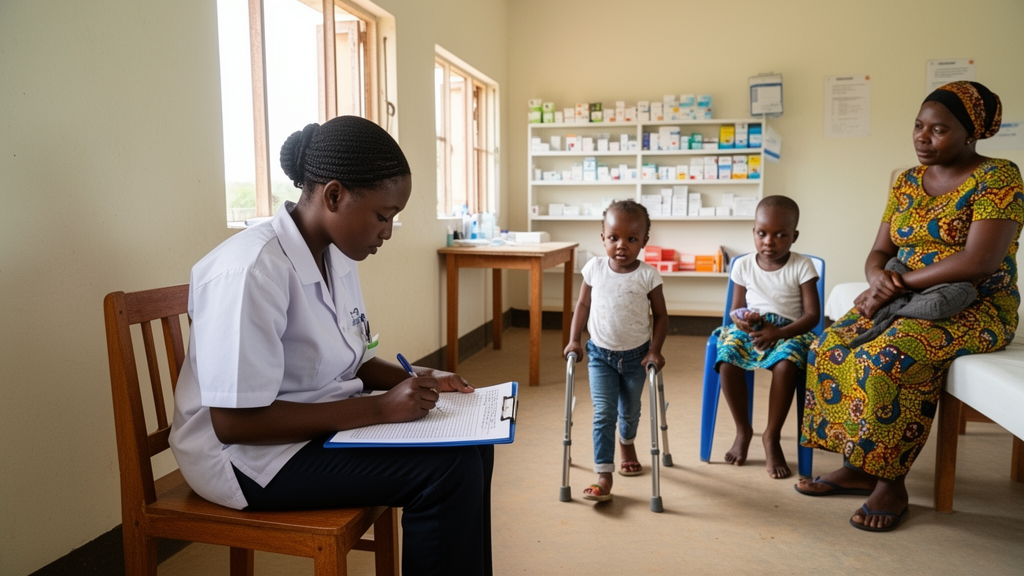
Community health workers in Rwanda commonly reported encountering children with physical or mental disabilities in the communities they served, according to a quantitative study of 358 workers. Overall, 63.6% said they had observed at least one child with a disability. The study captures community health workers’ reports rather than a population prevalence estimate, because it neither clinically assessed children nor surveyed every child in a defined population.

Researchers analyzed secondary data from the 358 participating community health workers, or CHWs. Each worker reported whether they had observed at least one child with a physical or mental disability in their community. The sample’s median age was 45 years, and 57.7% of participants were female. Descriptive statistics summarized workers’ characteristics and their reported observations, while bivariate and multivariable logistic regression analyses examined factors associated with reporting childhood disabilities.

The most frequently reported physical conditions were genu valgum, mentioned by 38.3% of participating workers; clubfoot, reported by 36.1%; and hearing impairment, reported by 34.0%. For mental or developmental conditions, 40.1% of workers reported observing developmental delay and 21.7% reported epilepsy. These figures represent the percentages of health workers who mentioned each condition, not the percentages of children who had it. The design therefore describes the range and frequency of workers’ observations but cannot establish how many children in Rwanda live with each disability.

Referral was a prominent part of workers’ reported activity: 94.6% said they had referred cases to health facilities. The regression analysis identified two factors associated with whether workers reported observing children with disabilities. Female workers had higher odds of reporting a case than male workers, with an adjusted odds ratio of 2.03, a 95% confidence interval of 1.27–3.23 and a p-value of 0.003. Workers with 11–15 years of experience also had higher odds of reporting childhood disabilities than those with fewer than five years of experience, with an adjusted odds ratio of 2.22, a 95% confidence interval of 1.08–4.56 and a p-value of 0.030. These statistical associations do not establish that gender or experience caused differences in reporting.

The findings position community health workers as potential identifiers and referral points for childhood disabilities in rural, low-resource settings, where access to early diagnosis, care and support systems may be limited. The researchers concluded that strengthening workers’ capacity through targeted training, screening tools and improved referral systems may enhance early identification and equitable access to care. The study itself did not test those interventions or measure whether stronger screening and referral systems improve child outcomes. It instead provides descriptive evidence about the conditions workers reported observing, their referral activity and the worker characteristics associated with reporting a case. Direct child-level assessment would be required to estimate population prevalence, while evaluation of training, screening and referral approaches would be needed to determine whether they improve diagnosis and care.

Subject of Research: Community health worker reports of childhood physical and mental disabilities in rural Rwanda

Article Title: Community health worker–reported observations of physical and mental disabilities among children in rural setting in Rwanda

Article References: Umurerwa, M., uwimpuhwe, D., Dukuzimana, M. J., Franke, M. A., Mukundwa, P. N., & Ngwakongnwi, E. (2026). Community health worker–reported observations of physical and mental disabilities among children in rural setting in Rwanda. BMC Health Services Research. https://doi.org/10.1186/s12913-026-15875-3

Image Credits: AI Generated

DOI: 10.1186/s12913-026-15875-3

Keywords: Rwanda, childhood disability, community health workers, rural health, physical disability, mental disability, developmental delay, clubfoot, hearing impairment, health referrals, Community, health

Cite Scienmag News

Ophelia Keating. (October 20, 2026). Rwanda health worker survey reports childhood disability observations. Scienmag. https://scienmag.com/rwanda-health-worker-survey-reports-childhood-disability-observations/

Ophelia Keating. "Rwanda health worker survey reports childhood disability observations." Scienmag, 20 October 2026, https://scienmag.com/rwanda-health-worker-survey-reports-childhood-disability-observations/. Accessed 20 October 2026.

Ophelia Keating. "Rwanda health worker survey reports childhood disability observations." Scienmag. October 20, 2026. https://scienmag.com/rwanda-health-worker-survey-reports-childhood-disability-observations/


Tags: childhood disabilityclubfootcommunitycommunity health workerscommunity health workers Rwandacommunity-based disability assessmentdevelopmental delaydevelopmental delay reportsepilepsy prevalence RwandaHealthhealth referralshealth worker perceptions of childhood disabilitieshealth worker survey Rwandahearing impairmenthearing impairment in childrenmental and developmental disabilitiesmental disabilityphysical conditions in childrenphysical disabilityphysical disability observationsprevalence of childhood disabilitiesrural healthRwanda
Share26Tweet16
Previous Post

Research report: Bladder preservation is still feasible in the rare aggressive small cell carcinoma subtype

Next Post

Strip tillage led sorghum yields and water efficiency in Ethiopian field trial

Related Posts

GB10 shows durable anti-leakage effects in animal eye models
Medicine

GB10 shows durable anti-leakage effects in animal eye models

October 20, 2026
METS-IR Linked to Cardiovascular Risk Across Chinese and U.S. Cohorts
Medicine

METS-IR Linked to Cardiovascular Risk Across Chinese and U.S. Cohorts

October 20, 2026
Rat study finds exercise-dependent BDNF and cognitive responses
Medicine

Rat study finds exercise-dependent BDNF and cognitive responses

October 20, 2026
Single-center Bogotá study finds 24.9% STI prevalence among PrEP users
Medicine

Single-center Bogotá study finds 24.9% STI prevalence among PrEP users

October 20, 2026
Legal Anonymity Raised Personal Injury Settlements by 12–17%
Medicine

Legal Anonymity Raised Personal Injury Settlements by 12–17%

October 20, 2026
Blood pressure and heart risk emerge as multiple myeloma clues
Medicine

Blood pressure and heart risk emerge as multiple myeloma clues

October 20, 2026
Next Post
Strip tillage led sorghum yields and water efficiency in Ethiopian field trial

Strip tillage led sorghum yields and water efficiency in Ethiopian field trial

  • Mothers who receive childcare support from maternal grandparents show more optimized

    Mothers who receive childcare support from maternal grandparents show more parental warmth, finds NTU Singapore study

    27656 shares
    Share 11059 Tweet 6912
  • University of Seville Breaks 120-Year-Old Mystery, Revises a Key Einstein Concept

    1061 shares
    Share 424 Tweet 265
  • Bee body mass, pathogens and local climate influence heat tolerance

    682 shares
    Share 273 Tweet 171
  • Researchers record first-ever images and data of a shark experiencing a boat strike

    546 shares
    Share 218 Tweet 137
  • Groundbreaking Clinical Trial Reveals Lubiprostone Enhances Kidney Function

    531 shares
    Share 212 Tweet 133
Science

Embark on a thrilling journey of discovery with Scienmag.com—your ultimate source for cutting-edge breakthroughs. Immerse yourself in a world where curiosity knows no limits and tomorrow’s possibilities become today’s reality!

RECENT NEWS

  • Strip tillage led sorghum yields and water efficiency in Ethiopian field trial
  • Rwanda health worker survey reports childhood disability observations
  • Research report: Bladder preservation is still feasible in the rare aggressive small cell carcinoma subtype
  • Lack of genetic structure suggests high connectivity of Parnassius phoebus between nearby valleys in the Alps

Categories

  • Agriculture
  • Anthropology
  • Archaeology
  • Athmospheric
  • Biology
  • Biotechnology
  • Blog
  • Bussines
  • Cancer
  • Chemistry
  • Climate
  • Earth Science
  • Editorial Policy
  • Marine
  • Mathematics
  • Medicine
  • Pediatry
  • Policy
  • Psychology & Psychiatry
  • Science Education
  • Science News
  • Social Science
  • Space
  • Technology and Engineering

Subscribe to Blog via Email

Enter your email address to subscribe to this blog and receive notifications of new posts by email.

Join 5,150 other subscribers

© 2025 Scienmag - Science Magazine

Welcome Back!

Login to your account below

Forgotten Password?

Retrieve your password

Please enter your username or email address to reset your password.

Log In
No Result
View All Result
  • HOME
  • SCIENCE NEWS
  • CONTACT US

© 2025 Scienmag - Science Magazine

Discover more from Science

Subscribe now to keep reading and get access to the full archive.

Continue reading