


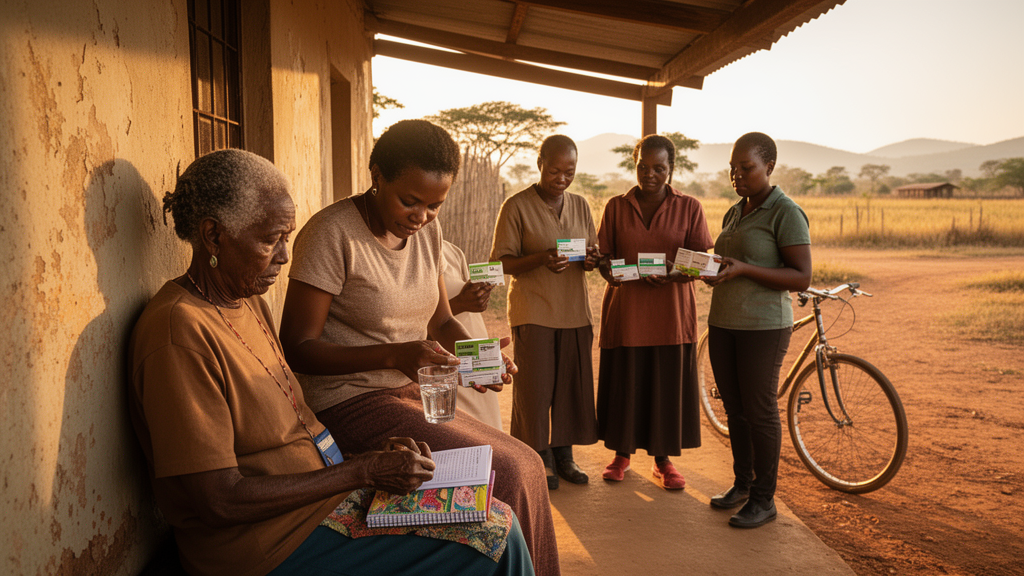
Family caregivers of people with epilepsy in rural South Africa rely heavily on informal networks, personal resilience and community support to manage seizures, stigma and financial pressure, according to a qualitative study of 60 caregivers in Limpopo and Mpumalanga provinces. The findings indicate that these coping resources may help families sustain care in underserved settings, but they do not replace accessible, disability-inclusive health services.
The study explored how caregivers cope with the chronic neurological condition and navigate the support pathways available to them. Its qualitative descriptive design focused on the experiences of family caregivers rather than measuring seizure frequency, clinical outcomes or the effectiveness of particular interventions. Participants were recruited through snowball sampling and purposively, with 30 caregivers interviewed in each province.
Interviews were conducted in local languages, audio-recorded, transcribed verbatim and analyzed using thematic analysis. This approach allowed the researchers to examine the emotional, social, spiritual and economic resources caregivers described in their daily lives. Six themes emerged: emotional and psychological coping strategies; family- and community-based support systems; religious and spiritual coping; financial strain and economic adaptation; limited caregiver knowledge and support in managing epilepsy; and barriers to effective coping and support.
Emotional and psychological coping formed a central part of caregivers’ responses. Participants also drew on family and community support systems, suggesting that care for people with epilepsy in these rural communities was organized substantially through relationships outside formal health services. The study did not quantify the amount of support each caregiver received or determine whether any strategy improved health outcomes, but it documented informal support as a major pathway through which families managed the demands of caregiving.
Religious and spiritual coping emerged as another important theme. The findings show that caregivers used spiritual practices and beliefs alongside practical and familial forms of support. The analysis does not establish that religious coping reduced stress or improved epilepsy management; rather, it identifies it as part of the coping resources available within participants’ communities.
Economic pressure was a recurring feature of caregiving. The researchers reported financial strain often associated with disrupted employment, as well as economic adaptation by families. Because the study was qualitative, it did not calculate income losses, treatment expenditures or the economic burden of epilepsy across households. Nevertheless, the interviews show that the ability to provide consistent care could be constrained by caregivers’ changing employment circumstances and limited material resources.
Caregivers also described limited knowledge and support for managing epilepsy. The study’s findings indicate that uncertainty about seizure management could constrain effective coping and access to support. At the same time, the report does not provide a clinical assessment of participants’ knowledge or compare it with a standardized measure. It identifies a gap in caregiver education and practical support within the health-service environment experienced by these families.
Stigma and barriers to effective coping further complicated the picture. The researchers describe persistent stigma as a feature that could restrict help-seeking, while the wider healthcare environment was described as limited in its support for caregivers. Because the sample was drawn from rural communities in two provinces, the findings offer an in-depth account of the pathways used by these 60 families rather than a population-wide estimate of caregiver needs. They also do not demonstrate that informal support causes better or worse outcomes for people with epilepsy.
The authors conclude that caregivers depend primarily on informal and community-based coping mechanisms. These resources reflect resilience, the researchers say, but are insufficient to meet long-term caregiving demands. They call for disability-inclusive health systems strengthened through improved caregiver education, psychosocial support and community-based interventions. The study therefore points to a need for formal services that complement, rather than presume the existence of, the support networks rural families already build around epilepsy care.
Subject of Research: Qualitative study of coping strategies and support pathways among rural South African family caregivers of people with epilepsy
Article Title: Coping and support pathways among family caregivers of persons with epilepsy in rural South Africa: implications for disability-inclusive health systems in rural settings
Article References: Ngobeni, H., Makhado, L., & Makhado, T. G. (2026). Coping and support pathways among family caregivers of persons with epilepsy in rural South Africa: implications for disability-inclusive health systems in rural settings. BMC Health Services Research. https://doi.org/10.1186/s12913-026-15582-z
Image Credits: AI Generated
DOI: 10.1186/s12913-026-15582-z
Keywords: epilepsy care, family caregivers, rural South Africa, informal support, disability-inclusive health systems, caregiver coping, stigma, community support, Coping, support, pathways, family
Cite Scienmag News
Kendall Mcintyre. (October 26, 2026). Rural South African caregivers rely on informal epilepsy support networks. Scienmag. https://scienmag.com/rural-south-african-caregivers-rely-on-informal-epilepsy-support-networks/
Kendall Mcintyre. "Rural South African caregivers rely on informal epilepsy support networks." Scienmag, 26 October 2026, https://scienmag.com/rural-south-african-caregivers-rely-on-informal-epilepsy-support-networks/. Accessed 26 October 2026.
Kendall Mcintyre. "Rural South African caregivers rely on informal epilepsy support networks." Scienmag. October 26, 2026. https://scienmag.com/rural-south-african-caregivers-rely-on-informal-epilepsy-support-networks/


