


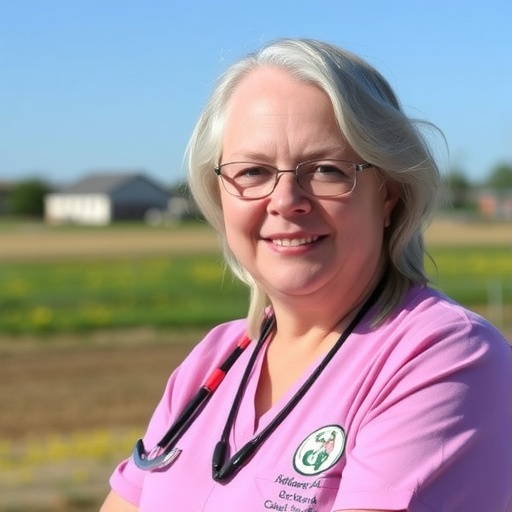
In recent years, the burden of cancer care in rural populations has emerged as a critical challenge in healthcare delivery, particularly concerning access to quality surgical treatment. Traditional paradigms often emphasize centralization of complex surgeries in high-volume urban centers, purportedly associated with better outcomes. However, emerging evidence challenges this notion, suggesting that rural-dwelling patients with common cancers can achieve comparable surgical outcomes at local rural hospitals, thereby potentially mitigating the burdens of travel and systemic disparities.
A comprehensive analysis published in the Journal of the American College of Surgeons (JACS) rigorously examined the perioperative outcomes of patients living in rural areas who underwent surgery for lung or colon cancer. The study scrutinized data from over 16,000 Medicare-enrolled adults aged 65 or older, all residing outside metropolitan statistical areas as per ZIP code definitions. Leveraging Surveillance, Epidemiology, and End Results (SEER) data, the research focused on patients with stage I to III colon and lung cancers, excluding early-stage pre-cancers and stage IV metastatic disease, to homogeneously evaluate surgical complexity and postoperative results.
The impetus for the study arises from longstanding concerns about rural healthcare disparities. Rural patients typically encounter substantial logistical obstacles, including extended travel distances, increased travel times, and associated financial and emotional costs, when seeking cancer surgery at distant urban centers. These barriers can lead to delays in care, decreased adherence to treatment regimens, and overall poorer patient experiences. The question persistently unresolved was whether the quality of surgical care at local rural facilities compromises patient outcomes compared to centralized urban centers.
The analysis revealed a striking paradigm shift. More than half of colon cancer patients (54%) and approximately one quarter of lung cancer patients received their cancer surgery at hospitals situated locally within their rural communities. Importantly, the demographic and clinical profiles—including cancer stage distribution, health status, and surgical complexity—were broadly similar between patients treated locally and those who traveled to urban centers. Notably, a slightly higher proportion of patients at rural hospitals were Medicaid eligible (10% versus 8%), hinting at socioeconomic disparities inherent within these cohorts.
Crucially, perioperative outcomes—measured primarily by 90-day mortality rates and hospital readmission rates—did not significantly differ between rural and urban hospital settings. Lung cancer surgery mortality approximated 5%, with colon cancer surgery mortality near 7%, consistent across facility types. Additionally, 90-day readmission rates hovered around 10% for lung cancer patients and 14% for colon cancer patients regardless of treatment location. These homogeneous outcomes underscore the feasibility and safety of performing complex oncologic surgeries in rural facilities without compromising patient survival or early postoperative recovery.
The study also illuminated travel burden disparities: rural patients undergoing surgery in urban centers traveled substantially longer distances and endured greater travel times than those managed locally. For colon cancer patients, urban-directed care entailed approximately threefold the travel distance—translating to an additional 33 miles and 35 minutes of commute. Similarly, lung cancer patients faced nearly double the travel — approximately 26 extra miles and 23 more minutes traveling to urban facilities. These logistical demands pose significant challenges, particularly for elderly patients with limited transportation options or comorbidities.
While these findings suggest rural facilities can deliver high-quality surgical oncology care, the authors emphasized that some rural patients will inevitably require or prefer treatment at urban centers. Selection criteria for local versus centralized care remain incompletely understood, influenced by referral patterns, physician recommendations, institutional capabilities, patient preference, and tumor-specific factors. The study was limited to Medicare beneficiaries, thus primarily representing older adults, and restricted to SEER-participating states, which might impact generalizability.
From a systems perspective, these findings bear considerable implications. Healthcare systems undergoing regionalization of cancer care must judiciously balance centralization incentives with the necessity to provide accessible care for rural populations. Strengthening surgical capacity and multidisciplinary cancer care in rural hospitals could alleviate travel burdens, reduce financial toxicity, and improve adherence to treatment protocols. Moreover, investment in telehealth and integrated care coordination could further support rural oncology patients.
The research team plans subsequent investigations to dissect attributes of rural and urban hospitals associated with superior outcomes, extending beyond surgical endpoints to encompass comprehensive cancer care, including chemotherapy, radiation, and survivorship. Understanding disparities in preoperative screening and postoperative therapies will be vital to fully optimize cancer care continuity in rural settings. Insights from high-performing rural hospitals could unveil scalable practices to elevate rural oncology care nationally.
Michael E. Egger, MD, FACS, MPH, associate professor of surgery at the University of Louisville School of Medicine and lead author of the study, underscores the importance of this paradigm. “Traveling long distances for surgery is not practical for all patients, nor sustainable for urban centers operating at capacity,” he remarks. “We must discern which patients can be safely treated locally and which necessitate referral to specialized centers to ensure equity and quality of cancer care.”
In conclusion, this landmark study furnishes robust preliminary evidence that complex oncologic surgeries for lung and colon cancer can be safely and effectively performed in local rural hospitals without compromising perioperative outcomes. By reframing rural cancer surgery as a feasible local intervention rather than a mandate for distant referral, the findings advocate for a more nuanced, patient-centered approach to cancer care delivery, potentially transforming the therapeutic landscape for rural populations.
News Publication Date: 11-Feb-2026
Web References:
- https://doi.org/10.1097/XCS.0000000000001781
- https://journals.lww.com/journalacs/abstract/9900/perioperative_outcomes_of_rural_dwelling_patients.1557.aspx
References:
Egger M, Jones T, Piamonte Q, et al. Rural-dwelling patients can safely undergo lung and colon cancer surgery at their local rural hospital with good perioperative outcomes. Journal of the American College of Surgeons, 2026. DOI: 10.1097/XCS.0000000000001781
Cite Scienmag News
Nathaniel Bowman. (February 11, 2026). Rural Cancer Patients Experience Comparable Outcomes with Local Surgery. Scienmag. https://scienmag.com/rural-cancer-patients-experience-comparable-outcomes-with-local-surgery/
Nathaniel Bowman. "Rural Cancer Patients Experience Comparable Outcomes with Local Surgery." Scienmag, 11 February 2026, https://scienmag.com/rural-cancer-patients-experience-comparable-outcomes-with-local-surgery/. Accessed 3 September 2026.
Nathaniel Bowman. "Rural Cancer Patients Experience Comparable Outcomes with Local Surgery." Scienmag. February 11, 2026. https://scienmag.com/rural-cancer-patients-experience-comparable-outcomes-with-local-surgery/


