

Monday, October 26, 2026
Science
No Result
View All Result
  • Login
  • HOME
  • SCIENCE NEWS
  • CONTACT US
  • HOME
  • SCIENCE NEWS
  • CONTACT US
No Result
View All Result
Scienmag
No Result
View All Result
Home Science News Technology and Engineering

Runtime Assurance Framework Quantifies Risk Trade-offs for BVLOS Drone Operations

October 26, 2026
in Technology and Engineering
Denise Maddox
By Denise Maddox Scienmag Editorial Profile - Mechanical Engineering
Reading Time: 2 mins read
0
Runtime Assurance Framework Quantifies Risk Trade-offs for BVLOS Drone Operations

Runtime Assurance Framework Quantifies Risk Trade-offs for BVLOS Drone Operations

65
SHARES
587
VIEWS
Share on FacebookShare on Twitter
ADVERTISEMENT

A newly published study in Aerospace Systems presents ASSURE-BVLOS, a runtime assurance framework designed to support beyond-visual-line-of-sight (BVLOS) unmanned aircraft operations. The framework links five operational domains—communications, perception, external information, environment and vehicle condition—to a bounded risk index, and pairs that index with visible uncertainty penalties, predefined authority states, deterministic hard-limit overrides and configuration-linked evidence. The aim is to give supervisory decisions a single, auditable structure that accounts for all of these factors together rather than in isolation.

The paper supplies analytical properties of the framework together with a newly implemented computational evaluation. The authors note that this new evaluation replaces an earlier numerical assessment, because the previous executable implementation was unavailable for verification. All newly specified parameters are disclosed in the study, a step intended to make the configured supervisory model reproducible by others.

In the computational evaluation, the framework was tested across 100,000 independent synthetic states. The estimated hazardous-outcome probability was 10.739% for a static hard-limit baseline and 8.083% for ASSURE-BVLOS, a difference of 2.656 percentage points with a 95% paired-bootstrap interval of 2.557 to 2.757. The authors are explicit that the direction of this difference is structurally favoured by assumed mitigation factors and therefore does not constitute independent evidence of safety effectiveness. Ten random seeds produced differences ranging from 2.534 to 2.711 percentage points, indicating stability of the estimate across repeated runs.

Performance under nominal conditions was more modest. Critical-state recall reached 40.20% at an intervention burden of 9.77%. Threshold, weight, surrogate and adverse-intervention analyses exposed substantial trade-offs among the framework’s settings, and an arithmetic fusion of scores achieved slightly higher recall at a matched intervention burden. In separate prescribed-score tests, mean switching fell from 97.56 to 5.84 transitions while protected-state occupancy rose from 29.70% to 63.73%, showing how the authority-state design changes how often the supervisor intervenes and how long the system remains in protected modes.

Twenty-eight implementation tests passed, supporting the correctness of the software realisation. The authors caution, however, that these findings establish reproducible behaviour of the configured supervisory model only—not flight safety, causal intervention effectiveness or certification compliance. Closed-loop simulation, hardware- and human-in-the-loop testing, and controlled flight validation remain necessary before any operational claims could be made. For BVLOS operations, where supervisory decisions must weigh communications quality, perception reliability, external information, environmental conditions and vehicle health simultaneously, the study offers a documented, testable structure for such decisions, along with a candid account of the trade-offs and the limits of what synthetic evaluation can demonstrate.

Subject of Research: Runtime assurance for BVLOS unmanned aircraft operations

Article Title: ASSURE-BVLOS: runtime assurance for risk-adaptive space–air–ground unmanned aircraft operations

Article References: Barua, N. (2026). ASSURE-BVLOS: runtime assurance for risk-adaptive space–air–ground unmanned aircraft operations. Aerospace Systems. https://doi.org/10.1007/s42401-026-00565-z

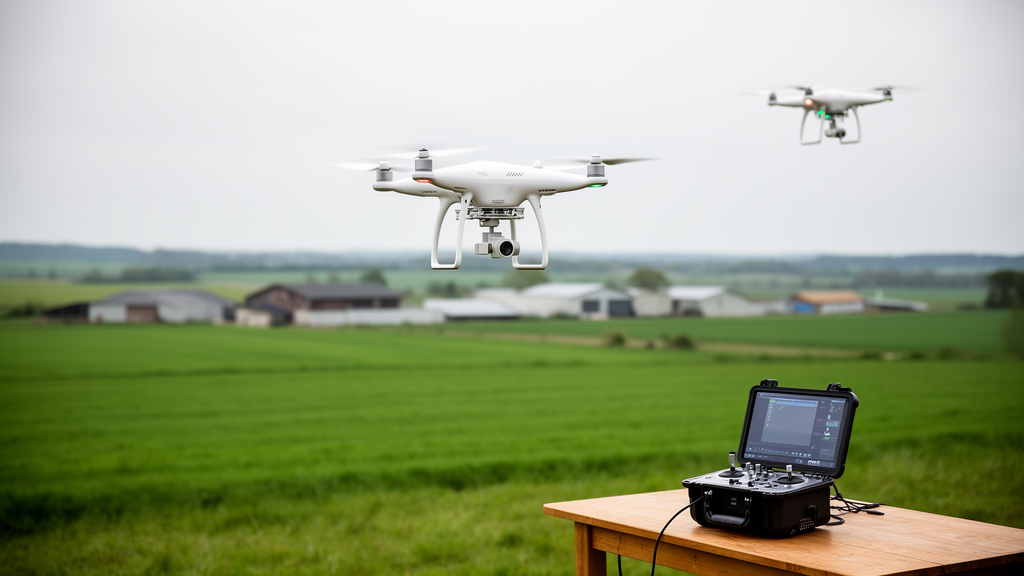
Image Credits: AI Generated

DOI: 10.1007/s42401-026-00565-z

Keywords: BVLOS, unmanned aircraft, runtime assurance, risk index, aerospace systems, computational evaluation, ASSURE-BVLOS, runtime, assurance, risk-adaptive, space, ground

Cite Scienmag News

Denise Maddox. (October 26, 2026). Runtime Assurance Framework Quantifies Risk Trade-offs for BVLOS Drone Operations. Scienmag. https://scienmag.com/runtime-assurance-framework-quantifies-risk-trade-offs-for-bvlos-drone-operations/


Denise Maddox. "Runtime Assurance Framework Quantifies Risk Trade-offs for BVLOS Drone Operations." Scienmag, 26 October 2026, https://scienmag.com/runtime-assurance-framework-quantifies-risk-trade-offs-for-bvlos-drone-operations/. Accessed 26 October 2026.

Denise Maddox. "Runtime Assurance Framework Quantifies Risk Trade-offs for BVLOS Drone Operations." Scienmag. October 26, 2026. https://scienmag.com/runtime-assurance-framework-quantifies-risk-trade-offs-for-bvlos-drone-operations/

Tags: Aerospace Systemsaerospace systems BVLOS safety analysisanalytical properties of drone risk management modelsassuranceASSURE-BVLOSBVLOSBVLOS drone operations risk assessmentcomputational evaluationcomputational evaluation of drone safety frameworksgroundhazard probability estimation in BVLOS flightsimpact of mitigation factors on BVLOS drone riskoperational domain integration for drone risk managementreproducibility in UAV safety researchrisk indexrisk trade-off quantification in drone safetyrisk-adaptiveruntimeruntime assuranceruntime assurance framework for unmanned aircraftspacesupervisory decision-making in autonomous dronesuncertainty penalties in drone operational safetyunmanned aircraft
Share26Tweet16
Previous Post

Appropriate antibiotics in the ICU linked to better survival, DIANA analysis shows

Next Post

Educators call for systemic responses to learner violence in South Africa

Related Posts

Computational model shows how the brain dodges obstacles while reaching for goals
Biology

Computational model shows how the brain dodges obstacles while reaching for goals

October 26, 2026
New Diagnostic Tool Probes Feature-Level Bias in Dutch Health Algorithms
Medicine

New Diagnostic Tool Probes Feature-Level Bias in Dutch Health Algorithms

October 26, 2026
Voice fillers: injectable biomaterials reshape the science of vocal fold repair
Science News

Voice fillers: injectable biomaterials reshape the science of vocal fold repair

October 26, 2026
Why a Perfect Interface Can Still Fail the Person Using It
Science News

Why a Perfect Interface Can Still Fail the Person Using It

October 26, 2026
From Pixels to Compressed Streams: A Review Maps the Evolving Field of Anomaly Detection
Technology and Engineering

From Pixels to Compressed Streams: A Review Maps the Evolving Field of Anomaly Detection

October 26, 2026
AI-guided robot with adaptive lighting measures blind holes to 0.03 mm accuracy
Science News

AI-guided robot with adaptive lighting measures blind holes to 0.03 mm accuracy

October 26, 2026
Next Post
Educators call for systemic responses to learner violence in South Africa

Educators call for systemic responses to learner violence in South Africa

  • Mothers who receive childcare support from maternal grandparents show more optimized

    Mothers who receive childcare support from maternal grandparents show more parental warmth, finds NTU Singapore study

    27656 shares
    Share 11059 Tweet 6912
  • University of Seville Breaks 120-Year-Old Mystery, Revises a Key Einstein Concept

    1061 shares
    Share 424 Tweet 265
  • Bee body mass, pathogens and local climate influence heat tolerance

    682 shares
    Share 273 Tweet 171
  • Researchers record first-ever images and data of a shark experiencing a boat strike

    546 shares
    Share 218 Tweet 137
  • Groundbreaking Clinical Trial Reveals Lubiprostone Enhances Kidney Function

    531 shares
    Share 212 Tweet 133
Science

Embark on a thrilling journey of discovery with Scienmag.com—your ultimate source for cutting-edge breakthroughs. Immerse yourself in a world where curiosity knows no limits and tomorrow’s possibilities become today’s reality!

RECENT NEWS

  • Cyanobacteria Build Two Specialized Pili from One Shared Assembly Machinery
  • Type I Interferon Signaling Helps Clear Early Lyme Disease Infection in Mice
  • Climate change may shift plague risk zones in China’s Northern Tianshan
  • Computational model shows how the brain dodges obstacles while reaching for goals

Categories

  • Agriculture
  • Anthropology
  • Archaeology
  • Athmospheric
  • Biology
  • Biotechnology
  • Blog
  • Bussines
  • Cancer
  • Chemistry
  • Climate
  • Earth Science
  • Editorial Policy
  • Marine
  • Mathematics
  • Medicine
  • Pediatry
  • Policy
  • Psychology & Psychiatry
  • Science Education
  • Science News
  • Social Science
  • Space
  • Technology and Engineering

Subscribe to Blog via Email

Enter your email address to subscribe to this blog and receive notifications of new posts by email.

Join 5,151 other subscribers

© 2025 Scienmag - Science Magazine

Welcome Back!

Login to your account below

Forgotten Password?

Retrieve your password

Please enter your username or email address to reset your password.

Log In
No Result
View All Result
  • HOME
  • SCIENCE NEWS
  • CONTACT US

© 2025 Scienmag - Science Magazine

Discover more from Science

Subscribe now to keep reading and get access to the full archive.

Continue reading