

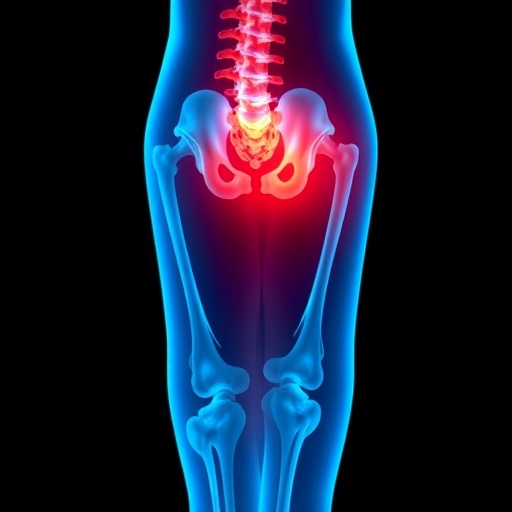
In a groundbreaking study recently published in “Biol Sex Differ,” researchers Lu, Wang, and Yang delve into the impact of romosozumab—an innovative monoclonal antibody—on osteoporotic fractures compared to conventional PTH (1–34) analogs specifically in women. This research promises a significant leap forward in our understanding of osteoporosis treatment and the optimization of fracture prevention strategies for a demographic notoriously prone to fragility fractures.
Osteoporosis, characterized by reduced bone mineral density and deterioration of bone microarchitecture, is a common condition affecting millions of women worldwide, particularly post-menopausal women. The societal burden of osteoporotic fractures is immense—affecting quality of life, leading to increased healthcare costs, and contributing to a rising incidence of morbidity and mortality associated with fragility fractures. Thus, effective treatments are not just necessary; they are crucial.
Romosozumab, which functions by both inhibiting sclerostin and stimulating bone formation, represents a new class of treatments focused on improving bone density and reducing fracture risk. Unlike traditional therapies, romosozumab offers a dual mechanism of action that not only helps instigate new bone formation but also counteracts the resorption of old bone, thus presenting a unique therapeutic profile. This study’s findings shine a light on romosozumab as a potentially superior choice over older PTH analogs.
The researchers conducted a comprehensive analysis utilizing real-world evidence, drawing upon extensive clinical data that emphasizes practical outcomes over controlled clinical trial results. This approach enhances the relevance of the findings, reflecting how Romosozumab performs under everyday conditions rather than isolated clinical setups. Such evidence is vital to formulating treatment protocols that resonate with actual patient experiences and responses.
The study meticulously compared patients receiving romosozumab to those treated with PTH (1–34) analogs, measuring bone mineral density increases and subsequent rates of osteoporotic fractures. The results confirmed a statistically significant advantage for romosozumab in reducing fracture incidents, a finding that underscores the importance of considering new therapeutic options in standard treatment regimens for osteoporosis.
Particularly striking was the pronounced effect seen in high-risk populations. Women with a history of fractures or those showing significant bone loss were found to benefit substantially from romosozumab treatment. This highlights the necessity of individualized patient care in the management of osteoporosis—different patients exhibit varied resonses to the treatments available, making personalized approaches vital.
Furthermore, the research also revealed that patients treated with romosozumab reported higher satisfaction levels with their treatment outcomes. Enhanced patient adherence to therapy can significantly impact the overall effectiveness of osteoporosis treatments, as consistent use is crucial for achieving optimal results. The psychological aspect of treatment cannot be overlooked; feeling like treatment is effectively managing health can drastically improve a patient’s commitment to their prescribed interventions.
One critical aspect addressed in the study revolves around safety. Concerns surrounding the adverse effects of any medication are paramount, especially for older populations who may already be managing multiple health conditions. The study reported on the safety profile of romosozumab, indicating that while there were instances of side effects, they were manageable and not significantly higher than those observed in patients taking PTH (1–34) analogs. This information serves to bolster confidence among clinicians and patients when considering romosozumab as a treatment option.
The implications of this research extend beyond the realm of clinical practice into public health strategies. As osteoporosis continues to affect an aging population, the need for effective treatments will only grow. Accepting romosozumab as a frontline therapy can potentially shape new guidelines and treatment pathways for medical professionals and lead to improved health outcomes for women at risk of fractures.
Moreover, the economic impact of adopting romosozumab in the treatment landscape could yield cost savings in the long run. By effectively reducing the rates of fractures, healthcare systems could decrease the financial burden of hospitalization and long-term care associated with osteoporotic fractures. The transition towards more advanced treatments like romosozumab may represent a proactive approach to managing a condition that poses significant societal costs and health burdens.
In light of these findings, clinicians are urged to reassess current treatment paradigms in osteoporosis management. Given the strong evidence contrasting the effectiveness of romosozumab against PTH (1–34) analogs, it raises an important question: Are we doing enough to ensure that our patients receive the best possible care?
The quest for effective osteoporosis treatments is far from over. Continuous research is required to unveil the long-term impacts of romosozumab and its place within the continuum of care. Future studies that expand on the demographics, including men and younger populations, will be essential to comprehensively understand the landscape of osteoporosis treatment. Researchers are optimistic that with the ongoing advancements in medical research and pharmaceutical developments, the future of osteoporosis management will improve markedly.
As we stand on the cusp of these developments in osteoporosis treatment, the findings from Lu, Wang, and Yang serve as a guiding beacon for healthcare professionals, researchers, and patients alike. Real-world evidence indeed opens new horizons for treatment, guiding clinical decisions toward interventions that are both effective and in line with patient needs and preferences.
With these foundational studies propelling the field forward, the medical community remains dedicated to unraveling the complexities of osteoporosis while ensuring that innovative therapies, like romosozumab, find their rightful place in treatment regimens, ultimately enhancing the lives of millions impacted by this silent disease.
Subject of Research: The comparative effectiveness of romosozumab versus PTH (1–34) analogs in reducing osteoporotic fractures in women.
Article Title: Real-world evidence indicates romosozumab use is associated with a greater reduction in osteoporotic fractures than PTH (1–34) analogs in women.
Article References:
Lu, KH., Wang, SI. & Yang, SF. Real-world evidence indicates romosozumab use is associated with a greater reduction in osteoporotic fractures than PTH (1–34) analogs in women.
Biol Sex Differ (2026). https://doi.org/10.1186/s13293-025-00817-1
Image Credits: AI Generated
DOI: 10.1186/s13293-025-00817-1
Keywords: Osteoporosis, Romosozumab, PTH (1–34) analogs, Osteoporotic fractures, Women’s health, Bone density, Fracture prevention, Real-world evidence.


