


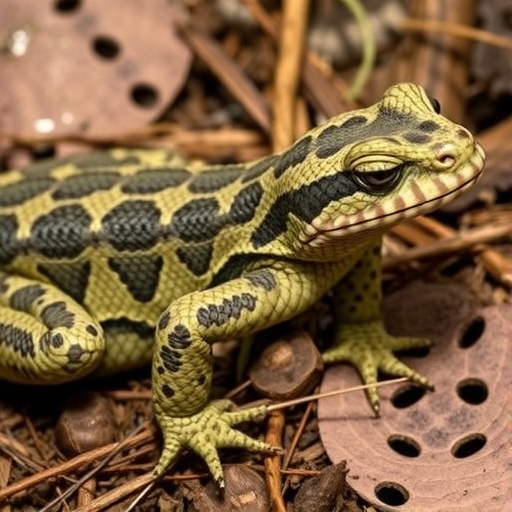
In the intricate tapestry of ecosystems, the interdependence of species is often starkly illuminated by the consequences of human activities. A recent study focuses on the alarming phenomenon of roadkill, particularly affecting herpetofauna—reptiles and amphibians—within the confines of a Mexican Biosphere Reserve. The path to ecological awareness is often paved with tragic statistics, and this research sheds light on hotspots where these creatures meet their untimely demise due to vehicular traffic. The results underscore a pressing environmental issue that urges immediate attention and action.
Herpetofauna play a critical role in ecological balance, acting as both predators and prey within their habitats. Their decline due to road mortality poses a significant threat not only to the individual species but also to the broader ecosystem dynamics. The study conducted by Cabrera-Hernández and colleagues carefully mapped out areas in the Mexican Biosphere Reserve where roadkill incidents are most frequent, revealing patterns of vulnerability that can inform conservation strategies. These observations not only highlight immediate risks but also provide a foundation for future ecological assessments.
The methodology employed in this research is as vital as the findings. By employing systematic counting and geographical information system (GIS) technologies, the researchers meticulously cataloged instances of roadkill over a defined period. This rigorous approach allowed them to correlate roadkill frequency with specific habitat characteristics, road types, and traffic patterns. The use of GIS technology, in particular, brings a sophisticated dimension to the analysis, enabling a visual representation of data and facilitating a better understanding of spatial relationships within the environment.
Maps generated from the study illustrate alarming hotspots where the incidence of roadkill peaked, demonstrating a clear correlation between high-traffic areas and biodiversity. These maps serve as a wake-up call, presenting stakeholders—including policymakers, conservationists, and the general public—with clear evidence of the impact of roads on herpetofauna populations. By mapping these critical zones, the research paves the way for targeted interventions aimed at mitigating roadkill through the implementation of wildlife crossings and increased road signage, aimed at raising awareness among drivers.
Given the significant implications of road infrastructure on wildlife preservation, the study positions itself at the intersection of conservation and urban planning. Cities and towns are expanding rapidly, often at the expense of natural habitats. The findings explore the necessity of integrating wildlife corridors and safe passage solutions into future road designs, highlighting the need for collaboration between ecologists and urban planners. As biodiversity faces unprecedented pressures from human encroachment, such integrations are seen as crucial steps toward sustainable development.
Moreover, this research contributes to the broader conversation around climate change and its ramifications for wildlife. As ecosystems shift due to changing climatic conditions, species struggles are exacerbated by human-made obstacles like roads. The study highlights the urgency of adapting our infrastructure to be more accommodating of wildlife, reminding us that ecological preservation and development can coexist when carefully planned. The authors advocate for a paradigm shift in the way we construct and maintain roads, urging us to prioritize coexistence with nature over mere expansion.
Public awareness is another crucial component of the conversation around roadkill and its impacts. By disseminating the findings of this study through various channels, researchers aim to raise consciousness among the general populace. Making the issue relatable—for instance, discussing the ecological and even economic consequences of losing herpetofauna—could galvanize community action. Grassroots movements can emerge as vital participants in the quest to reduce roadkill, from citizen science programs that monitor wildlife populations to advocacy for better road management practices.
Educating drivers about the plight of herpetofauna is essential. An informed driving public is far more likely to observe caution on roadways known for high wildlife crossings. Utilizing strategic signage, holding local workshops, and promoting campaigns on social media could effectively inform individuals about reducing speeds in wildlife-prone areas. Such community engagement fosters a sense of responsibility for local ecosystems and can lead to profound shifts in behavior and awareness.
In conclusion, Cabrera-Hernández et al.’s study shines a critical spotlight on the roadkill crisis facing herpetofauna in a Mexican Biosphere Reserve. By delineating hotspots and engaging with community awareness, the research not only informs academic discourse but also calls for immediate and practical steps towards mitigating the impacts of vehicular traffic on biodiversity. As the authors rightly stress, the conservation of our natural heritage depends on our willingness to heed these warnings—and to act. Without decisive action, the grim statistics could translate into irreversible losses in biodiversity, echoing through our ecosystems and altering the natural balance that we’ve come to rely upon.
Let us embrace the challenge presented by these findings and work collaboratively to forge pathways that prioritize both human needs and the irreplaceable web of life surrounding us. The time to act is now, as every road crossed holds the potential for both peril and protection of our cherished wildlife.
Cite Scienmag News
Margaret Porter. (December 17, 2025). Roadkill Hotspots Threaten Herpetofauna in Mexico’s Reserve. Scienmag. https://scienmag.com/roadkill-hotspots-threaten-herpetofauna-in-mexicos-reserve/
Margaret Porter. "Roadkill Hotspots Threaten Herpetofauna in Mexico’s Reserve." Scienmag, 17 December 2025, https://scienmag.com/roadkill-hotspots-threaten-herpetofauna-in-mexicos-reserve/. Accessed 4 September 2026.
Margaret Porter. "Roadkill Hotspots Threaten Herpetofauna in Mexico’s Reserve." Scienmag. December 17, 2025. https://scienmag.com/roadkill-hotspots-threaten-herpetofauna-in-mexicos-reserve/


