


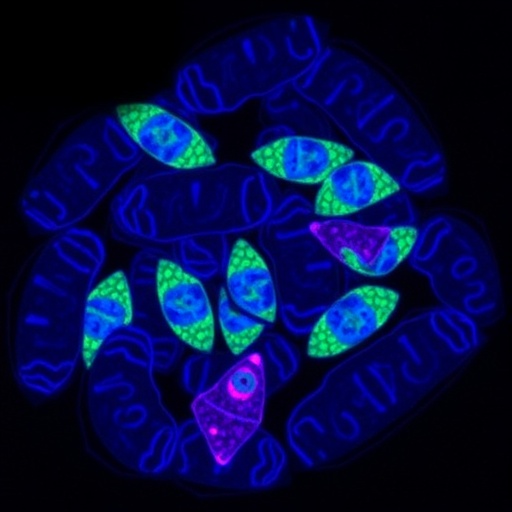
In a surprising and impactful development within the lung cancer research community, a key study elucidating the mechanisms of epithelial-mesenchymal transition (EMT) in lung adenocarcinoma has recently been retracted. The original paper, published in BMC Cancer, explored the complex interplay between RNF43, a ubiquitin ligase, and phosphorylated E-cadherin mediated by c-Src kinase, proposing that this interaction facilitated EMT—a critical step in cancer metastasis. This retraction raises questions and underscores the dynamic and sometimes contentious nature of cancer biology research.
Epithelial-mesenchymal transition is a fundamental biological process allowing epithelial cells to acquire mesenchymal, migratory characteristics. This transformation is pivotal in cancer progression, enabling tumor cells to disseminate from the primary site and establish metastatic colonies in distant organs. Central to this process is the regulation of cell adhesion molecules like E-cadherin, whose loss is commonly associated with EMT and poor prognosis in many cancers, including lung adenocarcinoma.
The original study highlighted RNF43’s role as an E3 ubiquitin ligase targeting phosphorylated E-cadherin. It proposed that RNF43 facilitates the ubiquitination and subsequent proteasomal degradation of E-cadherin when phosphorylated by the tyrosine kinase c-Src. This mechanism was posited to weaken cell-cell adhesion, enhancing EMT and promoting invasive phenotypes in lung cancer cells. Such findings, if robust, could have paved the way for novel therapeutic interventions aiming to halt metastasis by stabilizing E-cadherin at the cell membrane.
RNF43 itself has garnered significant attention in the field of oncology due to its multifaceted functions and mutations implicated in various cancers. Typically known for modulating Wnt signaling pathways, RNF43’s involvement in degrading E-cadherin revealed a previously unexplored axis potentially exploitable for targeted cancer therapies. Meanwhile, c-Src kinase, frequently overactive in multiple malignancies, acts as a regulatory switch, phosphorylating substrates that alter cell adhesion and motility.
Despite the initial enthusiasm, the recent retraction signals that the data or interpretations underlying these conclusions were found to be unreliable or insufficiently substantiated. Though retractions are unfortunate, they are an essential aspect of scientific self-correction, ensuring the integrity and reproducibility of research findings. The precise reasons behind the retraction, whether involving experimental inaccuracies, data inconsistencies, or other methodological concerns, underscore the challenges facing molecular oncology research.
For clinicians and researchers focused on lung adenocarcinoma, the retraction serves as a cautionary reminder about the complexity of cancer signaling networks. EMT regulation involves an intricate web of signaling pathways, post-translational modifications, and cross-talk between intracellular and extracellular environments. Targeting single molecules like RNF43 or phosphorylation events alone might not sufficiently disrupt these networks, necessitating a more integrated approach.
The significance of E-cadherin in cancer biology remains unchallenged, with its degradation frequently correlating with increased invasiveness and therapy resistance. However, the pathways leading to its loss of function are diverse, involving transcriptional repression, endocytosis, and proteolytic cleavage. Thus, therapeutic strategies aimed at maintaining or restoring E-cadherin levels require a comprehensive understanding of these overlapping mechanisms.
Moreover, c-Src kinase continues to be a focus of anti-cancer drug development due to its central role in cell migration and survival signaling. Drugs targeting c-Src are in various clinical trial stages, aiming to blunt tumor metastasis and improve patient outcomes. Clarifying how c-Src-mediated phosphorylation affects downstream targets like E-cadherin is crucial for optimizing such therapeutic strategies.
The original research attempted to integrate ubiquitination processes with kinase signaling in the EMT context, representing a novel conceptual advance. Ubiquitin-proteasome pathways have broad implications in cell cycle regulation, apoptosis, and signal transduction. Dysregulation of ubiquitination is commonly observed in cancers, making components like RNF43 attractive therapeutic targets if validated.
This event also highlights the importance of meticulous experimental design, comprehensive validation using multiple methodologies, and transparent data reporting. In the fast-evolving landscape of molecular oncology, reproducibility and rigorous peer review are essential safeguards against premature conclusions that could misdirect research and clinical trials.
Looking beyond the retraction, the scientific community must continue to dissect the multifactorial regulation of EMT and metastasis in lung adenocarcinoma. Advances in high-resolution imaging, proteomics, and genome editing techniques such as CRISPR-Cas9 offer unprecedented opportunities to unravel these complex biological processes with precision.
The lung adenocarcinoma field remains a critical battleground due to the disease’s high incidence and mortality worldwide. Decoding the molecular underpinnings of metastatic dissemination ultimately holds the key to improving early detection, providing more effective therapies, and enhancing patient survival rates.
In sum, while the retraction temporarily stalls the promising line of inquiry around RNF43, phosphorylated E-cadherin, and c-Src in lung adenocarcinoma EMT, it reinforces an essential principle of science—the ongoing pursuit of truth through iterative validation. Future studies, armed with robust methodologies and interdisciplinary approaches, are poised to build upon or refine these concepts to better combat this devastating disease.
Cite Scienmag News
Nathaniel Bowman. (October 23, 2025). RNF43 Targets Phosphorylated E-Cadherin Degradation. Scienmag. https://scienmag.com/rnf43-targets-phosphorylated-e-cadherin-degradation/
Nathaniel Bowman. "RNF43 Targets Phosphorylated E-Cadherin Degradation." Scienmag, 23 October 2025, https://scienmag.com/rnf43-targets-phosphorylated-e-cadherin-degradation/. Accessed 4 September 2026.
Nathaniel Bowman. "RNF43 Targets Phosphorylated E-Cadherin Degradation." Scienmag. October 23, 2025. https://scienmag.com/rnf43-targets-phosphorylated-e-cadherin-degradation/


