


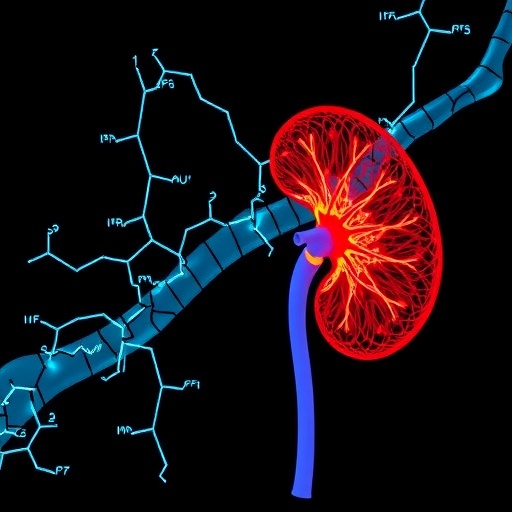
In a groundbreaking breakthrough that could redefine how chemotherapy side effects are managed, researchers have uncovered a novel strategy to shield kidneys from the devastating toxicity caused by doxorubicin, a powerful cancer-fighting drug. The study, spearheaded by Basal, Saad, and El Sadda, reveals that complexing rifampicin with iron can significantly mitigate doxorubicin-induced nephrotoxicity, providing a potent new avenue for safer cancer treatment protocols. This discovery offers not only hope for patients undergoing chemotherapy but also a deeper understanding of the molecular mechanisms that underpin drug-induced kidney damage.
Doxorubicin is widely recognized for its exceptional efficacy in killing a variety of cancerous cells, making it a frontline chemotherapeutic agent in oncology. However, its clinical utility is shadowed by its severe nephrotoxic side effects, which can lead to acute kidney injury, compromise renal function, and ultimately limit dosage and treatment success. The renal toxicity arises primarily from oxidative stress, mitochondrial dysfunction, and inflammation triggered by doxorubicin metabolites accumulating in renal tissues. For decades, this nephrotoxicity has posed a formidable obstacle, spurring researchers to seek protective strategies without jeopardizing the anti-cancer efficacy of doxorubicin.
Central to the recent study is rifampicin, a well-known antibiotic traditionally used to treat tuberculosis and other bacterial infections. Rifampicin’s pharmacological profile includes complexation capabilities with various metals, and when bound to iron, its chemical properties transform dramatically. The researchers hypothesized that this rifampicin-iron complex could interact beneficially within biological systems by modulating oxidative stress pathways. Given that oxidative stress is a primary driver of doxorubicin-induced nephrotoxicity, leveraging rifampicin’s metal-binding attributes could represent a targeted therapeutic approach.
To investigate this possibility, the team employed advanced in vitro and in vivo models simulating doxorubicin-induced kidney injury. They meticulously synthesized the rifampicin-iron complex and characterized its physicochemical properties through spectroscopic techniques and electron microscopy, ensuring stability and bioavailability. Following administration, they monitored renal function markers such as serum creatinine and blood urea nitrogen, alongside histopathological analysis to gauge tissue damage. The results were profound: the rifampicin-iron complex significantly attenuated biochemical and structural indicators of nephrotoxicity compared to control groups exposed solely to doxorubicin.
Mechanistically, this nephroprotective effect appears rooted in the modulation of reactive oxygen species (ROS). The iron-bound rifampicin complex acts as a catalytic antioxidant, scavenging free radicals generated by the redox cycling of doxorubicin metabolites. Furthermore, it stabilizes mitochondrial membranes, preventing release of pro-apoptotic factors and curbing the inflammatory cascade commonly implicated in renal injury. Notably, treatment with this complex did not compromise the cytotoxic activity of doxorubicin against cancer cells in separate assays, underscoring its potential clinical utility without detracting from therapeutic efficacy.
The implications of this research transcend a single chemotherapeutic agent. As nephrotoxicity frequently limits drug dosing in oncology and other medical fields, the methodological innovation of metal complexation to reengineer drug side effects could pioneer a new class of supportive care interventions. Future research may explore analogous complexes with other antibiotics or chelators, vastly expanding the pharmacological toolkit available to oncologists seeking to optimize treatment safety and patient outcomes.
Moreover, the study’s findings contribute a nuanced perspective on the interplay between metal ions, pharmacodynamics, and tissue-specific toxicity. Understanding how metal-complexed pharmaceuticals influence intracellular oxidative environments opens exciting new vistas in medicinal chemistry and toxicology. The research team proposed that enhancing endogenous antioxidant defenses via biologically compatible complexes might become a cornerstone strategy against various drug-induced organ toxicities, beyond nephrotoxicity alone.
The translational potential of this discovery is remarkable. Prior to clinical application, rigorous pharmacokinetic studies are necessary to determine optimal dosing schedules, complex stability in vivo, and long-term safety profiles. Additionally, clinical trials would have to confirm efficacy in human patients, exploring biomarkers for early detection of renal injury and responsive modulation by the rifampicin-iron complex. Given the global burden of cancer and the widespread use of doxorubicin, this strategy could notably improve quality of life and treatment adherence for millions of patients worldwide.
In sum, the investigation by Basal, Saad, and El Sadda represents a paradigm shift in addressing chemotherapy-associated side effects. Through clever biochemical manipulation of an established antibiotic with iron, a potent shield emerges against one of oncology’s most feared clinical complications. This synergy between pharmacology and inorganic chemistry not only exemplifies interdisciplinary innovation but also rekindles hope for patients enduring the rigors of cancer treatment.
The full details of the study illuminate complex biochemical pathways while emphasizing practical clinical relevance. As the scientific community digests these findings, the pathway is clear for expanding research into related compounds, exploring molecular docking interactions, and developing precision therapies that neutralize toxicity without dulling anti-cancer potency. Furthermore, this work underscores the potential for repurposing existing drugs in novel configurations, which could accelerate therapeutic advancements by bypassing the lengthy drug discovery pipeline.
Overall, the novel rifampicin-iron complex represents a beacon of progress in oncology supportive care. Its ability to mitigate renal toxicity while preserving chemotherapeutic function may well transform clinical protocols and patient experiences. Continued multidisciplinary collaboration and investment in this promising line of inquiry will be crucial in turning this laboratory success into a standard of care.
As the medical landscape evolves, the synergistic integration of pharmacology, chemistry, and molecular biology continues to unravel innovative solutions for age-old problems in cancer therapy. The insights gained from this study reinforce the critical importance of tackling drug side effects through sophisticated biochemical engineering and pave the way for safer, more effective treatment regimens on a global scale.
Cite Scienmag News
Nathaniel Bowman. (June 23, 2026). Rifampicin-Iron Complex Reduces Doxorubicin Kidney Damage. Scienmag. https://scienmag.com/rifampicin-iron-complex-reduces-doxorubicin-kidney-damage/
Nathaniel Bowman. "Rifampicin-Iron Complex Reduces Doxorubicin Kidney Damage." Scienmag, 23 June 2026, https://scienmag.com/rifampicin-iron-complex-reduces-doxorubicin-kidney-damage/. Accessed 5 September 2026.
Nathaniel Bowman. "Rifampicin-Iron Complex Reduces Doxorubicin Kidney Damage." Scienmag. June 23, 2026. https://scienmag.com/rifampicin-iron-complex-reduces-doxorubicin-kidney-damage/


