


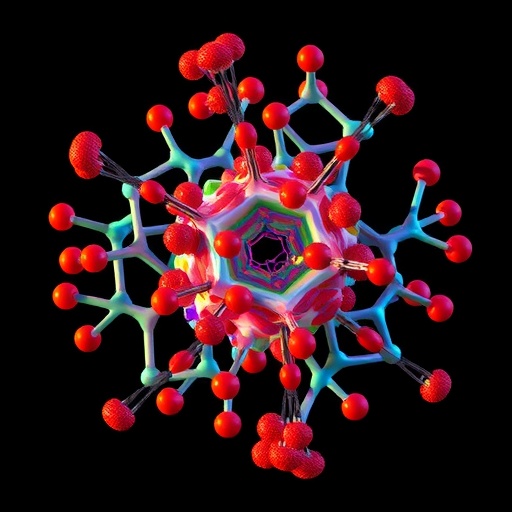
In the rapidly evolving field of computational chemistry, researchers are constantly seeking more effective ways to optimize molecular structures. The introduction of a novel framework, termed the Riemannian Denoising Model (R-DM), marks a significant advancement in this pursuit. This innovative approach diverges from traditional methods that typically rely on Euclidean space, opting instead to utilize a Riemannian manifold for molecular structure optimization. The significance of employing a Riemannian metric lies in its ability to more accurately reflect the dynamics of molecular energy changes, which is crucial for modeling potential energy surfaces with high fidelity.
Molecular optimization is foundational to understanding chemical reactions and designing new materials. Conventional optimization techniques often encounter challenges when mapping complex energy landscapes. These difficulties arise primarily from the limitations of Euclidean metrics in capturing the nuanced behaviors of molecular systems. The R-DM framework overcomes these limitations by incorporating geometry that is specific to the molecular properties under study, allowing it to make strides in predictive accuracy.
One of the notable advantages of the R-DM approach is its incorporation of internal coordinates that are directly reflective of energetic properties. This physics-informed perspective is essential for improving the robustness of the optimization process. By aligning the metric with the energy landscape of molecules, R-DM enhances the model’s ability to achieve chemical accuracy, with reported energy errors consistently falling below 1 kcal mol^(-1). Such precision is vital for applications that require stringent adherence to thermodynamic principles.
The architecture of the R-DM framework is built upon advanced denoising techniques that leverage deep learning. By training on large datasets that include the QM9, QM7-X, and GEOM datasets, the model learns to denoise molecular configurations effectively. This training enables the model to not only stabilize molecular structures but also to produce energetically favorable configurations that conform to the underlying physical laws. The outcome is a powerful tool that efficiently navigates the intricacies of molecular space.
The evaluation metrics used to benchmark the R-DM framework against conventional approaches illustrate its superiority. In comparative studies, R-DM has demonstrated marked improvements not only in structural fidelity but also in energetic predictions. These results highlight the model’s efficiency, as it navigates molecular landscapes with greater agility and accuracy than models constrained by Euclidean frameworks.
Moreover, the flexibility of the R-DM model allows it to adapt to various computational challenges in chemistry and materials science. As researchers explore increasingly complex molecular systems, having a robust optimization framework that can accommodate a wide range of chemical environments becomes ever more important. R-DM serves as a versatile tool capable of addressing diverse optimization tasks that are common in contemporary research.
The implications of this research extend beyond academic pursuits. The ability to optimize molecular structures to such a precise degree opens up new avenues for drug discovery, materials engineering, and nanotechnology. In drug discovery, for instance, the accurate prediction of molecular interactions is pivotal for designing effective pharmaceuticals. The enhanced performance of R-DM could streamline the identification of lead compounds, drastically reducing the time and cost associated with drug development.
Furthermore, in materials science, creating novel materials with specific properties often relies on the meticulous optimization of atomic structures. R-DM’s ability to achieve chemical accuracy can facilitate the design of materials that meet tailored specifications for various applications, such as renewable energy technologies or advanced manufacturing processes.
Collaboration between interdisciplinary teams will be crucial to harness fully the potential of the R-DM framework. Chemists, physicists, and computer scientists must work in tandem to refine these models further and integrate them into existing platforms for molecular simulations. The convergence of machine learning and computational chemistry represents a promising frontier with the potential to revolutionize our understanding of molecular systems.
The Riemannian Denoising Model not only exemplifies a shift in optimization techniques but also underscores the importance of innovative thinking in tackling longstanding challenges in molecular science. This paradigm shift calls for a reevaluation of conventional methodologies and invites researchers to explore the rich possibilities that new geometrical frameworks offer. With advancements in computational power and data availability, the future of molecular optimization is bright.
Ultimately, the development of R-DM exemplifies the advancements that machine learning and mathematical frameworks can provide in enhancing our ability to optimize molecular structures. This framework isn’t just a tool; it’s a gateway to deeper insights into the behaviors of molecules and their interactions. As we delve further into the intricacies of molecular dynamics, the lessons learned from R-DM may well inform the next breakthroughs in chemistry, propelling research into uncharted territories.
In conclusion, the introduction of the Riemannian Denoising Model represents a significant leap forward in the field of molecular structure optimization. By employing a Riemannian metric and internal coordinates reflective of molecular energetics, R-DM outperforms conventional models and showcases the capacity of physics-informed approaches. As the computational landscape continues to evolve, this novel framework could indeed pave the way for transformative discoveries, shaping the future of both chemistry and materials science.
Woo, J., Kim, S., Kim, J.H. et al. Riemannian denoising model for molecular structure optimization with chemical accuracy.
Nat Comput Sci (2026). https://doi.org/10.1038/s43588-025-00919-1
Cite Scienmag News
Denise Maddox. (January 2, 2026). Riemannian Denoising Model Achieves Accurate Molecular Optimization. Scienmag. https://scienmag.com/riemannian-denoising-model-achieves-accurate-molecular-optimization/
Denise Maddox. "Riemannian Denoising Model Achieves Accurate Molecular Optimization." Scienmag, 2 January 2026, https://scienmag.com/riemannian-denoising-model-achieves-accurate-molecular-optimization/. Accessed 4 September 2026.
Denise Maddox. "Riemannian Denoising Model Achieves Accurate Molecular Optimization." Scienmag. January 2, 2026. https://scienmag.com/riemannian-denoising-model-achieves-accurate-molecular-optimization/


