

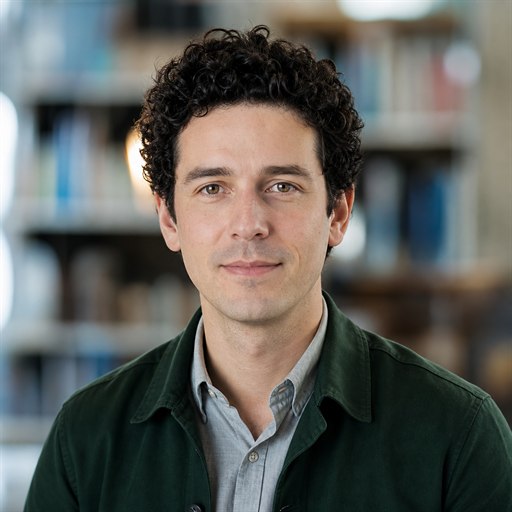

HOUSTON — In a significant milestone for the global scientific community, renowned bioengineer Antonios Mikos has been elected to the prestigious European Academy of Sciences (EURASC). This distinguished international institution celebrates remarkable achievements in scientific inquiry and technological innovation. Mikos, the Louis Calder Professor of Bioengineering and Chemical and Biomolecular Engineering at Rice University, is celebrated for his revolutionary contributions in biomaterials and regenerative medicine, which have profoundly transformed the landscape of tissue engineering and controlled drug delivery.
Mikos’s pioneering work bridges fundamental biomaterials science with translational applications in medicine. His research portfolio spans sophisticated strategies for developing biocompatible scaffolds that mimic the extracellular matrix, enabling the regeneration of complex tissues. He has extensively explored synthetic and natural polymer systems tailored to degrade at controlled rates, releasing therapeutic agents in a spatiotemporally regulated manner. These innovations have had far-reaching implications in orthopedic, dental, cardiovascular, neurologic, and ophthalmologic medicine, advancing patient-specific regenerative solutions.
Central to Mikos’s research is the design of multifunctional biomaterials capable of interfacing with biological systems to promote healing and regeneration. His work delves into the intricate signaling pathways involved in tissue repair, leveraging biomaterial chemistry to orchestrate cellular responses. A notable focus is on gene-activated matrices that facilitate localized gene therapy, invigorating endogenous repair mechanisms. This nexus of biomaterials and gene therapy presents a frontier for precision medicine, combining material science with molecular biology.
The engineering of three-dimensional tissue constructs remains a cornerstone of Mikos’s contributions. His laboratory champions the use of porous scaffolds that support cell attachment, proliferation, and differentiation while enabling nutrient diffusion. These structures serve as models for studying disease progression and therapeutic interventions. By integrating microfabrication techniques and bioreactors, Mikos’s team replicates physiological environments to enhance tissue maturation ex vivo, thereby advancing organ repair and replacement paradigms.
Regulated drug delivery systems developed under Mikos’s guidance have reshaped treatment approaches for chronic diseases. These biomaterials provide sustained release profiles, reducing systemic toxicity while maximizing therapeutic efficacy. Customizable delivery vehicles, from hydrogels to nanoparticles, have been engineered to respond to environmental stimuli such as pH and enzymatic activity. Such responsiveness allows for on-demand drug release, optimizing timing and dosage to patient needs.
Mikos’s interdisciplinary collaborations stretch across biomedical engineering, material science, and clinical medicine, underscoring his commitment to translational research. His work not only elucidates foundational principles but also accelerates the path from bench to bedside. The impact of his biomaterials is evident in clinical trials targeting bone regeneration and cartilage repair, including strategies that combat inflammation and infection at injury sites.
Beyond his research achievements, Mikos plays a vital role in shaping the scientific community. As founding editor and editor-in-chief of the Tissue Engineering journals, he has cultivated a platform accelerating discoveries and cross-disciplinary dialogue. Mentorship is a hallmark of his career, fostering a generation of researchers who continue to innovate in regenerative medicine and bioengineering worldwide.
His election to the European Academy of Sciences affirms his status as a global leader whose work transcends national boundaries. The academy’s emphasis on interdisciplinary collaboration and societal impact resonates deeply with Mikos’s vision. He anticipates that membership will augment opportunities to exchange knowledge and contribute to international efforts that harness science and technology for human betterment.
At Rice University, Mikos directs multiple research hubs including the Biomaterials Lab, the Center for Excellence in Tissue Engineering, and the J.W. Cox Laboratory for Biomedical Engineering. These centers epitomize a convergence of basic science and engineering with clinical application, fostering environments where innovative biomaterials evolve from concept to clinical reality. His membership in the National Academy of Engineering, the National Academy of Medicine, and other esteemed societies further underscores his profound influence.
With an impressive publication record exceeding 700 scientific articles and over 30 patented technologies, Mikos’s contributions illustrate an extraordinary blend of creativity and rigor. His research continues to push the boundaries of how engineered biomaterials can emulate and augment biological functions. The widespread clinical adoption of his innovations reflects a transformative impact that extends well beyond academic circles.
The formal induction ceremony for Mikos’s inclusion into the European Academy of Sciences will take place on December 17-18, 2025, during the EURASC Annual Symposium at CERN in Geneva. This event not only honors his past achievements but also heralds new opportunities for advancing collaborative research across continents. Mikos expressed his eagerness to engage with this distinguished community to drive forward the frontiers of knowledge.
The recognition of Antonios Mikos’s accomplishments highlights the essential role of biomaterials science in medicine’s future. As challenges such as organ shortages and chronic disease burdens grow, his work illuminates pathways to engineered solutions capable of repairing and regenerating damaged tissues. Mikos’s visionary approach exemplifies the potency of integrating engineering principles with biological insight to revolutionize healthcare.
Through continuous innovation and leadership, Mikos remains at the forefront of efforts to harness the potential of materials science in healing the human body. His election to the European Academy of Sciences cements a legacy marked by transformative advances, global collaboration, and a steadfast commitment to improving lives through science and engineering.
News Publication Date: May 19, 2025
Web References: https://news.rice.edu/
Cite Scienmag News
Gregory Coleman. (May 19, 2025). Rice’s Mikos Elected to European Academy of Sciences. Scienmag. https://scienmag.com/rices-mikos-elected-to-european-academy-of-sciences/
Gregory Coleman. "Rice’s Mikos Elected to European Academy of Sciences." Scienmag, 19 May 2025, https://scienmag.com/rices-mikos-elected-to-european-academy-of-sciences/. Accessed 4 September 2026.
Gregory Coleman. "Rice’s Mikos Elected to European Academy of Sciences." Scienmag. May 19, 2025. https://scienmag.com/rices-mikos-elected-to-european-academy-of-sciences/


