

Saturday, May 2, 2026
Science
No Result
View All Result
  • Login
  • HOME
  • SCIENCE NEWS
  • CONTACT US
  • HOME
  • SCIENCE NEWS
  • CONTACT US
No Result
View All Result
Scienmag
No Result
View All Result
Home Science News Medicine

Rice research aims to reprogram the genetic code

July 3, 2024
in Medicine
Reading Time: 2 mins read
0
Han Xiao
66
SHARES
600
VIEWS
Share on FacebookShare on Twitter
ADVERTISEMENT

Rice University chemist Han Xiao has been awarded nearly $2 million from the National Institutes of Health Maximizing Investigators’ Research Award (MIRA) program for established investigators.

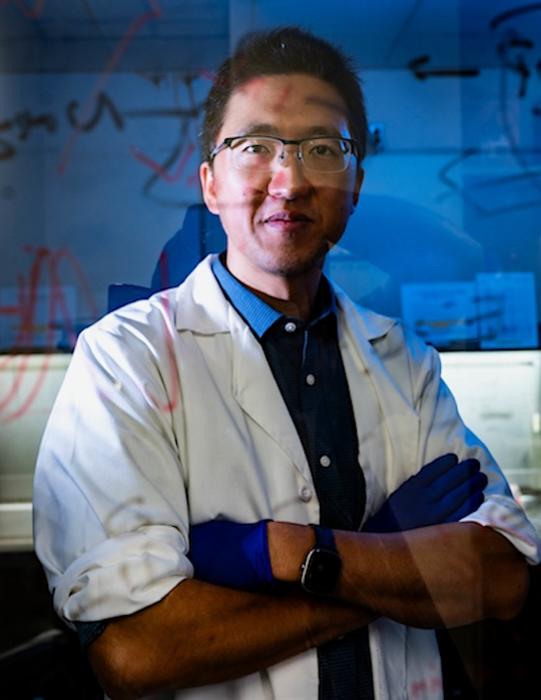
Han Xiao

Credit: Photo by Jeff Fitlow/Rice University.

Rice University chemist Han Xiao has been awarded nearly $2 million from the National Institutes of Health Maximizing Investigators’ Research Award (MIRA) program for established investigators.

All organisms with few exceptions use 20 standard amino acids to build proteins. Xiao’s research aims to reprogram the genetic code to precisely manipulate biological systems by using noncanonical amino acids (ncAAs) with diverse properties to help build proteins. Researchers generally use ncAAs to investigate the structure and dynamics of proteins, but Xiao wants to take that a step further.

“This innovative approach could revolutionize how we understand and control cellular functions,” said Xiao, the Norman Hackerman-Welch Young Investigator, associate professor of chemistry, director of Rice’s Synthesis X Center and a Cancer Prevention & Research Institute of Texas Scholar.

Xiao will use the five-year grant to develop innovative cells capable of biosynthesizing and utilizing ncAAs and to explore their potential as in vivo sensors for enzymes involved in posttranslational modifications (PTMs).

PTMs are essential for regulating cell biology. The enzymes that add and remove PTMs, known as “writers” and “erasers,” play major roles in causing various diseases, including cancer and neurological disorders.

Current methods for detecting these enzyme activities, such as fluorescence analysis, western blot and mass spectrometry, are limited to laboratory settings. Xiao’s research seeks to develop ways to monitor these activities within living organisms.

“Our goal is to create eukaryotic cells that can produce proteins with PTM handles, enabling real-time monitoring of enzyme activities,” Xiao said.

These engineered cells could pave the way for new strategies in treating diseases by providing valuable insights into the effectiveness of epigenetic inhibitors in live subjects.

MIRA supports research in an investigator’s laboratory that falls within the mission of the National Institute of General Medical Sciences (NIGMS). The goal of MIRA is to increase the efficiency of NIGMS funding by providing investigators with greater stability and flexibility, thereby enhancing scientific productivity and the chances for important breakthroughs.


Share26Tweet17
Previous Post

Cracking the code for cerebellar movement disorders

Next Post

First study to measure toxic metals in tampons shows arsenic and lead, among other contaminants

Related Posts

Family Health Needs of Disabled Elders Explored — Medicine
Medicine

Family Health Needs of Disabled Elders Explored

May 2, 2026
Physical Disorders, ADLs, Cognition, Depression in Nursing Homes — Medicine
Medicine

Physical Disorders, ADLs, Cognition, Depression in Nursing Homes

May 2, 2026
Paul and Shelia Schlosberg Family Foundation Advances Military Brain Health with Pioneering $3 Million Grant — Medicine
Medicine

Paul and Shelia Schlosberg Family Foundation Advances Military Brain Health with Pioneering $3 Million Grant

May 2, 2026
Improving Hip Fracture Care in Frail Elders — Medicine
Medicine

Improving Hip Fracture Care in Frail Elders

May 1, 2026
Mount Sinai Introduces the Marilyn Monroe Mental Health Initiative for Arts Professionals — Medicine
Medicine

Mount Sinai Introduces the Marilyn Monroe Mental Health Initiative for Arts Professionals

May 1, 2026
New Study Reveals Dangers of Driving After Consuming Cannabis Edibles and Alcohol — Medicine
Medicine

New Study Reveals Dangers of Driving After Consuming Cannabis Edibles and Alcohol

May 1, 2026
Next Post
First study to measure toxic metals in tampons shows arsenic and lead, among other contaminants

First study to measure toxic metals in tampons shows arsenic and lead, among other contaminants

  • Mothers who receive childcare support from maternal grandparents show more parental warmth, finds NTU Singapore study

    Mothers who receive childcare support from maternal grandparents show more parental warmth, finds NTU Singapore study

    27639 shares
    Share 11052 Tweet 6908
  • University of Seville Breaks 120-Year-Old Mystery, Revises a Key Einstein Concept

    1042 shares
    Share 417 Tweet 261
  • Bee body mass, pathogens and local climate influence heat tolerance

    677 shares
    Share 271 Tweet 169
  • Researchers record first-ever images and data of a shark experiencing a boat strike

    540 shares
    Share 216 Tweet 135
  • Groundbreaking Clinical Trial Reveals Lubiprostone Enhances Kidney Function

    527 shares
    Share 211 Tweet 132
Science

Embark on a thrilling journey of discovery with Scienmag.com—your ultimate source for cutting-edge breakthroughs. Immerse yourself in a world where curiosity knows no limits and tomorrow’s possibilities become today’s reality!

RECENT NEWS

  • Family Health Needs of Disabled Elders Explored
  • Mcu Controls Bone Growth Through Mitochondrial Calcium
  • Physical Disorders, ADLs, Cognition, Depression in Nursing Homes
  • Precise Spatiotemporal Cardiac Repair and Regeneration

Categories

  • Agriculture
  • Anthropology
  • Archaeology
  • Athmospheric
  • Biology
  • Biotechnology
  • Blog
  • Bussines
  • Cancer
  • Chemistry
  • Climate
  • Earth Science
  • Editorial Policy
  • Marine
  • Mathematics
  • Medicine
  • Pediatry
  • Policy
  • Psychology & Psychiatry
  • Science Education
  • Social Science
  • Space
  • Technology and Engineering

Subscribe to Blog via Email

Success! An email was just sent to confirm your subscription. Please find the email now and click 'Confirm Follow' to start subscribing.

Join 5,146 other subscribers

© 2025 Scienmag - Science Magazine

Welcome Back!

Login to your account below

Forgotten Password?

Retrieve your password

Please enter your username or email address to reset your password.

Log In
No Result
View All Result
  • HOME
  • SCIENCE NEWS
  • CONTACT US

© 2025 Scienmag - Science Magazine
