


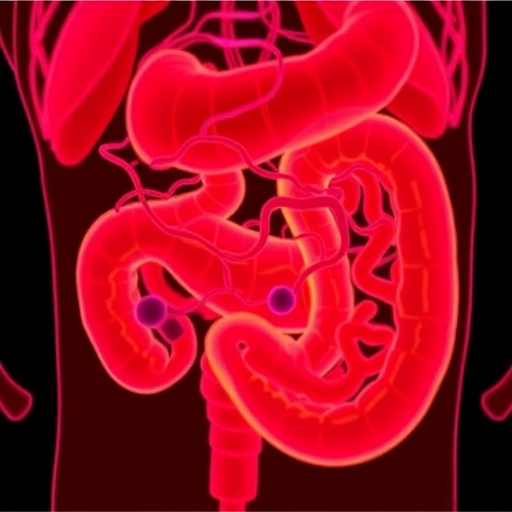
Severe acute pancreatitis (SAP) stands as one of the most challenging clinical emergencies in gastroenterology, characterized by high morbidity and mortality rates due primarily to overwhelming systemic inflammation and multiple organ dysfunction. Despite advances in supportive care, therapeutic options remain limited, especially for complications arising beyond the pancreas itself. Among these, pancreatitis-associated intestinal injury (PAII) has emerged as a pivotal driver in the progression of disease severity, representing a critical “second hit” that amplifies systemic inflammation through disruption of the gut barrier and ensuing translocation of luminal microbes and endotoxins. Addressing this pathological cascade has remained elusive—until now.
A breakthrough study led by Dr. Jun Yang at the Affiliated Hospital of Jiangnan University has identified Rhein, a natural anthraquinone derivative traditionally extracted from the rhubarb plant (Rheum palmatum) and aloe species, as a potent agent that mitigates intestinal injury in SAP. Published in the Chinese Medical Journal, this research elucidates the molecular axis involving peroxisome proliferator-activated receptor gamma (PPARγ), the NOD-like receptor protein 3 (NLRP3) inflammasome, and macrophage polarization as a key regulatory mechanism underlying Rhein’s therapeutic efficacy.
The intestinal barrier is a complex, dynamic interface composed of a monolayer of epithelial cells interconnected by tight junction proteins such as ZO-1, ZO-2, Claudin-1, and Occludin. This structure maintains selective permeability that prevents bacterial and endotoxin ingress into systemic circulation. In SAP, systemic inflammatory responses and local pancreatic necrosis precipitate ischemic injury and endothelial dysfunction within the gut, leading to disruption of tight junction integrity and enterocyte apoptosis. This breakdown facilitates bacterial translocation and endotoxemia, fueling a self-perpetuating inflammatory loop that accelerates systemic inflammatory response syndrome (SIRS) and multiple organ dysfunction syndrome (MODS).
In their rigorous experimental setup, Yang and colleagues employed a cerulein combined with lipopolysaccharide (LPS)-induced mouse model of SAP to mimic human disease pathology. With Rhein administration at 50 mg/kg, they observed profound attenuation of pancreatic enzyme elevation — specifically serum amylase and lipase — indicators of pancreatic injury. Histological analyses revealed significantly reduced pancreatic edema, necrosis, and inflammatory infiltration. The most striking effects of Rhein, however, were evident in the intestinal tissue where Rhein preserved colonic mucosal architecture, maintained villus height, and diminished inflammatory cell infiltration, all hallmark indicators of restored barrier function.
Molecular analyses demonstrated that Rhein markedly upregulated the expression of key tight junction proteins, reversing SAP-induced downregulation. This translation into functional barrier restoration was substantiated by decreased serum LPS levels, confirming reduced endotoxin translocation. This finding underscores Rhein’s role in stabilizing the epithelial barrier and dampening the gut-originating inflammatory cascade characteristic of SAP progression.
The innate immune microenvironment within the gut plays a crucial role in orchestrating inflammatory responses. Macrophages, highly plastic immune cells, exist along a spectrum from classically activated pro-inflammatory M1 phenotypes, which produce excessive levels of cytokines like IL-1β, IL-6, and tumor necrosis factor-alpha (TNF-α), to alternatively activated M2 macrophages that promote anti-inflammatory effects and tissue repair. During SAP, an overwhelming skewing toward M1 macrophage predominance exacerbates the inflammatory milieu and tissue damage.
Immunofluorescence studies revealed that Rhein reprograms this macrophage polarization balance significantly. Rhein-treated animals exhibited a pronounced reduction in NOS2-positive M1 macrophages and a concomitant increase in CD206-positive M2 macrophages. This polarization shift redefined the intestinal immune environment from one characterized by a deleterious “inflammatory storm” toward a milieu conducive to immune regulation and mucosal healing, establishing a cellular basis for Rhein’s protective effects.
Central to this phenotypic macrophage switch is the activation of PPARγ, a nuclear receptor known for regulating anti-inflammatory gene expression and macrophage differentiation toward the M2 phenotype. Intriguingly, SAP markedly suppresses colonic PPARγ expression and phosphorylation, a defect effectively reversed by Rhein treatment. Functional interrogation by co-administering the selective PPARγ antagonist GW9662 abrogated Rhein’s benefits, reinstating M1 dominance, decreasing tight junction proteins, elevating systemic LPS, and exacerbating histopathological injury. These results unequivocally position PPARγ activation as indispensable for Rhein’s therapeutic effect.
One of the downstream effectors modulated via PPARγ activation is the NLRP3 inflammasome, a cytosolic multiprotein complex that senses endogenous danger signals and sterile inflammation, culminating in caspase-1 activation, gasdermin D (GSDMD)-mediated pyroptosis, and release of pro-inflammatory cytokines IL-1β and IL-18. In vitro assays using LPS and IFN-γ-primed bone marrow-derived macrophages showed that Rhein profoundly suppresses NLRP3 expression, caspase-1 cleavage, and subsequent inflammasome activation. These suppressive effects were reversed with GW9662, confirming the crosstalk whereby PPARγ activation restrains inflammasome-mediated inflammation and macrophage phenotype.
The translational implications of this study are profound. By elucidating a direct mechanistic link between PPARγ-induced macrophage reprogramming, suppression of NLRP3 inflammasome, and restoration of intestinal barrier integrity, this research opens new therapeutic avenues targeting the immune microenvironment in PAII. Rhein, with an established safety profile in traditional medicine, emerges as a viable candidate for drug repositioning aimed at reducing SAP-associated intestinal damage and systemic inflammation.
While the study utilized a well-validated animal model reflecting a single SAP etiology and focused on a defined Rhein dosage, the demonstrated molecular pathways provide a compelling rationale for advancing Rhein into expanded preclinical settings and eventual clinical trial designs. Addressing limitations related to potential dose-dependent toxicity and broad disease applicability will be crucial steps toward translating these findings into clinical practice.
This pioneering investigation by Dr. Jun Yang and his team not only deepens our understanding of the complex pathophysiology underlying SAP and its complications but also charts a promising path forward for therapeutic interventions targeting the PPARγ/NLRP3/macrophage axis. As severe acute pancreatitis continues to challenge clinicians worldwide, Rhein’s immune-modulatory properties and intestinal barrier preservation capacity may represent a paradigm shift in managing this devastating disease.
News Publication Date: 20 March 2026
References: DOI: 10.1097/CM9.0000000000004085
Cite Scienmag News
Drew Townsend. (May 13, 2026). Rhein Alleviates Intestinal Damage in Severe Acute Pancreatitis by Modulating Macrophage Activation via PPARγ. Scienmag. https://scienmag.com/rhein-alleviates-intestinal-damage-in-severe-acute-pancreatitis-by-modulating-macrophage-activation-via-ppar%ce%b3/
Drew Townsend. "Rhein Alleviates Intestinal Damage in Severe Acute Pancreatitis by Modulating Macrophage Activation via PPARγ." Scienmag, 13 May 2026, https://scienmag.com/rhein-alleviates-intestinal-damage-in-severe-acute-pancreatitis-by-modulating-macrophage-activation-via-ppar%ce%b3/. Accessed 3 September 2026.
Drew Townsend. "Rhein Alleviates Intestinal Damage in Severe Acute Pancreatitis by Modulating Macrophage Activation via PPARγ." Scienmag. May 13, 2026. https://scienmag.com/rhein-alleviates-intestinal-damage-in-severe-acute-pancreatitis-by-modulating-macrophage-activation-via-ppar%ce%b3/


