Saturday, October 31, 2026
Science
No Result
View All Result
  • Login
  • HOME
  • SCIENCE NEWS
  • CONTACT US
  • HOME
  • SCIENCE NEWS
  • CONTACT US
No Result
View All Result
Scienmag
No Result
View All Result
Home Science News Medicine

Reward Signals Sweep the Entire Mouse Visual Cortex

October 28, 2026
in Medicine
Cassandra Pierce
By Cassandra Pierce Scienmag Editorial Profile - Systems Neuroscience
Reading Time: 3 mins read
0
Reward Signals Sweep the Entire Mouse Visual Cortex

Reward Signals Sweep the Entire Mouse Visual Cortex

65
SHARES
587
VIEWS
Share on FacebookShare on Twitter
ADVERTISEMENT

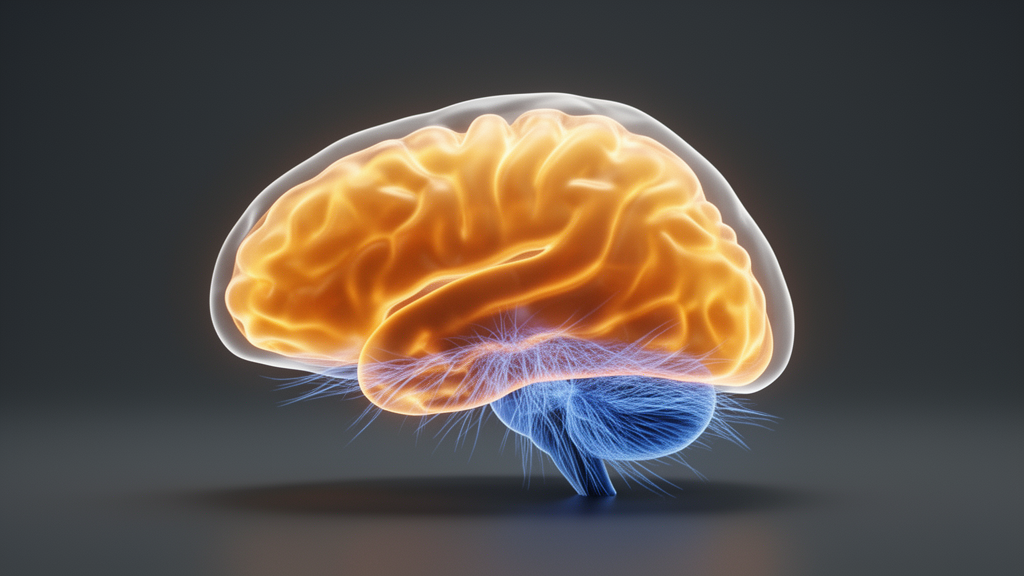
When a mouse gets a drop of water for noticing a change on a screen, its entire visual cortex reacts — not just the primary visual area where reward-related activity had been studied before, but every one of the six cortical areas that process sight. That is the central finding of a new study posted in Frontiers in Behavioral Neuroscience, which mined the Allen Visual Behavior Neuropixels dataset to ask whether the visual cortex as a whole carries a dedicated reward signal. Across 103 recording sessions in which head-fixed mice performed a visual change-detection task, the researchers aligned the activity of 54,039 neurons to the moment of reward delivery and found that reward modulation is a cortex-wide phenomenon, not a specialty of a single area.

The team was deliberately strict about what counted as reward coding. A neuron’s peri-reward response had to be reproducible, verified with a split-half test against an inter-spike-interval null distribution, and it had to be reward-specific in two separate contrasts: active behavior versus passive replay of the same stimuli, and hit trials versus miss trials. Only units passing both filters were retained. This double screen matters because visual cortex activity can reflect images, movement, or arousal rather than reward itself; requiring the modulation to survive both contrasts isolates a signal tied to the reward event. Even under this conservative criterion, a substantial cohort of reward-modulated neurons emerged in all six visual areas.

The dominant sign of that modulation was surprising: suppression. Most reward-modulated units reduced their firing around reward delivery rather than increasing it, and the strength of this suppressive predominance fell off systematically along the functional hierarchy of the visual system — strongest in primary visual cortex and progressively weaker in higher-order areas. The effect was also concentrated in layer 4 and in narrow-spiking neurons. Together these patterns suggest that reward arrives in the visual cortex largely as a dampening of activity, anchored early in the cortical hierarchy, rather than as the excitatory burst one might naively expect from a positive event.

At the population level, the reward-modulated neurons behaved differently from their neighbors in a measurable way: in every visual area, this cohort operated in a lower-variability regime than the surrounding population. The researchers then decomposed the individual peri-reward response profiles and found that they did not sort into discrete categories. Instead, the temporal shapes formed a shared continuum, common across areas, within which one feature stood out geographically: an anticipatory ramp of activity building up before reward delivery was most prevalent in primary visual cortex.

The authors conclude that the mouse visual cortex carries a distributed, predominantly suppressive and anticipatory reward signal — hierarchically graded across areas, yet built from a shared temporal repertoire. The work is a correlative analysis of an existing dataset in head-fixed mice performing a trained change-detection task, so it establishes how reward-related activity is organized across the visual cortical hierarchy rather than testing any intervention, and the findings apply to the mouse visual system under these task conditions. Even so, the study broadens the map considerably: reward-related signaling, previously documented almost entirely in primary visual cortex under trained associative paradigms, now appears to be a system-wide feature of the visual cortex, with suppression as its dominant mode and a graded structure that mirrors the cortex’s own hierarchy.

Subject of Research: Reward-related neural signaling across the six areas of the mouse visual cortex during a change-detection task

Article Title: Reward coding across mouse visual cortical areas

Article References: Souza, J. P. G., Vieira, A. B., Ventura, V., de Lima, J. C., Arcanjo, G., de Paula, E. V., Sales, M., Souza, A. B. A., Alvarez-Jácobo, J. E., Fontenele, A. J., Aguiar, L. A. A., de Santana, M. A., Sousa, N., & de Vasconcelos, N. A. P. (2026). Reward coding across mouse visual cortical areas. Frontiers in Behavioral Neuroscience, 20, 1944695. https://doi.org/10.3389/fnbeh.2026.1944695

Image Credits: AI Generated

DOI: 10.3389/fnbeh.2026.1944695

Keywords: visual cortex, reward coding, Neuropixels, mouse neuroscience, cortical hierarchy, neural suppression, primary visual cortex, change-detection task, Allen Brain Observatory, layer 4, anticipatory activity, spike train analysis

Cite Scienmag News

Cassandra Pierce. (October 28, 2026). Reward Signals Sweep the Entire Mouse Visual Cortex. Scienmag. https://scienmag.com/reward-signals-sweep-the-entire-mouse-visual-cortex/

Cassandra Pierce. "Reward Signals Sweep the Entire Mouse Visual Cortex." Scienmag, 28 October 2026, https://scienmag.com/reward-signals-sweep-the-entire-mouse-visual-cortex/. Accessed 31 October 2026.

Cassandra Pierce. "Reward Signals Sweep the Entire Mouse Visual Cortex." Scienmag. October 28, 2026. https://scienmag.com/reward-signals-sweep-the-entire-mouse-visual-cortex/


Tags: Allen Brain Observatoryanticipatory activitychange-detection taskcortex-wide neural activity during rewardcortical areas involved in reward processingcortical hierarchyhead-fixed mouse visual experimentslayer 4long-range cortical involvement in reward signalsmouse neuroscienceneural mechanisms of reward in sensory processingneural response to reward deliveryneural suppressionNeuropixelsNeuropixels dataset in visual neuroscienceperi-reward neuron response validationprimary visual cortexreward codingreward modulation across multiple visual areasReward signals in mouse visual cortexreward-specific neural activity in visual cortexspike train analysisvisual change detection in micevisual cortex
Share26Tweet16
Previous Post

Second-by-Second Skin Readings Map Audiovisual Features Linked to Viewer Arousal in Sport Ads

Next Post

Female Age and Sperm DNA Fragmentation Linked to Embryo Euploidy, but Predictive Power Is Weak

Related Posts

ZNF207 shields glutamine transporter ASCT2 from degradation to fuel liver cancer growth
Cancer

ZNF207 shields glutamine transporter ASCT2 from degradation to fuel liver cancer growth

October 30, 2026
Most Ethiopian HIV patients on dolutegravir therapy show good knowledge, survey finds
Medicine

Most Ethiopian HIV patients on dolutegravir therapy show good knowledge, survey finds

October 30, 2026
Serum and urine protein biomarkers may sharpen prostate cancer detection beyond PSA
Medicine

Serum and urine protein biomarkers may sharpen prostate cancer detection beyond PSA

October 30, 2026
One gene locus flags atrial fibrillation risk after major surgery, UK Biobank study finds
Medicine

One gene locus flags atrial fibrillation risk after major surgery, UK Biobank study finds

October 30, 2026
Deep-learning CT reconstruction sharpens calcium visibility in phantom tests, but dose evens the score
Medicine

Deep-learning CT reconstruction sharpens calcium visibility in phantom tests, but dose evens the score

October 30, 2026
Pennywort Leaf Extract Lowers Blood Sugar in Diabetic Rats, Study Finds
Medicine

Pennywort Leaf Extract Lowers Blood Sugar in Diabetic Rats, Study Finds

October 30, 2026
Next Post
Female Age and Sperm DNA Fragmentation Linked to Embryo Euploidy, but Predictive Power Is Weak

Female Age and Sperm DNA Fragmentation Linked to Embryo Euploidy, but Predictive Power Is Weak

  • Mothers who receive childcare support from maternal grandparents show more optimized

    Mothers who receive childcare support from maternal grandparents show more parental warmth, finds NTU Singapore study

    27656 shares
    Share 11059 Tweet 6912
  • University of Seville Breaks 120-Year-Old Mystery, Revises a Key Einstein Concept

    1061 shares
    Share 424 Tweet 265
  • Bee body mass, pathogens and local climate influence heat tolerance

    682 shares
    Share 273 Tweet 171
  • Researchers record first-ever images and data of a shark experiencing a boat strike

    546 shares
    Share 218 Tweet 137
  • Groundbreaking Clinical Trial Reveals Lubiprostone Enhances Kidney Function

    531 shares
    Share 212 Tweet 133
Science

Embark on a thrilling journey of discovery with Scienmag.com—your ultimate source for cutting-edge breakthroughs. Immerse yourself in a world where curiosity knows no limits and tomorrow’s possibilities become today’s reality!

RECENT NEWS

  • Trademarks Meet Patents in New Method to Spot Technology Opportunities
  • Reddit self-declarations offer auditable labels for demographic inference
  • Scots pine needles map trace element pollution in Polish industrial town
  • Dual-blockchain scheme secures vehicle handovers without pre-shared keys

Categories

  • Agriculture
  • Anthropology
  • Archaeology
  • Athmospheric
  • Biology
  • Biotechnology
  • Blog
  • Bussines
  • Cancer
  • Chemistry
  • Climate
  • Earth Science
  • Editorial Policy
  • Marine
  • Mathematics
  • Medicine
  • Pediatry
  • Policy
  • Psychology & Psychiatry
  • Science Education
  • Science News
  • Social Science
  • Space
  • Technology and Engineering

Subscribe to Blog via Email

Enter your email address to subscribe to this blog and receive notifications of new posts by email.

Join 5,150 other subscribers

© 2025 Scienmag - Science Magazine

Welcome Back!

Login to your account below

Forgotten Password?

Retrieve your password

Please enter your username or email address to reset your password.

Log In
No Result
View All Result
  • HOME
  • SCIENCE NEWS
  • CONTACT US

© 2025 Scienmag - Science Magazine

Discover more from Science

Subscribe now to keep reading and get access to the full archive.

Continue reading