


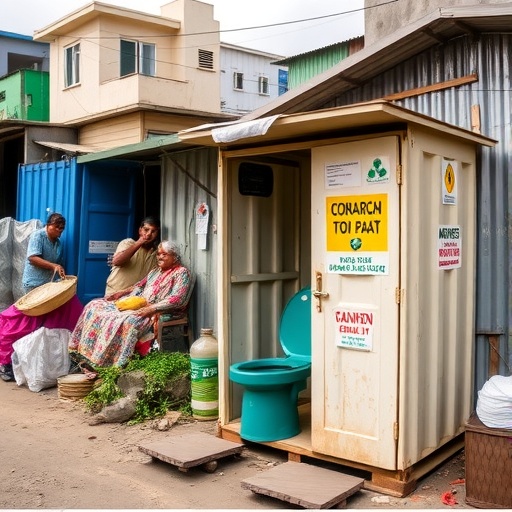
In 2024, a staggering 3.4 billion people around the world still lacked access to safely managed sanitation services. This alarming statistic sheds light on a critical global health issue, prompting urgent calls to action. The United Nations has recognized this challenge by setting Sustainable Development Goal 6, which aims to ensure access to adequate sanitation and hygiene for everyone by the year 2030. However, despite these noble targets, many communities remain underserved, especially in rapidly growing urban areas where infrastructure cannot keep pace with population growth.
Recent advancements in sanitation technology are offering hope for these communities. Among them is the innovative container-based sanitation (CBS) system, which is transforming the way sanitation services are delivered in informal settlements. A comprehensive international study has highlighted the positive impact that CBS systems have on the quality of life for residents in urban slums across Kenya, Peru, and South Africa. This research emphasizes the need for effective, scalable solutions that prioritize human dignity and health, particularly in regions where conventional sewage systems are impractical.
Container-based sanitation operates on a simple yet effective premise. It employs sealed, portable toilet containers that are regularly collected, emptied, and cleaned as part of a subscription-based service. Unlike traditional sanitation methods that require extensive infrastructure, CBS is designed to be flexible and practical for densely populated urban areas. This paradigm shift in sanitation delivery is particularly crucial in informal settlements where safe and hygienic sanitation is often a luxury rather than a standard.
The findings of the study, co-authored by researchers from Bangor University and Cranfield University, have recently been published in the esteemed journal Nature Water. The implications of this research extend beyond mere convenience; they suggest that container-based sanitation could serve as a temporary yet transformative solution for improving public health in the world’s most vulnerable urban communities. While CBS cannot perfectly replace sewered systems, it offers a viable alternative that can be rapidly deployed to mitigate serious sanitation challenges.
Dr. Alison Parker, a prominent scholar in international water and sanitation at Cranfield University, has articulated the significance of this research. She stated, “It has been a huge privilege to work with dedicated researchers globally to reveal the potential that CBS has to provide a safe toilet for billions of people who currently lack access. The necessity for essential sanitation and hygiene services is a fundamental human requirement for health and well-being.” Her fervent remarks highlight the urgency with which stakeholders must address these pressing sanitation issues.
The study utilized smartphone-based surveys to collect data on sanitation usage and public health among CBS users. This systematic approach afforded the researchers a unique opportunity to closely monitor the experiences of residents over time, thus providing one of the most in-depth examinations of CBS services in urban slums to date. The considerable data set has enabled the researchers to derive crucial insights into the effectiveness of container-based sanitation as a solution for those living in informal settlements.
Among the key findings of the research, CBS users reported significantly fewer problems with their sanitation facilities compared to those reliant on traditional options. This discrepancy in experience underscores the advantages of adopting newer methods of sanitation delivery. Furthermore, satisfaction levels among CBS users were high across various components of the service, including the frequency and thoroughness of collection and cleaning. The quality of life in the context of sanitation was demonstrably enhanced through improvements in the servicing of CBS systems.
Dr. Ben Exton, a lead author of the study and a research assistant at Bangor University, provided further insight into these findings. He noted, “Our comprehensive dataset, which included hundreds of participants surveyed at multiple intervals throughout the year, showcases the real-world impact that well-maintained container-based sanitation can yield for people living in informal settlements.” His reflections on the research highlight the need for continued investment in innovative sanitation solutions that effectively address pressing public health challenges.
The research also revealed notable differences in user experiences across the countries studied. In Kenya and Peru, where CBS toilets are provided by social enterprises benefiting from grants, users reported fewer issues and higher satisfaction rates compared to users in South Africa, where CBS systems are offered at no cost by local governmental authorities. These findings emphasize the importance of tailored interventions that consider the unique social and economic contexts of each region, enhancing the effectiveness of sanitation services.
Rémi Kaupp, Executive Director of the Container Based Sanitation Alliance, expressed his enthusiasm regarding the study’s findings. He stated, “I am delighted to see rigorous, long-term research that comprehensively examines how sanitation users perceive their services. This study not only highlights the vital role of container-based sanitation in providing uninterrupted access for residents in informal settlements but also underscores the necessity of professional sanitation operators to assure safe and consistent service delivery.” His remarks reinforce the importance of professionalism in sanitation management to improve overall public health outcomes.
Access to safe sanitation is an essential component of public health, yet millions are currently denied this fundamental right. The findings from this groundbreaking study serve as a clarion call for governments, NGOs, and private sectors alike to invest in sustainable sanitation solutions that address the needs of marginalized populations. Improving sanitation services can have far-reaching impacts on health, education, and economic productivity, making it a critical area of focus for achieving broader development goals.
Ultimately, the road ahead is clear. The continued research and implementation of container-based sanitation systems offer a promising avenue for alleviating some of the most pressing sanitation challenges faced by the urban poor worldwide. As these systems become increasingly understood and adopted, they have the potential to foster healthier, more dignified living conditions for millions who currently live without reliable sanitation services.
In conclusion, this study emphasizes the urgency of innovative sanitation solutions like container-based sanitation systems, showcasing their transformative potential in improving the quality of life for vulnerable populations. By addressing the sanitation crisis through practical and scalable methods, it may be possible to ensure that everyone can access one of the most basic necessities for health and dignity.
Cite Scienmag News
Denise Maddox. (September 26, 2025). Revolutionizing Urban Living: How Container-Based Sanitation Enhances Life in Slum Communities. Scienmag. https://scienmag.com/revolutionizing-urban-living-how-container-based-sanitation-enhances-life-in-slum-communities/
Denise Maddox. "Revolutionizing Urban Living: How Container-Based Sanitation Enhances Life in Slum Communities." Scienmag, 26 September 2025, https://scienmag.com/revolutionizing-urban-living-how-container-based-sanitation-enhances-life-in-slum-communities/. Accessed 4 September 2026.
Denise Maddox. "Revolutionizing Urban Living: How Container-Based Sanitation Enhances Life in Slum Communities." Scienmag. September 26, 2025. https://scienmag.com/revolutionizing-urban-living-how-container-based-sanitation-enhances-life-in-slum-communities/


