


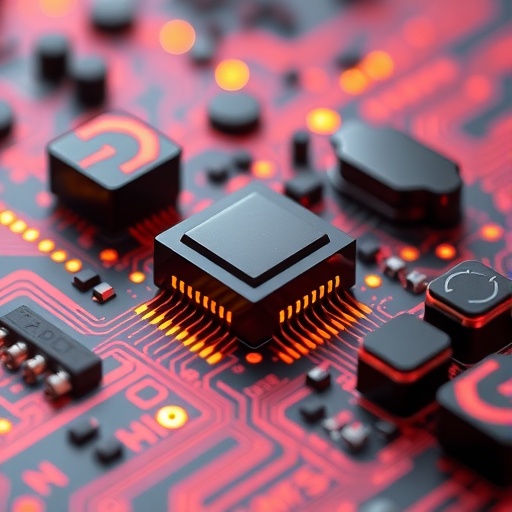
In the ceaseless race to push the boundaries of computing and communications technology, heterogeneous integration (HI) emerges as a defining advancement destined to reshape the future. Over the past decade and more, HI has transitioned from a niche innovation to a cornerstone in the design and manufacturing of electronic systems that power artificial intelligence (AI), high-performance computing (HPC), and ubiquitous smartphone connectivity. As the insatiable demand for smaller, faster, and more efficient devices escalates, HI offers a paradigm shift by enabling the seamless integration of diverse semiconductor components into unified, high-functioning packages that defy the limitations of traditional monolithic chip designs.
At its core, heterogeneous integration transcends the classical monolithic silicon chip framework by melding multiple semiconductor dies with varied functionalities—logic, memory, sensors, photonics, and power electronics—into compact, multilayered assemblies. This approach capitalizes on the best technological nodes for each functionality, thereby circumventing the compromises inherent in fabricating a single chip to perform all tasks. Not only does HI enhance performance and energy efficiency, but it also accelerates innovation cycles by allowing incremental upgrades of individual components without redesigning entire systems.
Since the early 2010s, the escalating importance of HI has been observable in the packaging strategies of cutting-edge semiconductor devices used in AI accelerators, data centers, and communications infrastructure. Advanced packaging methods such as system-in-package (SiP), 2.5D/3D integration using silicon interposers, and fan-out wafer-level packaging have become pivotal. These technologies enable unprecedented transistor densities and shorter interconnect distances, significantly reducing latency and power consumption while boosting bandwidth. The strategic role of HI in these domains epitomizes its potential to serve as the linchpin for next-generation computing paradigms.
The complexities inherent to heterogeneous integration extend well beyond basic assembly and require an intricate symbiosis of design, fabrication, and system reliability considerations. For instance, integrating high-speed logic components with delicate photonics and power modules within a constrained thermal envelope demands rigorous thermal management innovations. The challenge is compounded by heterogeneous materials with differing thermal expansion coefficients and electrical behaviors, requiring novel interconnects and bonding techniques that maintain signal integrity and mechanical stability under diverse operating conditions.
Furthermore, the design methodologies necessary for successful HI require an evolution from traditional chip-centric workflows toward system-level co-design and verification. Collaborative roadmaps that bridge device engineering, packaging technology, and system architecture are essential to harness HI’s full potential. Artificial intelligence workloads, with their unique data movement and processing requirements, exemplify the necessity for cross-disciplinary efforts encompassing semiconductor technologists, packaging experts, and system architects. This integrated approach ensures that heterogeneous modules can communicate seamlessly and operate efficiently as unified systems.
One pivotal aspect of HI is the improvement in interconnect technology. Traditional wire-bonding and flip-chip techniques are giving way to advanced high-density interconnects such as micro-bumps, through-silicon vias (TSVs), and embedded bridges within interposers, which enable the dense vertical and lateral electrical connections necessary for 3D stacking and 2.5D integration. These sophisticated interconnects have fundamentally transformed the bandwidth and energy profiles of integrated systems, providing the critical pathways for rapid data exchange between heterogeneous components.
The rise of photonic integration within heterogeneous systems marks another landmark development in overcoming electronic interconnect bottlenecks. By integrating photonic components directly with electronic circuits, HI platforms can leverage the unparalleled bandwidth and low latency of optical communication channels on-chip or between chips. Photonics integration also opens new avenues for power-efficient data transmission, pivotal for accelerating AI inference engines and telecommunications equipment that demand continuous, high-speed data throughput.
Power electronics integration within HI frameworks is equally essential, enabling the precise and efficient distribution of energy within high-density packages. The inclusion of advanced power management modules, such as wide-bandgap semiconductor devices, enhances the overall power efficiency and thermal robustness of heterogeneous chips. This is increasingly critical as AI and HPC workloads push power budgets to their limits and thermal dissipation becomes a primary system design constraint.
One cannot overstate the importance of modeling and simulation in advancing heterogeneous integration technology. Predictive tools capable of simulating electrical, mechanical, thermal, and reliability performance enable engineers to optimize designs before fabrication, reducing costly iterations. Digital twins and machine learning-assisted co-design frameworks are emerging as indispensable resources to navigate the complex parameter spaces opened by combining diverse component technologies on a single substrate.
Reliability remains a fundamental challenge and a key focus area for HI advancement. As heterogeneous modules integrate components with diverse materials and form factors, novel failure modes related to mechanical stress, thermal cycling, electromigration, and other degradation mechanisms come to the fore. Addressing these concerns mandates robust testing protocols and accelerated lifetime analytics, ensuring that heterogeneous systems meet stringent performance and durability standards necessary for consumer electronics, industrial applications, and mission-critical infrastructure.
The smartphone and cellular communication sector vividly illustrates HI’s disruptive impact, as these devices demand ever-more compact, multi-functional packages. By integrating analog RF components, digital processors, sensors, and power modules within a single heterogeneous substrate, mobile devices achieve superior performance, reduced form factors, and enhanced energy efficiency. This trend also supports the advent of 5G and beyond, where millimeter-wave signal processing and massive MIMO antenna arrays necessitate highly integrated and finely tuned electronic assemblies.
Artificial intelligence hardware accelerators represent another compelling application domain where HI unlocks unprecedented capabilities. By co-packaging high-bandwidth memory with computing cores and specialized AI inference engines in 3D integrated stacks, system designers can dramatically improve the speed and efficiency of machine learning operations. This not only amplifies real-time data processing but also enables scalable architectures for future generative AI and other emerging workloads.
As computing continues its trajectory toward exascale performance and widespread connectivity, the ecosystem surrounding heterogeneous integration must evolve in concert. Collaborative roadmaps that integrate insights from academia, industry research labs, and commercial producers will be paramount. Such roadmaps must embrace cross-disciplinary perspectives, detailing fabrication process compatibility, system-level thermal management, interconnect innovation, and reliability protocols to shepherd HI from concept to mass adoption.
In conclusion, heterogeneous integration stands at the forefront of semiconductor evolution, embodying the shift from incremental transistor scaling to holistic system optimization. By integrating diverse semiconductor technologies into coherent, performance-tuned packages, HI empowers a new generation of computing and communication devices that meet the demands of an increasingly data-driven world. The journey ahead will require visionary partnerships and technological breakthroughs across fabrication, design, and system-level integration to fully realize the promise embedded within heterogeneous integration.
—
Cite Scienmag News
Denise Maddox. (March 30, 2026). Revolutionizing Tech: Heterogeneous Integration of Electronics. Scienmag. https://scienmag.com/revolutionizing-tech-heterogeneous-integration-of-electronics/
Denise Maddox. "Revolutionizing Tech: Heterogeneous Integration of Electronics." Scienmag, 30 March 2026, https://scienmag.com/revolutionizing-tech-heterogeneous-integration-of-electronics/. Accessed 3 September 2026.
Denise Maddox. "Revolutionizing Tech: Heterogeneous Integration of Electronics." Scienmag. March 30, 2026. https://scienmag.com/revolutionizing-tech-heterogeneous-integration-of-electronics/


