


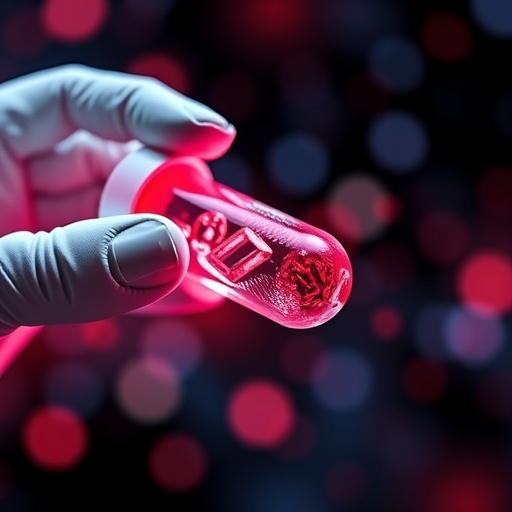
Researchers at the University of Nottingham have achieved a significant breakthrough in the field of RNA medicine delivery by developing a versatile and highly efficient materials platform. This innovative system exploits modular supramolecular chemistry to create adaptable nanoscale carriers capable of safely ferrying a wide spectrum of genetic medicines into target cells. These advances hold the potential to accelerate the development of next-generation vaccines, enhance cancer therapies, and broaden the therapeutic reach of gene-silencing approaches.
Central to this development is the design of modular polycation building blocks that self-assemble with RNA molecules through reversible host–guest interactions. These dynamic chemical bonds allow for precise control over the stability and behavior of the resulting nanoparticles. By modulating subtle aspects of the polycation chemistry, researchers can fine-tune the delivery vehicles to meet diverse therapeutic requirements, tailoring their properties for optimal efficacy in various biological contexts.
The rational design of these supramolecular polycations introduces a versatile platform that transcends the limitations of existing RNA delivery technologies. Unlike conventional lipid-based carriers or viral vectors, this system provides a chemically defined and structurally tunable scaffold that can be scaled up for industrial production. The ability to automate nanoparticle formulation ensures rigorous compliance with critical quality parameters essential for clinical-grade RNA vaccines and therapeutics.
Experimental validation demonstrated that these RNA-loaded nanoparticles can transfect a broad array of cell types with efficiency matching or surpassing that of current leading commercial reagents. Notably, the particles exhibited minimal cytotoxicity, an essential criterion for safe therapeutic applications. The researchers confirmed functional delivery in vivo by effectively reducing oncogene expression in breast tumor tissues and inducing protective immunity against the H1N1 influenza virus in mouse models.
The modular polycation platform operates through a supramolecular host–guest mechanism, a non-covalent, reversible bonding system inspired by molecular recognition principles. This enables dynamic fine-tuning of nanoparticle properties such as size, charge density, and stability. The resulting supramolecular architectures can be rapidly reconfigured by altering molecular building blocks, creating a toolbox for precision medicinal design in RNA therapeutics.
Beyond the fundamental advances in chemical engineering, this platform’s strength lies in its scalability and adaptability. Automated production methods were optimized to generate nanoparticles meeting stringent critical quality attributes, paving the way for rapid deployment during outbreak responses. This not only accelerates the timeline for vaccine manufacturing but also enhances the feasibility of personalized RNA medicines with rapid turnaround times.
The collaborative effort encompassed expertise across multiple institutions, including the University of Nottingham, Imperial College London, King’s College London, University College London, and biotech firms Aqdot Ltd and Centillion Ltd. This multidisciplinary team integrated pharmaceutical sciences, chemical engineering, molecular biology, and immunology to address formidable challenges in RNA delivery.
This research exemplifies a paradigm shift in gene delivery technology, where supramolecular polymer chemistry offers unprecedented modularity and control. The capacity to tailor nanoparticles for specific cargoes and therapeutic goals heralds a future where RNA-based treatments can be more precisely engineered, increasing therapeutic outcomes while minimizing side effects. As genetic medicines gain prominence, such innovative delivery systems will be pivotal.
Furthermore, the platform’s versatility extends to a variety of RNA modalities including messenger RNA (mRNA) vaccines, small interfering RNA (siRNA), and antisense oligonucleotides. By enabling efficient cellular uptake and endosomal escape, these modular nanoparticles markedly improve the intracellular bioavailability of therapeutic RNA, addressing key bottlenecks in nucleic acid medicine.
The practical demonstration of in vivo efficacy in breast cancer models and influenza vaccination underscores the clinical promise of this platform. In cancer, targeted knockdown of oncogenes via RNA interference can suppress tumor growth and progression, while effective vaccination against viral pathogens can induce robust, long-lasting immunity. These findings open multiple avenues for therapeutic intervention.
As RNA therapeutics continue to revolutionize medicine, innovations in delivery systems are crucial to overcome biological barriers and achieve therapeutic thresholds. The modular supramolecular polycation technology represents a breakthrough in this quest, merging chemistry and biology to create adaptable, efficient, and safe RNA delivery vehicles that can meet diverse clinical needs.
In summary, this groundbreaking research from the University of Nottingham presents a chemically tunable multicomponent delivery system that holds the promise to transform RNA medicine. Its ability to rapidly generate tailored formulations, coupled with scalable automated manufacture and proven in vivo performance, marks a significant step forward in the global endeavor to develop next-generation vaccines, cancer therapies, and gene-silencing drugs.
Cite Scienmag News
Nathaniel Bowman. (February 23, 2026). Revolutionizing Future Medicine: A Breakthrough Drug Delivery Platform Unveiled. Scienmag. https://scienmag.com/revolutionizing-future-medicine-a-breakthrough-drug-delivery-platform-unveiled/
Nathaniel Bowman. "Revolutionizing Future Medicine: A Breakthrough Drug Delivery Platform Unveiled." Scienmag, 23 February 2026, https://scienmag.com/revolutionizing-future-medicine-a-breakthrough-drug-delivery-platform-unveiled/. Accessed 3 September 2026.
Nathaniel Bowman. "Revolutionizing Future Medicine: A Breakthrough Drug Delivery Platform Unveiled." Scienmag. February 23, 2026. https://scienmag.com/revolutionizing-future-medicine-a-breakthrough-drug-delivery-platform-unveiled/


